
Image: Mint (Business)
Discover Warren Buffett's insights on cost of living versus standard of living. Learn how financial discipline leads to true wealth and happiness.
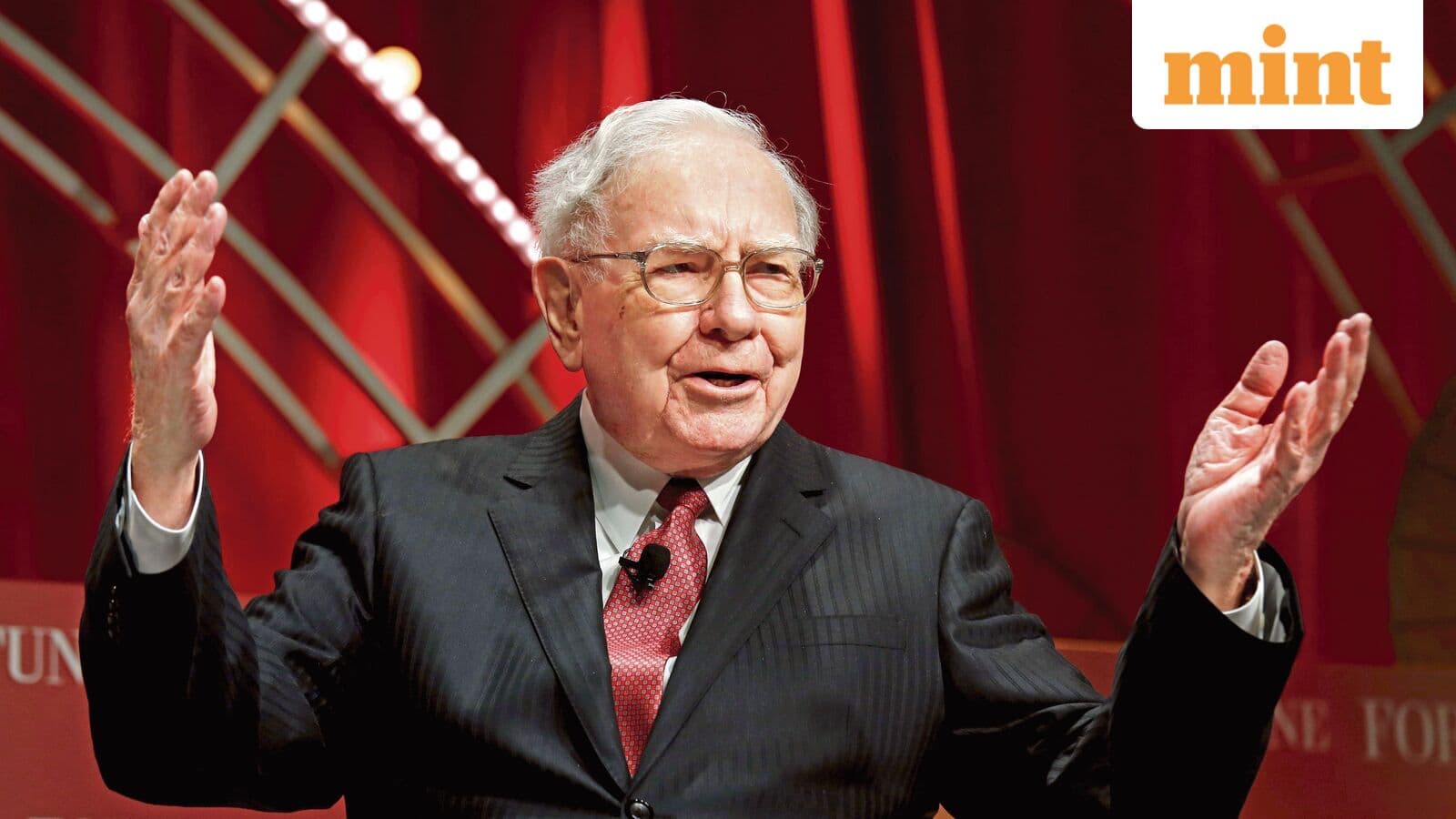
GlipzoWarren Buffett, the renowned founder and chairman of Berkshire Hathaway, has built a legacy as one of the world’s most successful investors. His investment strategies, rooted in long-term thinking and a focus on fundamentals, have made him a revered figure in finance. Known affectionately as the 'Oracle of Omaha,' Buffett's insights often circulate in investment circles, captivating both novice and seasoned investors alike.
One of Buffett's most impactful pieces of advice is encapsulated in his quote: "Don't confuse the cost of living with the standard of living." This statement, which he conveyed to biographer Alice Schroeder in her 2008 book, The Snowball: Warren Buffett and the Business of Life, emphasizes a crucial distinction that many overlook. Buffett’s views on lifestyle choices reflect his belief that true wealth isn’t merely about material possessions or outward appearances.
Buffett’s philosophy extends beyond financial success; he advocates for a fulfilling life defined by relationships and personal satisfaction. During a talk at Levo Office Hours in May 2013, he reiterated that standard of living is about achieving personal goals and surrounding oneself with loved ones rather than accumulating wealth for the sake of it. He acknowledged his occasional indulgence in luxuries, like flying on a private jet, yet asserted that, apart from taxes and charitable contributions, he could comfortably live on $100,000 a year.
He stated, "I wouldn't live better if I had eight houses, if I had a 400-foot yacht or anything of that sort. I'm living in a house that I bought 55 years ago. It's warm in the winter, it's cool in the summer. It has everything I wanted, plus, it has all kinds of good memories." His home, purchased for just $31,500, holds more value for him than any extravagant mansion could.
Buffett’s insights on frugality and wise spending offer a blueprint for aspiring investors. Financial planners often stress the importance of avoiding purchases made solely to impress others, as these can hinder long-term financial health. Nitin Kaushik, a Chartered Accountant and financial advisor, highlighted this point on social media, warning that expenditures aimed at maintaining a certain lifestyle can erode future wealth. He noted that spending ₹20,000 a month on luxury items could cost an individual nearly ₹1.9 crore over 20 years, assuming a 12% return on investments.
Kaushik emphasized that real wealth is often invisible, represented by compounding portfolios, paid-off assets, and unused credit lines. This perspective encourages individuals to focus on building wealth through smart investment strategies rather than succumbing to lifestyle inflation.
Radhika Gupta, Chief of Edelweiss Mutual Fund, advocates for a balanced approach to managing lifestyle inflation. She proposed a practical guideline known as the 10-30-50 rule for savings: 1-10% in your 20s, 30% in your 30s, and 50% in your 40s and beyond. This strategy underscores the importance of adjusting saving rates as income and responsibilities grow.
Gupta also shared an innovative concept she calls SDS—Savings Deducted at Source. This approach suggests automating savings through Systematic Investment Plans (SIPs), Recurring Deposits (RDs), or Fixed Deposits (FDs) to ensure that savings happen before expenses are incurred. Her philosophy mirrors Buffett's, allowing individuals to enjoy life’s luxuries while still prioritizing their financial future.
Warren Buffett’s partnership with the late Charlie Munger has been pivotal in transforming Berkshire Hathaway Inc. from a struggling textile company into a multi-billion dollar conglomerate. Over nearly 60 years, they have achieved astonishing returns, boasting a staggering 55 million percent increase from 1964 to 2024. Today, Berkshire Hathaway holds a market value of approximately $1.2 trillion, with Class A shares valued at $167 billion each.
Buffett's investment prowess has earned him a reputation for selecting winning companies, including giants like Apple, Bank of America, and Coca-Cola. His ability to predict stock performance has instilled a sense of trust and admiration among investors worldwide.
As Warren Buffett steps down from his role as CEO to Greg Abel, the investment community watches closely. Buffett’s legacy of wisdom will undoubtedly continue to influence future generations of investors. His teachings on the cost of living versus standard of living remain pertinent, reminding us that wealth isn't solely about accumulation but about making choices that lead to a rich life.
For investors, the key takeaway is to prioritize financial discipline, focus on long-term goals, and cultivate meaningful relationships. As lifestyle inflation continues to pose challenges, adopting Buffett’s insights can help individuals navigate their financial journeys, ensuring they build lasting wealth while enjoying life’s pleasures responsibly.
Moving forward, investors should remain vigilant and adaptable, carefully considering their spending habits and investment strategies in an ever-evolving economic landscape. Watching how Buffett's successors carry on his legacy will be crucial for anyone invested in the future of finance.

Commercial LPG prices have risen again, with increases of ₹42 in Delhi and ₹53.50 in Kolkata impacting businesses and consumers alike. Find out more.
Indian Express
Discover how a tragic coal mine explosion in Shanxi, China, reveals ongoing safety concerns in the industry amidst a push for green energy.
BBC Business
Montek Singh Ahluwalia highlights key economic challenges for India, emphasizing the need for a strategic approach to balance payments and investment.
Indian Express