
Image: BBC Business
UK's proposed legislation could allow adoption of EU laws without full votes, sparking political controversy and debates over parliamentary oversight.
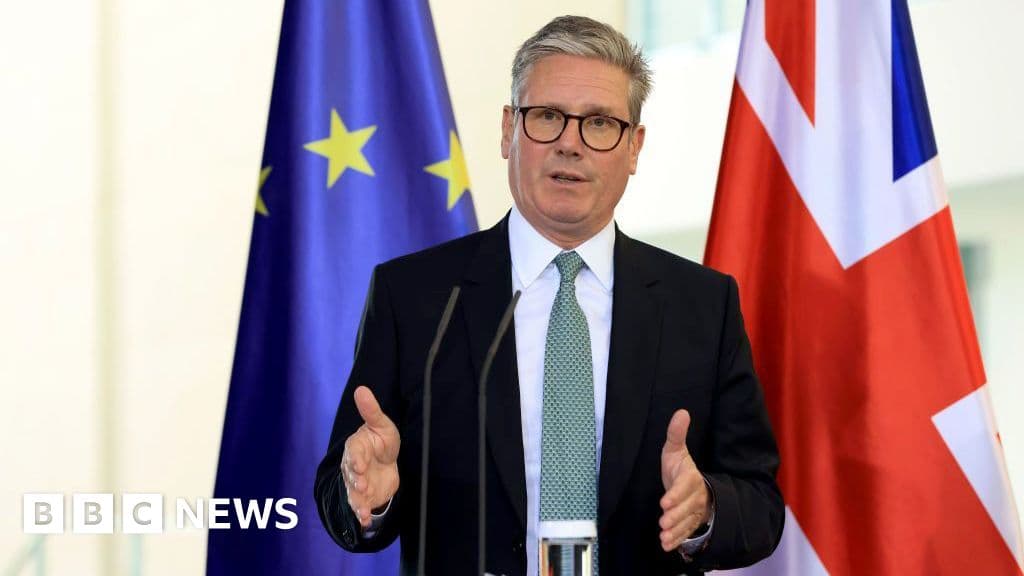
GlipzoIn a significant move, Sir Keir Starmer is proposing new legislation that aims to facilitate the UK's adoption of future European Union (EU) laws without requiring a full parliamentary vote each time. This initiative is designed to enable the UK to more readily align with upcoming regulations that will enhance the trade of goods and services, particularly in areas such as food standards.
This approach, which is expected to be revealed later this year, seeks to create a more streamlined process for the UK government, allowing ministers to introduce draft laws more swiftly. The aim is to keep pace with EU standards and ensure that the UK remains competitive in trade, especially as the nation navigates post-Brexit realities.
Under the proposed plan, new rules would be categorized as "secondary legislation," which typically undergoes less scrutiny compared to primary legislation. This means that Members of Parliament (MPs) and peers would have a more limited role in the approval process. The government asserts that this method will not eliminate parliamentary oversight but will instead make it more efficient to respond to evolving market conditions.
Despite the government's assurances, the plans have ignited fierce opposition from political opponents, particularly from the Conservative Party and Reform UK. Critics argue that this could diminish Parliament's role, effectively rendering it a mere spectator as the EU dictates terms.
Conservative shadow business secretary Andrew Griffith has voiced strong concerns, stating that such a move would reduce Parliament's involvement in significant decisions and hand over more power to Brussels. Nigel Farage, the leader of Reform UK, has promised to oppose this legislation vigorously, labeling it a covert attempt to reinstate EU control over the UK.
Additionally, the Liberal Democrats, through education spokeswoman Munira Wilson, have expressed support for closer ties with Europe but are adamant that any legislation that sidelines Parliament would be deemed "wrong and undemocratic."
The government, however, sees the potential for substantial economic benefits through this proposed alignment with EU standards. They have projected that a deal concerning food standards alone could generate billions of pounds for the UK economy by alleviating bureaucratic red tape for exporters.
Ministers argue that a closer relationship with the EU is not only economically prudent but also strategically necessary in a world filled with geopolitical challenges, such as the ongoing Iran war. In a statement to BBC Radio 5 Live, Sir Keir emphasized the importance of a robust relationship with Europe in the current climate, suggesting that such alignment could lead to lower prices for consumers and improved trade conditions.
The anticipated legislation will primarily focus on several key areas: - Food Standards: Aligning with EU rules on food flavorings, animal health, and organic pet food labeling. - Carbon Pricing: Integrating with the EU's carbon trading framework, though specific details are still pending. - Electricity Trading: Establishing agreements that facilitate smoother electricity transactions between the UK and EU.
The government is expected to unveil more details during a summit planned for the summer, where further negotiations on these fronts will take place.
In light of these developments, Chancellor Rachel Reeves has indicated a willingness to explore additional agreements with the EU that align with broader national interest principles. These principles encompass enhancing economic growth, promoting investment, and bolstering the UK's security and resilience in the global market.
As the UK government prepares to move forward with these legislative plans, the political landscape remains fraught with opposition and uncertainty. The balance between maintaining parliamentary sovereignty and ensuring economic competitiveness will be a focal point in the ongoing discussions.
The proposed legislation represents a pivotal moment in the UK's post-Brexit journey, highlighting the complex relationship between the UK and EU. It raises important questions about sovereignty, parliamentary oversight, and the future of trade regulations. As negotiations unfold and the government seeks to implement these changes, the implications for UK businesses, consumers, and international relations will be closely watched by all stakeholders.
In conclusion, the landscape of trade and political dynamics in the UK is poised for significant shifts as these legislative measures are discussed and debated. The outcome of these discussions will not only affect current economic conditions but will also shape the long-term relationship between the UK and the EU. Keeping an eye on these developments will be crucial for understanding the future of UK-EU relations and the broader implications for trade in a rapidly changing world.

Tensions soar as the US and Iran engage in air strikes near the Strait of Hormuz, raising concerns over global oil supply and regional stability.
BBC World
Trump's international interventions face serious stalemates. What will this mean for U.S. foreign policy? Explore the critical challenges ahead.
Indian Express
Tehran denies resignation of President Masoud Pezeshkian amid claims of IRGC influence. What does this mean for Iran's political stability? Click to learn more!
Indian Express