
Image: BBC World
UK Defense Secretary John Healey reveals Russian submarines' covert operations over vital undersea cables, emphasizing national security and vigilance.
GlipzoIn a startling revelation, UK Defense Secretary John Healey announced that three Russian submarines have been engaged in a covert operation targeting critical undersea cables and pipelines located in waters north of the UK. This alarming development underscores the ongoing tensions between the West and Russia, particularly concerning the security of vital infrastructure. Healey emphasized that the British military has deployed a warship and aircraft to monitor and deter these malign activities by Moscow, ensuring that the UK's interests remain protected.
During a press conference at Downing Street on Thursday, Healey issued a direct warning to Russian President Vladimir Putin, stating, "We see you. We see your activity over our cables and our pipelines, and you should know that any attempt to damage them will not be tolerated and will have serious consequences." This statement highlights the UK's commitment to safeguarding its critical infrastructure, which is central to its national security.
The UK relies heavily on its undersea cables and pipelines for essential data and energy needs. Approximately 60 undersea cables land on the UK coastline, particularly in East Anglia and South West England. Notably, over 90% of the UK's daily internet traffic is transmitted through these cables, which makes them a high-value target in any potential conflict.
Healey explained that the Russian operation involved an Akula-class submarine acting as a diversion, while two GUGI spy submarines conducted surveillance on the cables. After being detected, the Akula submarine retreated, but the two GUGI vessels remained in the area, prompting heightened vigilance from the British military.
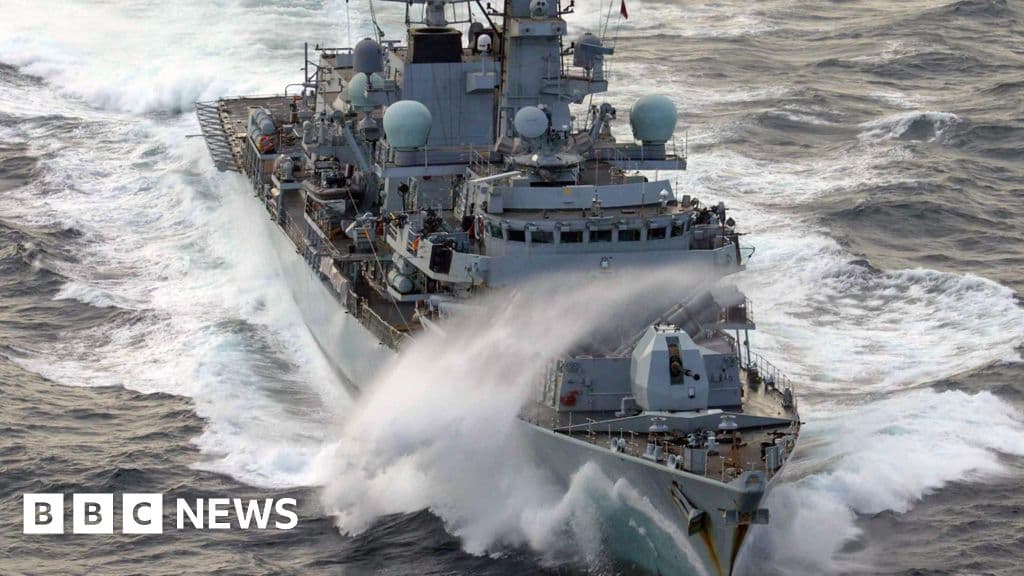
In response to the Russian submarines, the Royal Navy deployed the frigate HMS St Albans, the fuel tanker RFA Tidespring, and anti-submarine Merlin helicopters to track the submarines' movements. Healey noted that other nations were also involved in monitoring the situation, although he specifically named only Norway.
"Our armed forces left [Russia] in no doubt that they were being monitored, that their movements were not covert, as President Putin planned, and that their attempted secret operation had been exposed," Healey remarked. The British military's proactive response included dropping sonar buoys to demonstrate their constant monitoring of the Russian submarines.
While the GUGI — the Russian acronym for the Main Directorate for Deep Sea Research — may not be as widely known as organizations like the KGB or FSB, it represents a significant threat to Western nations. This secretive branch of the Russian navy reports directly to the defense minister and the president, indicating its importance within the military hierarchy. With its headquarters in St. Petersburg and an Arctic base at Olenya Bay, GUGI specializes in underwater surveillance, sabotage, and reconnaissance operations.
GUGI is equipped with advanced military technology, including miniature uncrewed submarines capable of covertly launching operations at great depths. These mini-subs can potentially cut undersea cables or intercept data, raising concerns about their intentions regarding the UK's critical infrastructure.
This incident forms part of a broader strategy known as hybrid warfare, where hostile actions are taken without direct attribution or lethal attacks. The UK's heightened concern stems from the possibility that Russian surveillance of undersea cables and pipelines may be aimed at preparing for future conflicts. In the event of hostilities, it is anticipated that Russia might attempt to disrupt or sever the UK's data connections, leveraging pre-positioned devices to escalate tensions rapidly.
Healey asserted that Putin has sought to exploit global conditions, emphasizing the need for vigilance and preparedness. The gravity of the situation calls for constant monitoring and proactive measures to mitigate potential threats to national security.
As the geopolitical landscape continues to evolve, the UK will likely enhance its monitoring efforts and bolster its defenses against potential Russian incursions. The recent revelations about Russian submarine activity highlight the critical importance of safeguarding undersea infrastructure and ensuring that such operations do not go unchecked.
In the coming weeks, observers should watch for the UK's strategic responses, including potential collaborations with NATO allies to strengthen maritime security. Additionally, the ongoing dialogue between Western nations and Russia will be crucial in addressing these threats and fostering stability in the region. The situation remains fluid, and vigilance will be paramount as both sides navigate these treacherous waters.
The UK’s infrastructure is vital to its economy and national security. Understanding the implications of Russian surveillance and potential sabotage is critical in an era of hybrid warfare, where information and connectivity are as crucial as military might. As tensions rise, the need for transparency and proactive defense measures becomes increasingly relevant.
---

Tensions soar as the US and Iran engage in air strikes near the Strait of Hormuz, raising concerns over global oil supply and regional stability.
BBC World
Trump's international interventions face serious stalemates. What will this mean for U.S. foreign policy? Explore the critical challenges ahead.
Indian Express
Tehran denies resignation of President Masoud Pezeshkian amid claims of IRGC influence. What does this mean for Iran's political stability? Click to learn more!
Indian Express