
Image: BBC World
Trump criticizes NATO's support amid Iran conflict, calling for stronger action. Rutte insists European nations have contributed. What’s next for the alliance?
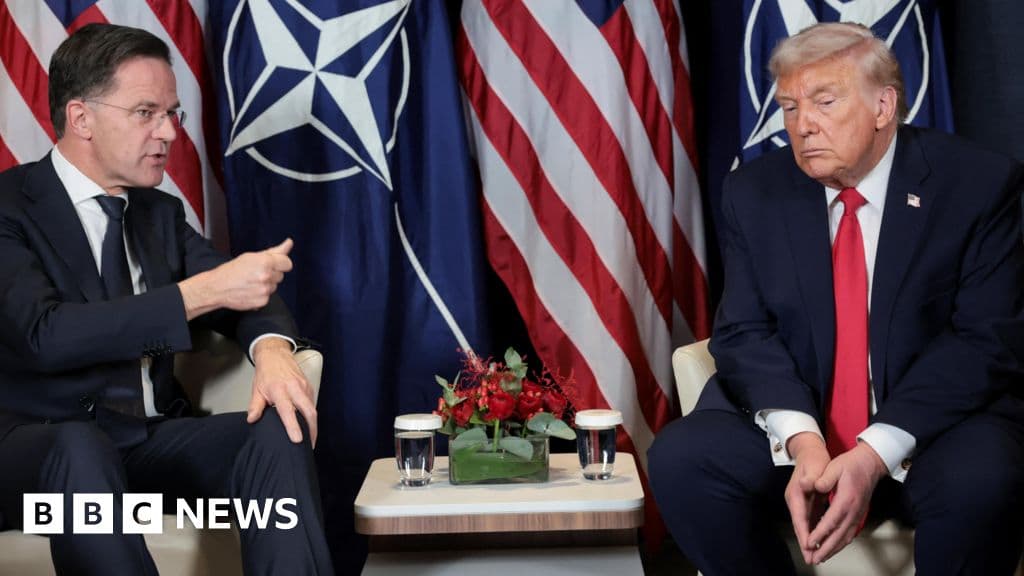
GlipzoIn a recent showdown at the White House, Donald Trump unleashed a barrage of criticism against NATO, accusing the alliance of failing to support the U.S. during the ongoing conflict in Iran. Following a private discussion with NATO Secretary General Mark Rutte, Trump took to Truth Social to voice his discontent, stating, "NATO WASN'T THERE WHEN WE NEEDED THEM, AND THEY WON'T BE THERE IF WE NEED THEM AGAIN." This post underscores the former president's persistent disillusionment with the transatlantic military alliance, especially amid rising global tensions.
During the meeting, which Rutte characterized as "very frank" and "very open," disagreements were evident. Ahead of their discussions on Wednesday, Trump had even hinted at the possibility of withdrawing the U.S. from NATO, particularly after several member countries were reluctant to assist in reopening the Strait of Hormuz to alleviate escalating oil prices. The specific details of the conversation remain undisclosed, but it was anticipated that Rutte would work to persuade Trump of the strategic importance of maintaining U.S. commitment to NATO.
Despite the attempts to mend fences, Trump's skepticism towards NATO is palpable. He believes that the alliance's member countries failed to provide adequate support during Operation Epic Fury, a military initiative aimed at countering threats from Iran. In the weeks leading up to the meeting, Trump has expressed serious contemplation about withdrawing from the alliance altogether, which consists of 32 member nations.
White House Press Secretary Karoline Leavitt reinforced Trump's sentiments, asserting that NATO had been "tested and they failed" when it mattered most. She articulated that many NATO countries had seemingly turned their backs on the American public, who financially support their national defenses. Leavitt suggested that Trump would engage in a "very frank and candid conversation" with Rutte, emphasizing the urgency of the matter.
In a bid to counter Trump's assertions, Rutte highlighted the contributions made by several European nations. He told CNN that a significant majority of European countries had been cooperative, providing vital support in terms of basing, logistics, and overflights. "It's therefore a nuanced picture," Rutte explained, indicating that not all NATO members have been unhelpful in the current crisis.
Rutte's comments also aimed to underscore the cooperative spirit among NATO nations, as they collectively navigate the complexities of the conflict with Iran. When asked about the implications of the war, Rutte confidently stated that the world is “absolutely” safer now due to Trump's leadership in diminishing Iran's nuclear threats. He asserted that most NATO members do not view the military actions in Iran as illegal and agree on the necessity to undermine Iran's nuclear capabilities.
As the situation unfolds, it’s crucial to recognize that the relationship between the U.S. administration and NATO was already strained prior to the conflict with Iran, due in part to disagreements surrounding Trump's controversial ambitions regarding Greenland. Following the meeting with Rutte, Trump reiterated his frustrations, remarking, "REMEMBER GREENLAND, THAT BIG, POORLY RUN, PIECE OF ICE!!!" This statement reflects the broader narrative of discord that has characterized Trump's interactions with NATO.
In late 2023, a significant legislative move was made when the U.S. Congress voted to prohibit any president from unilaterally withdrawing from NATO without the approval of a two-thirds Senate majority or a Congressional act. This decision underscores the entrenched importance of NATO to U.S. foreign policy and national security strategy.
The friction between Trump and NATO raises critical questions about the future of international alliances and U.S. military commitments. As the geopolitical landscape continues to evolve, particularly in the context of the Iran conflict, the effectiveness of NATO as a united front will be under scrutiny. The potential for a major shift in U.S. foreign policy looms large, especially with Trump’s vocal criticisms resonating with a segment of the American populace.
Looking ahead, it’s essential to monitor how this relationship develops. Will NATO adapt to Trump’s demands? Are European allies prepared to bolster their contributions to quell U.S. dissatisfaction? As the conflict in Iran persists, the alliance's cohesion and effectiveness may face unprecedented challenges, making this a pivotal moment in NATO's history. The upcoming discussions and decisions made by both U.S. and NATO leaders will be crucial in determining the future dynamics of global security and cooperation.
The world watches closely as the stakes rise, with the potential for significant repercussions on international relations and military strategy. Can NATO overcome these challenges and reaffirm its role as a pillar of collective security? Only time will tell.

Tensions soar as the US and Iran engage in air strikes near the Strait of Hormuz, raising concerns over global oil supply and regional stability.
BBC World
Trump's international interventions face serious stalemates. What will this mean for U.S. foreign policy? Explore the critical challenges ahead.
Indian Express
Tehran denies resignation of President Masoud Pezeshkian amid claims of IRGC influence. What does this mean for Iran's political stability? Click to learn more!
Indian Express