
Image: BBC Business
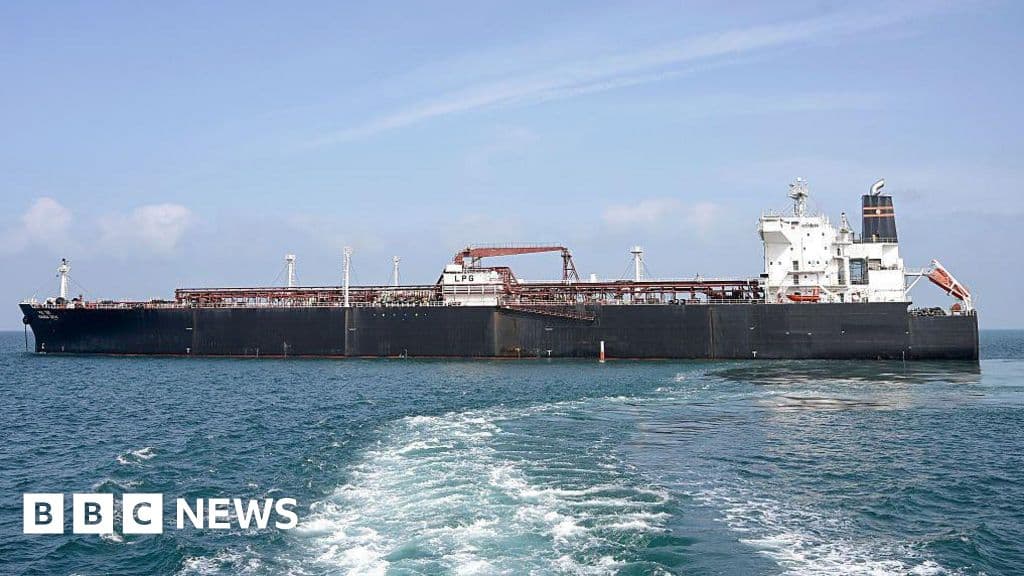
As Trump issues an ultimatum to Iran, Asian nations like the Philippines and Pakistan secure deals for safe passage through the Strait of Hormuz. What happens next?
GlipzoOn a tense Monday morning, U.S. President Donald Trump issued a stark warning to Iran, threatening to take significant military action against the nation if it did not agree to terms regarding the Strait of Hormuz by 8 PM EDT on Tuesday. This ultimatum has intensified scrutiny on this vital shipping corridor, through which a staggering 20% of the world's oil typically flows. As fears of conflict escalate, Asian nations are actively forging agreements with Tehran to ensure their energy needs are met.
The urgency for countries like the Philippines, Pakistan, and India to secure safe passage through the Strait of Hormuz arises from their heavy reliance on oil imports from the Gulf region. The threat of disruption in these critical shipping lanes has prompted these nations to act swiftly, as geopolitical tensions linger in the air.
In a notable development, the Philippines became the latest nation to finalize a deal with Iran, ensuring the safe transit of its vessels through the Strait. Theresa Lazaro, the Philippines' Secretary of Foreign Affairs, emphasized the significance of this agreement during a recent phone call with Iranian officials. She stated, "This agreement is vital for our energy security and the import of fertilizers, which are crucial for our economy."
The Philippines imports an astounding 98% of its oil from the Middle East, making it particularly vulnerable to fluctuations in supply and price. Just recently, the country declared a national energy emergency as domestic petrol prices surged, highlighting the urgency of navigating these diplomatic waters. The agreement with Iran signals a proactive approach by the Philippines, showcasing its willingness to engage with Tehran despite the ongoing tensions involving the U.S.
As the situation unfolds, several other Asian nations have also sought to establish secure maritime routes. Pakistan announced on March 28 that Iran would permit 20 Pakistani ships to traverse the Strait of Hormuz safely. Pakistani Foreign Minister Ishaq Dar praised this development, stating, "This gesture by Iran is a constructive step that highlights the importance of dialogue and diplomacy in resolving conflicts."
India has similarly engaged in talks with Iranian officials. The Iranian Embassy in India reassured that Indian vessels are safe, reflecting a commitment to maintaining open channels amid rising tensions. Subrahmanyam Jaishankar, India's Foreign Minister, confirmed that diplomatic efforts have facilitated the passage of Indian tankers through the strait, underscoring the importance of international cooperation in these trying times.
The Strait of Hormuz has emerged as a critical flashpoint in global geopolitics, particularly following Iranian threats to disrupt shipping in response to U.S. and Israeli military actions. With oil prices experiencing a notable uptick due to these disruptions, the implications of any conflict could echo across global markets, affecting not only the oil supply but also the broader economy.
Analysts emphasize the need for clarity regarding the nature of the agreements between Iran and the various Asian nations. Dimitris Maniatis, a shipping consultant, pointed out that it remains unclear whether the assurances provided by Iran apply universally to all vessels or are limited to certain flagged ships. This ambiguity raises questions about the sustainability and reliability of these agreements in the long term.
As discussions continue, China, recognized as the largest purchaser of Iranian oil, has confirmed that some of its vessels have successfully navigated the Strait of Hormuz. However, specifics regarding these transits have not been disclosed, leaving observers curious about the extent of China's involvement and its implications for regional stability.
Iran's willingness to engage with these nations suggests a strategic approach to compartmentalizing its relationships, with the potential to differentiate between a country's political alliances and its economic interests. Roger Fouquet from the National University of Singapore's Energy Studies Institute notes, "Iran appears to be distinguishing between a country's alliance and its active participation in the conflict," indicating a nuanced diplomatic strategy.
The developments surrounding the Strait of Hormuz are not just a regional concern; they impact global energy markets, international relations, and economic stability. As Asian nations navigate their energy security in this turbulent climate, their relationships with Iran may redefine geopolitical alliances and trade routes.
Looking ahead, the world will be watching closely to see how these agreements play out. Will Iran uphold its promises to ensure safe passage for vessels, or will tensions escalate further? The stakes are high, and the implications of this unfolding situation will resonate far beyond the Strait of Hormuz.
As the deadline set by President Trump approaches, the potential for conflict looms large. However, the actions taken by Asian nations to secure deals with Iran may indicate a shift in diplomatic strategies and alliances in the region. The next few days will be critical in determining whether these agreements will stabilize the situation or if further tensions will arise. The world is on edge, anticipating the next chapter in this complex geopolitical narrative.

Tensions soar as the US and Iran engage in air strikes near the Strait of Hormuz, raising concerns over global oil supply and regional stability.
BBC World
Trump's international interventions face serious stalemates. What will this mean for U.S. foreign policy? Explore the critical challenges ahead.
Indian Express
Tehran denies resignation of President Masoud Pezeshkian amid claims of IRGC influence. What does this mean for Iran's political stability? Click to learn more!
Indian Express