
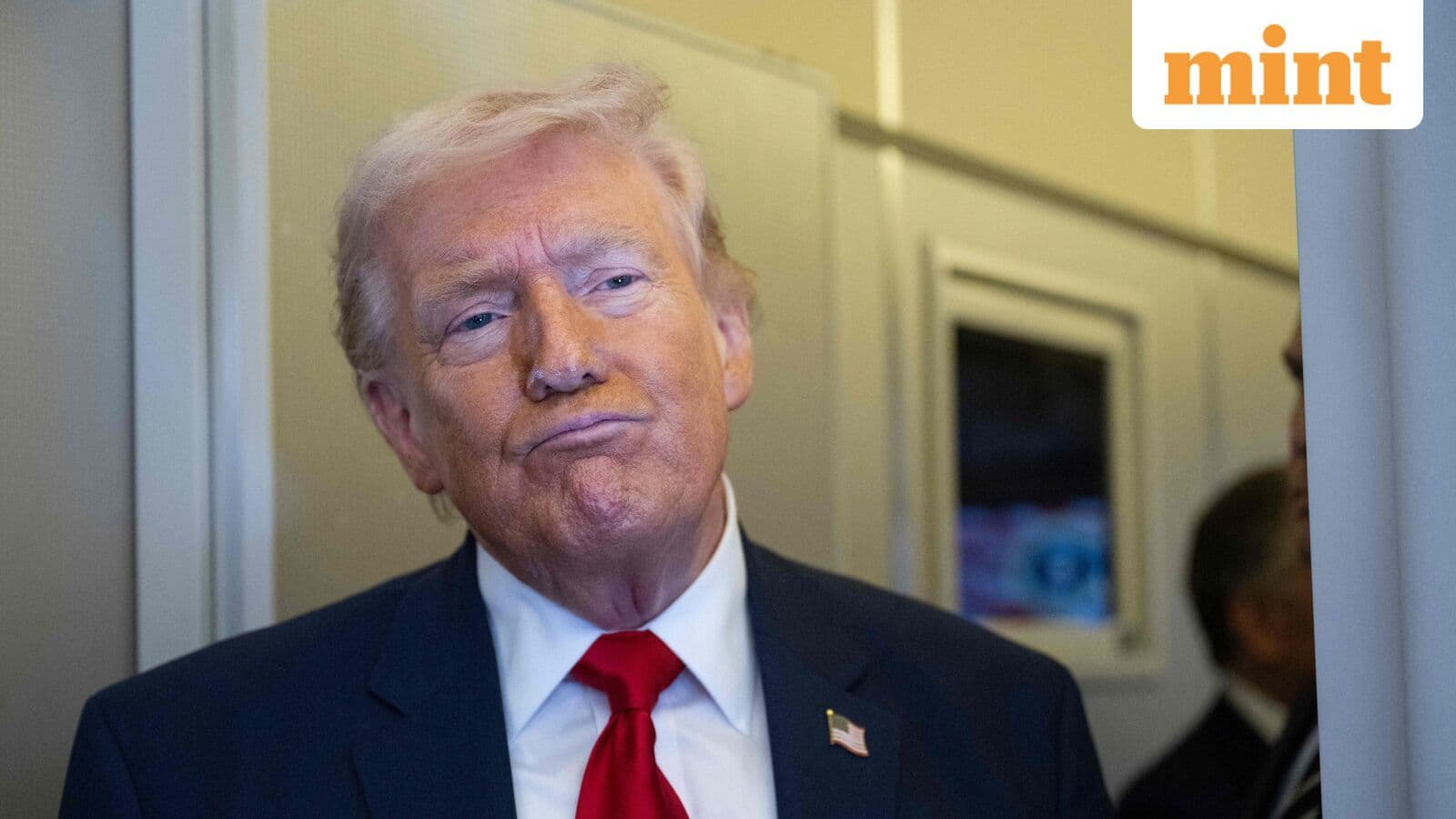
Image: Mint (Business)
Trump calls allies to secure Strait of Hormuz amid rising oil prices and ongoing U.S.-Iran conflict. Will they respond? Click to find out!
GlipzoIn a critical move amid escalating tensions in the Middle East, U.S. President Donald Trump has called upon global allies such as France, Japan, South Korea, Britain, and even China to deploy warships to maintain safety and security in the Strait of Hormuz. This request was made on Saturday, as the conflict involving the U.S. and Israel against Iran enters its 16th day, raising significant concerns over global oil supplies and market stability.
As the situation unfolds, oil prices have reacted dramatically, with reports indicating a spike to $120 per barrel earlier this week. The Strait of Hormuz, a crucial waterway through which approximately 20% of the world's oil passes, has become a focal point in the ongoing conflict. The Islamic Revolutionary Guards Corps (IRGC) of Iran has announced the closure of this strategic passage, which has instigated panic among traders and a ripple effect in the global energy markets.
Chris Wright, the U.S. Energy Secretary, spoke to NBC News, asserting that discussions are ongoing with several countries regarding the situation. He expressed optimism that China would play a constructive role in efforts to reopen the Strait, emphasizing its importance for international oil flow.
In a recent interview with CBS News, Iran's Foreign Minister Abbas Araghchi revealed that several nations have approached Iran seeking safe passage for their vessels. However, he made it clear that the decision lies with Iran's military, stating, "This is up to our military to decide." Araghchi highlighted that while some vessels from various countries have been permitted to navigate the strait, the U.S. and its allies are not welcome.
Araghchi’s comments reflect Iran's broader refusal to engage in dialogue with the U.S. regarding the cessation of hostilities, accusing Washington and its allies of igniting the conflict with coordinated attacks starting on February 28. This defiance underscores the complexity of the situation, where diplomatic solutions seem increasingly elusive.
As Trump seeks international support, UK Energy Secretary Ed Miliband emphasized the importance of collaboration among allies to ensure the Strait of Hormuz is reopened. He reiterated that the most effective method to achieve this goal is to end the ongoing war, hinting at a need for diplomatic resolution.
South Korea's foreign ministry acknowledged Trump's appeal, indicating that it would closely monitor the situation and coordinate with the U.S. This aligns with the expectations that Trump will further discuss the matter with Japan's Prime Minister Sanae Takaichi during her forthcoming visit to the White House on March 21.
France, on the other hand, is taking steps to collaborate with a broader coalition, including European partners and countries in Asia, to formulate an international escort mission for vessels navigating through the Strait. However, President Emmanuel Macron cautioned that such an operation will only proceed when conditions are more favorable, indicating a wait-and-see approach amid ongoing hostilities.
Amid these tensions, the International Energy Agency (IEA) has taken proactive measures by announcing that its 32 member countries have consented to release 400 million barrels of emergency oil into global markets. This decision aims to alleviate fears surrounding supply disruptions stemming from the conflict. The oil from Asia and Oceania will be made available immediately, while supplies from the Americas and Europe are expected to be accessible by the end of March.
The IEA's intervention is crucial in stabilizing global oil markets, as uncertainty looms over the potential for prolonged conflict in the region.
Looking ahead, the international community will be closely watching how the U.S. navigates its relationships with allies in response to the crisis in the Strait of Hormuz. With no immediate commitments from other nations to send ships, the pressure is mounting on the Trump administration to formulate a robust strategy that addresses both security and diplomatic concerns.
The situation remains fluid, and developments in the days to come will be critical. Observers will be keen to see whether diplomatic channels can be reopened amidst the rising tensions and if meaningful negotiations can take place to de-escalate the conflict. As the world watches, the stakes in the Strait of Hormuz have never been higher, potentially impacting global oil supplies and geopolitical stability for years to come.

Tensions soar as the US and Iran engage in air strikes near the Strait of Hormuz, raising concerns over global oil supply and regional stability.
BBC World
Trump's international interventions face serious stalemates. What will this mean for U.S. foreign policy? Explore the critical challenges ahead.
Indian Express
Tehran denies resignation of President Masoud Pezeshkian amid claims of IRGC influence. What does this mean for Iran's political stability? Click to learn more!
Indian Express