
Image: Wired
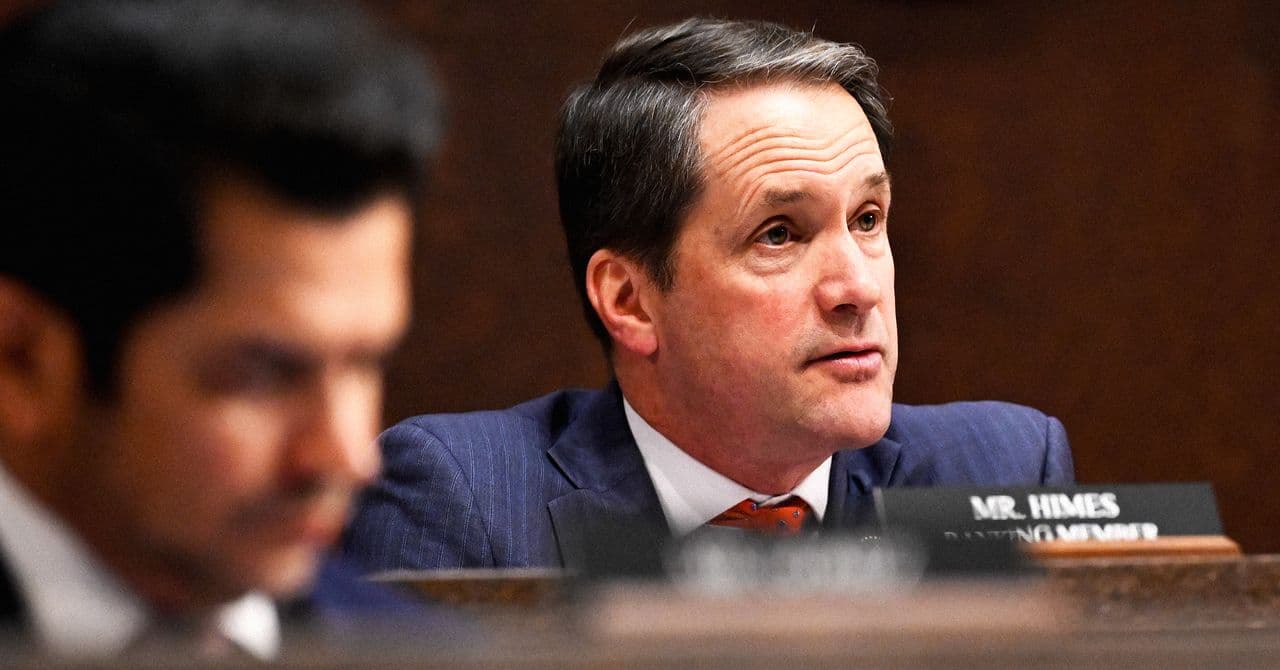
Democrat Jim Himes urges colleagues to support controversial FBI surveillance powers, raising concerns over privacy and oversight amid ongoing debates.
GlipzoIn a surprising move, Jim Himes, a prominent Democrat and the ranking member of the House Intelligence Committee, is actively encouraging his party colleagues to support the continuation of warrantless surveillance of American citizens' communications. This initiative comes amid concerns over privacy and government overreach, as well as the broader implications of surveillance practices under the current administration.
Himes' advocacy centers on the FBI's authority to conduct searches without a warrant, arguing that he has seen no evidence of misuse during the Trump administration. According to a letter obtained by WIRED, Himes is rallying fellow Democrats to back the White House’s request for the renewal of a contentious surveillance program that targets foreign communications but inadvertently captures a large volume of communications from U.S. citizens as well.
The program in question is authorized under Section 702 of the Foreign Intelligence Surveillance Act (FISA), which permits the collection of electronic data from non-U.S. persons located outside the United States. While designed for foreign intelligence gathering, it has raised alarms due to its tendency to collect communications from Americans, often without their consent or knowledge.
Himes references the “56 reforms” passed by Congress in 2024, which he claims have strengthened the oversight of the FBI’s surveillance activities. He asserts that these reforms have effectively prevented domestic misuse of the program, citing a compliance rate that reportedly exceeds 99 percent over the last two years. However, this assertion is met with skepticism from various corners, including civil liberties advocates who question the reliability of this compliance metric.
Critics point to significant changes within the FBI that have compromised the integrity of oversight mechanisms. Notably, the Office of Internal Auditing, which was instrumental in monitoring the FBI’s compliance with legal standards, was disbanded last year under the leadership of FBI director Kash Patel. This unit had previously unearthed numerous instances of improper searches carried out by the FBI, a fact that raises serious questions about the current state of accountability.
Himes' assertion of a high compliance rate is thus called into question, as the infrastructure that once supported this claim is no longer in place. The lack of independent oversight from either Congress or the FISA Court—both of which rely heavily on the FBI and the Justice Department to self-report violations—creates an environment ripe for potential abuses.
In his letter, Himes argues that the extensive oversight provided by all three branches of government ensures that any attempts to misuse the surveillance program would be swiftly detected. However, experts argue that this assertion is misleading. The Foreign Intelligence Surveillance Court operates as a secret court with no investigative capabilities, relying on the Justice Department for information regarding compliance and potential abuses.
Liza Goitein, a senior director at the Brennan Center for Justice, emphasizes that this reliance on self-reporting from the Justice Department is problematic. She notes that the current administration has significantly weakened internal oversight, leading to numerous federal court rebukes for inaccuracies in reporting.
The absence of rigorous checks between the FBI and citizens’ private communications poses a significant risk. Critics argue that the current political climate, coupled with the dismantling of internal controls at the FBI, could leave Americans vulnerable to extensive surveillance overreach. Many fear that such unchecked surveillance will not only infringe on individual privacy rights but could also lead to broader societal implications.
Himes maintains that a short-term reauthorization of Section 702 is necessary, arguing that it will allow Congress to engage in a thorough debate about potential reforms without jeopardizing national security. He suggests that the ongoing discussions about the balance between security and civil liberties must continue, emphasizing the need for compromise.
As Congress deliberates on the future of Section 702, the debate over surveillance powers is expected to intensify. Lawmakers will need to grapple with the pressing issue of privacy versus national security, especially in a landscape where public trust in government oversight is waning.
The upcoming discussions will likely bring to light various proposals aimed at enhancing oversight and accountability within the FBI. Observers will be watching closely to see how the balance between safeguarding civil liberties and addressing national security concerns is navigated. Key points of interest include: - Potential reforms to improve transparency and accountability in surveillance practices. - The role of bipartisan cooperation in addressing this sensitive issue. - Public sentiment towards surveillance and privacy rights, especially in light of recent events.
As the situation develops, it will be crucial for Congress to ensure that any renewal of surveillance powers is accompanied by robust mechanisms to protect the rights of Americans, ensuring that national security does not come at the cost of personal freedoms.

Tensions soar as the US and Iran engage in air strikes near the Strait of Hormuz, raising concerns over global oil supply and regional stability.
BBC World
Trump's international interventions face serious stalemates. What will this mean for U.S. foreign policy? Explore the critical challenges ahead.
Indian Express
Tehran denies resignation of President Masoud Pezeshkian amid claims of IRGC influence. What does this mean for Iran's political stability? Click to learn more!
Indian Express