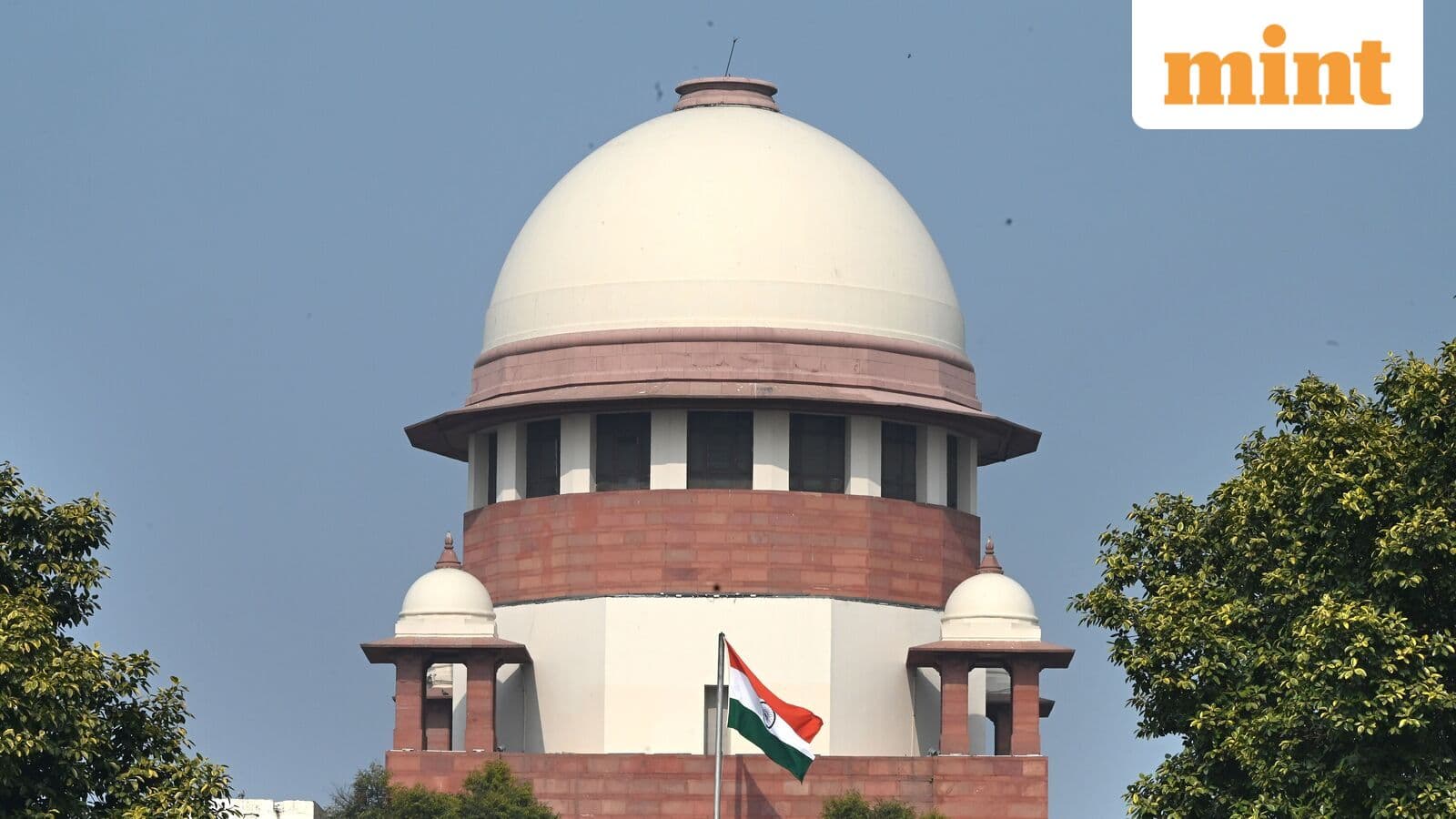
The Supreme Court of India rules that parental income cannot solely determine creamy layer status for OBC reservation, ensuring equitable treatment for all candidates.
Supreme Court Clarifies Creamy Layer Doctrine for OBCs
On **October 26, 2023**, the **Supreme Court of India** issued a landmark ruling regarding the creamy layer doctrine applicable to **Other Backward Classes (OBC)**. The court emphasized that parental income cannot solely determine a candidate’s eligibility for **OBC reservation benefits**. This decision is significant for many candidates who have faced wrongful classification based solely on their parents' earnings from non-government jobs.
The ruling was articulated by a bench comprising Justice P S Narasimha and Justice R Mahadevan. It addressed a long-standing issue where candidates in the Civil Services Examinations challenged their classification under the creamy layer based on parental employment in sectors such as Public Sector Undertakings (PSUs) and private companies. The court underscored the need for a more nuanced approach in evaluating creamy layer status, rather than relying exclusively on income.
Discrimination Against OBC Candidates
The Supreme Court condemned the practice of treating children of PSU and private sector employees differently from those of government servants. The court characterized this differentiation as **hostile discrimination**, which is not permissible under the Indian Constitution. The ruling serves as a reminder that all candidates within the same social class should be treated equally, regardless of their parents’ employment status.
The court’s strong stance against an income-only criteria for creamy layer classification was encapsulated in its statement: “Determination of creamy layer status solely on the basis of income brackets...is clearly unsustainable in law.” This highlights the court's commitment to ensuring that the benefits meant for genuinely backward classes do not fall into the hands of those who are more socially advanced within the OBCs.
Importance of Status over Income
The ruling draws upon the objectives of the creamy layer concept, aiming to prevent well-off individuals from monopolizing reservation benefits. The court noted that its purpose is to **ensure equity** and not establish arbitrary distinctions among similarly situated members of the OBC community. As articulated, “the object of excluding the creamy layer is to ensure that socially advanced sections within the OBCs do not appropriate benefits meant for the genuinely backward.”
This judgment not only reinforces the original intent of the creamy layer criteria established in the 1993 Office Memorandum but also aligns with subsequent clarifications made in a 2004 letter from the central government. Both documents underscore the importance of evaluating the status or post held by a candidate's parents rather than simply their income.
Affirmation of Lower Court Decisions
The Supreme Court's ruling also reaffirmed decisions from various High Courts, including those of **Madras, Kerala, and Delhi**, which had previously ruled in favor of candidates who argued they were wrongly categorized due to their parents' employment in non-government sectors. Many of these High Court decisions relied on the foundational criteria set forth in the 1993 memorandum, which the Supreme Court has now upheld.
This judicial endorsement serves as a significant milestone for candidates seeking OBC Non-Creamy Layer status for competitive examinations. It provides a clearer framework for evaluating eligibility and reinforces the principle that social mobility should be considered when determining the creamy layer status.
Historical Context of the Creamy Layer Doctrine
The concept of the creamy layer has its origins in the **Supreme Court’s 1992 Indra Sawhney ruling**, which upheld a **27% OBC reservation** in government jobs and educational institutions, while simultaneously establishing that those in the creamy layer should be excluded from these benefits. This principle is crucial in ensuring that the intended advantages of reservation policies reach those who are genuinely disadvantaged.
The court has consistently maintained that while income can indicate social advancement, it should not be the sole criterion for eligibility. The broader aim of reservation policies is to support those who have not yet achieved economic or social progress, ensuring a fair distribution of opportunities.
Conclusion: A Step Toward Equitable Opportunities
The **Supreme Court's ruling** on the creamy layer doctrine marks a pivotal moment in the ongoing quest for equitable opportunities within the OBC categories. By clarifying that parental income is not the only determinant for creamy layer status, the court has paved the way for a more just evaluation process, protecting the rights of candidates who may otherwise be wrongly classified.
This decision is expected to have far-reaching implications for civil service aspirants and other competitive examinations, enabling a more inclusive approach to reservation policies that truly reflects the socio-economic realities of the community.
Key Highlights:
- **Supreme Court emphasizes** that parental income cannot solely define OBC creamy layer status.
- The ruling condemns **hostile discrimination** against candidates from non-government sectors.
- It reaffirms the principle that status and post held by parents should be considered.
- The court supports previous High Court rulings favoring candidates seeking OBC Non-Creamy Layer status.
Keywords:
- creamy layer doctrine, OBC reservation, Supreme Court ruling, parental income, civil services examination
Category:
Politics