Glipzo
WorldTechnologyBusinessSportsEntertainmentScienceHealthPolitics
Glipzo
WorldTechnologyBusinessSportsEntertainmentScienceHealthPolitics
  1. Home
  2. /
  3. Business
  4. /
  5. Shocking Truth: Your Old Clothes Could End Up in Chile's Desert
Shocking Truth: Your Old Clothes Could End Up in Chile's Desert

Image: BBC Business

Business
Monday, April 20, 20264 min read

Shocking Truth: Your Old Clothes Could End Up in Chile's Desert

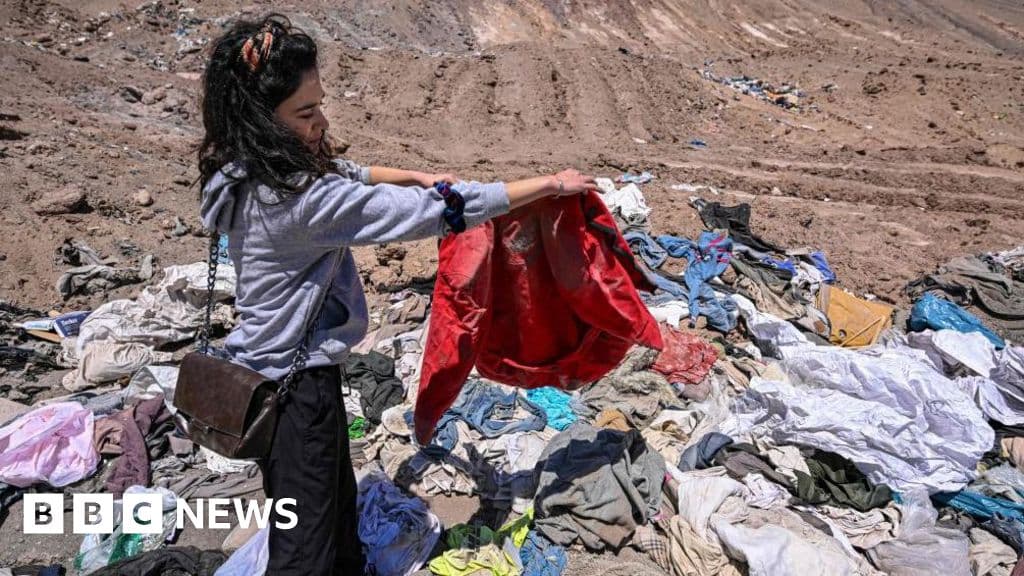
Discover the shocking truth about your recycled clothes: many end up illegally dumped in Chile's Atacama Desert. What can be done to change this?

Glipzo News Desk|Source: BBC Business
Share
Glipzo

Key Highlights

  • Over 39,000 tonnes of clothing are illegally dumped in the Atacama Desert each year.
  • Chile imports 123,000 tonnes of second-hand clothing annually, creating jobs but also waste.
  • Local authorities struggle to manage the illegal dumping of unsold clothing.
  • Innovative solutions aim to repurpose waste clothing and promote sustainability.
  • The future of the fashion industry hinges on balancing economic opportunity with environmental responsibility.

In this article

  • The Hidden Journey of Your Recycled Clothes Have you ever wondered what happens to your old clothes after you drop them off at a recycling bank? For many, the answer is unsettling. Instead of being recycled or reused, **millions of garments** might end up illegally discarded in the **Atacama Desert** in northern **Chile**. This shocking reality highlights a troubling aspect of the second-hand clothing trade that many consumers are unaware of.
  • How the System Works: The Good and the Bad While many garments find new homes in local markets or are exported to other Latin American countries, a significant portion fails to sell and faces a grim fate. According to estimates, around **39,000 tonnes** of clothing are illegally dumped each year in the desert. This has raised serious environmental and ethical concerns about the fashion industry and recycling practices.
  • The Dark Side of Second-Hand Clothing Trade Despite the economic benefits, the **Alto Hospicio** area faces significant challenges regarding the management of unsold clothing. The local landfill is only available for household waste, leaving traders with limited options for disposal. **Miguel Painenahuel**, a planning official in Alto Hospicio, notes the difficulty of monitoring illegal dumping. "There are so many trucks dumping clothes it's really hard to keep on top of it! We don't have the resources," he admits.
  • Innovative Solutions: Turning Waste into Opportunity In response to this growing issue, innovative solutions are being explored. **Luis Martínez**, the executive director of the **Centro Tecnológico de Economía Circular** (CircularTec), is at the forefront of efforts to address the surplus of unsold clothing. His organization focuses on promoting the reuse of resources, aiming to prevent waste and create sustainable practices within the clothing trade.
  • The Future of Clothing Recycling in Chile As the demand for second-hand clothing continues to grow, Chile faces a critical juncture. The balance between economic opportunity and environmental responsibility must be carefully managed. With increasing scrutiny on the fashion industry and its impact on the planet, consumers and businesses alike are beginning to recognize the importance of sustainable practices.

The Hidden Journey of Your Recycled Clothes Have you ever wondered what happens to your old clothes after you drop them off at a recycling bank? For many, the answer is unsettling. Instead of being recycled or reused, **millions of garments** might end up illegally discarded in the **Atacama Desert** in northern **Chile**. This shocking reality highlights a troubling aspect of the second-hand clothing trade that many consumers are unaware of.

Every year, Chile imports a staggering 123,000 tonnes of used clothing, primarily through the Iquique Free Trade Zone (Zofri). Established in 1975 to boost economic development, Zofri allows businesses to import and sell goods without incurring customs duties or VAT, which has made it a hotspot for second-hand clothing imports from countries like the US, Canada, Europe, and Asia.

How the System Works: The Good and the Bad While many garments find new homes in local markets or are exported to other Latin American countries, a significant portion fails to sell and faces a grim fate. According to estimates, around **39,000 tonnes** of clothing are illegally dumped each year in the desert. This has raised serious environmental and ethical concerns about the fashion industry and recycling practices.

Felipe González, the general manager of Zofri, explains that the importation of used clothing has created job opportunities, especially for local women. "It's a sector that gives the most work to local women in the region," he states, highlighting the importance of this industry for the community. Many of these women are involved in categorizing clothing based on quality, making it accessible work for those without formal qualifications.

The Dark Side of Second-Hand Clothing Trade Despite the economic benefits, the **Alto Hospicio** area faces significant challenges regarding the management of unsold clothing. The local landfill is only available for household waste, leaving traders with limited options for disposal. **Miguel Painenahuel**, a planning official in Alto Hospicio, notes the difficulty of monitoring illegal dumping. "There are so many trucks dumping clothes it's really hard to keep on top of it! We don't have the resources," he admits.

The lack of enforcement has resulted in a widespread problem, with unscrupulous traders choosing to either burn or dump unwanted clothes in the desert rather than facing the costs associated with legal disposal methods. The environmental impact of this practice is staggering, contributing to pollution and damaging the arid landscape.

Innovative Solutions: Turning Waste into Opportunity In response to this growing issue, innovative solutions are being explored. **Luis Martínez**, the executive director of the **Centro Tecnológico de Economía Circular** (CircularTec), is at the forefront of efforts to address the surplus of unsold clothing. His organization focuses on promoting the reuse of resources, aiming to prevent waste and create sustainable practices within the clothing trade.

Martínez's recent initiatives include the construction of a factory dedicated to refashioning and repurposing unsold garments. "We don't want the Atacama Desert to be famous as a tourist attraction where visitors can see mountains of clothes," he asserts, emphasizing the need for a more sustainable approach to clothing disposal.

The Future of Clothing Recycling in Chile As the demand for second-hand clothing continues to grow, Chile faces a critical juncture. The balance between economic opportunity and environmental responsibility must be carefully managed. With increasing scrutiny on the fashion industry and its impact on the planet, consumers and businesses alike are beginning to recognize the importance of sustainable practices.

Potential developments to watch for include: - The establishment of more recycling facilities to process unsold clothing. - Stricter regulations on the disposal of second-hand garments to curb illegal dumping. - Increased awareness campaigns aimed at educating consumers on the implications of their recycling habits.

In summary, the journey of your recycled clothes could take a dark turn, but with innovative solutions on the horizon, there is hope for a more sustainable future. As awareness grows, the fashion industry may shift towards practices that prioritize the planet, ensuring that the Atacama Desert is not known for its discarded textiles but for its natural beauty instead.
Did you find this article useful? Share it!

Share

Related Articles

Oil Prices Surge Amid Rising Tensions in Strait of Hormuz
Business
Apr 20, 2026

Oil Prices Surge Amid Rising Tensions in Strait of Hormuz

Oil prices soar as tensions rise between the US and Iran over the Strait of Hormuz. What does this mean for global energy markets? Click to find out!

BBC Business
UK Fuel Prices Drop After Weeks of Increases Amid Crisis
Business
Apr 18, 2026

UK Fuel Prices Drop After Weeks of Increases Amid Crisis

UK fuel prices finally dip after weeks of increases tied to the US-Israel war. What does this mean for drivers? Read on to find out more!

BBC Business
Oil Prices Dive as Iran Declares Strait of Hormuz 'Open'
Business
Apr 18, 2026

Oil Prices Dive as Iran Declares Strait of Hormuz 'Open'

Oil prices dropped sharply after Iran stated the Strait of Hormuz is open for commercial traffic during the ceasefire in the US-Israel conflict.

BBC Business

Categories

  • World
  • Technology
  • Business
  • Sports

More

  • Entertainment
  • Science
  • Health
  • Politics

Explore

  • Web Stories
  • About Us
  • Contact

Legal

  • Privacy Policy
  • Terms of Service

© 2026 Glipzo. All rights reserved.