
Image: BBC Business
Oil prices dropped sharply after Iran stated the Strait of Hormuz is open for commercial traffic during the ceasefire in the US-Israel conflict.
GlipzoIn a surprising turn of events, oil prices have sharply decreased after Iran announced that the Strait of Hormuz would be "completely open" to commercial vessels for the duration of the ceasefire in the ongoing conflict involving the US and Israel. The price of Brent crude plummeted to $88 per barrel, a significant decline from its earlier price of over $98 on Friday, showcasing the immediate impact of geopolitical developments on global oil markets.
The Strait of Hormuz, a vital maritime corridor located south of Iran, is crucial for the transportation of approximately 20% of the world's oil and liquefied natural gas. The recent conflict had severely restricted tanker traffic, causing prices to soar due to reduced supply.
Iranian Foreign Minister Abbas Araghchi stated, "The passage for all commercial vessels through the Strait of Hormuz is declared completely open for the remaining period of ceasefire." This announcement has sparked optimism in global financial markets, evident in the S&P 500 index rising by 1.2%, while both the Cac index in Paris and Dax in Frankfurt saw increases of around 2%. The FTSE 100 in London also rose, closing up 0.7%.
Since late February, when military strikes by the US and Israel intensified, the Strait of Hormuz had effectively been closed, leading to a drastic slowdown in tanker traffic. This blockade resulted in a significant reduction of oil and gas supplies available on global markets, pushing prices to alarming levels. Prior to the conflict, Brent crude was trading below $70 per barrel, but it surged to over $100 and peaked at more than $119 in March.
Despite the optimistic declaration from Iran, concerns remain regarding the safety of maritime operations in the region. The Baltic and International Maritime Council (BIMCO) has cautioned shipping companies about potential risks. Jakob Larsen, BIMCO's chief safety and security officer, commented, "The status of mine threats in the traffic separation scheme is unclear and BIMCO believes shipping companies should consider avoiding the area. This means that the Traffic Separation Scheme is not declared safe for transit at this point."
As the situation unfolds, the International Maritime Organization (IMO) is actively trying to verify Iran's commitment to reopening the Strait of Hormuz. IMO Secretary-General Arsenio Dominguez stated on social media, "We are currently verifying the recent announcement related to the reopening of the Strait of Hormuz, in terms of its compliance with freedom of navigation for all merchant vessels and secure passage using the IMO established traffic separation scheme."
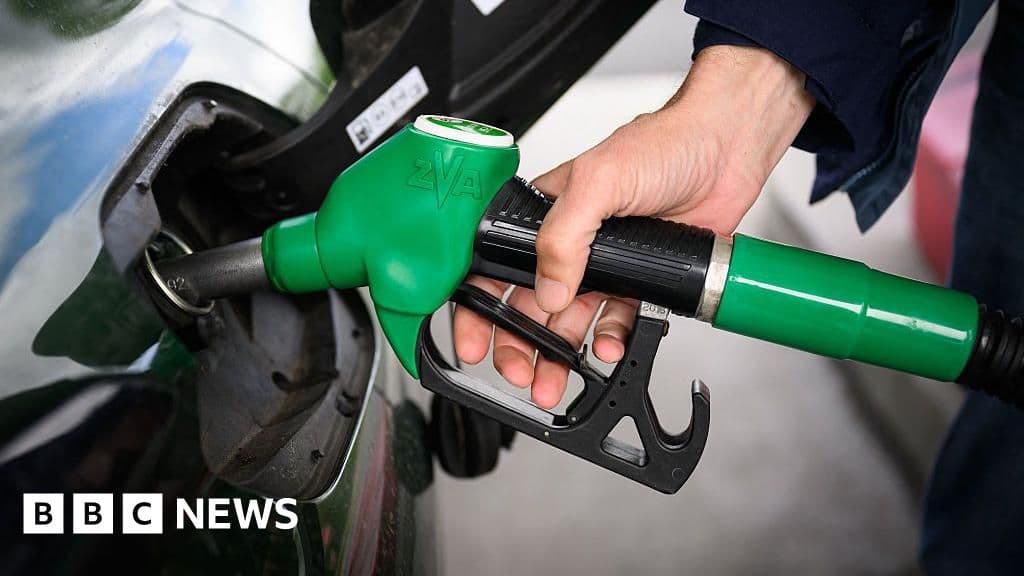
The volatility in oil prices has not only affected traders but has also had repercussions for consumers. Rising oil prices have led to increased costs for petrol and diesel, raising concerns among drivers. Moreover, the potential for supply disruptions has raised alarms in the aviation sector, with fears that airlines might have to suspend flights due to jet fuel shortages.
Additionally, the conflict has impacted agricultural supplies, particularly fertilizers, as one-third of the world's key fertilizer chemicals traverse the Strait. This disruption raises the prospect of heightened food prices, compounding the effects of the ongoing war.
Interestingly, just hours before Araghchi's announcement, the RAC, a leading motoring group in the UK, reported a slight decrease in petrol and diesel prices for the first time since the US-Israel conflict began. Prices at the pump began to ease on Thursday and continued to decline on Friday, although they remain significantly higher than in February.
Iran's declaration about reopening the Strait of Hormuz coincided with a ceasefire agreement between Israel and Lebanon, adding to the complexity of the political landscape. US President Donald Trump welcomed the news, expressing his gratitude through a post on Truth Social, where he stated, "IRAN HAS JUST ANNOUNCED THAT THE STRAIT OF IRAN IS FULLY OPEN AND READY FOR FULL PASSAGE. THANK YOU!" He further claimed that Iran had committed to never closing the Strait again, indicating a shift in the regional power dynamics.
However, Trump also noted that a naval blockade of Iran would continue until a permanent resolution to the conflict is reached, emphasizing the ongoing tensions in the region despite the optimistic announcements.
As the situation in the Strait of Hormuz evolves, all eyes will be on the international community's response and whether Iran's commitment to keeping the waterway open will hold. The implications for global oil prices, shipping operations, and even food supply chains are substantial. Analysts will be closely monitoring the reactions from maritime organizations and shipping companies, which will play a pivotal role in determining the safety of transit through this critical region.
In the coming weeks, expect further developments as the IMO and BIMCO work to ensure safe passage for commercial vessels. Additionally, the potential impact on oil prices, consumer costs, and global markets will remain a focal point for investors and policymakers alike. The tension between geopolitical maneuvers and economic stability continues to shape the narrative of this unfolding crisis.
Commercial LPG prices have risen again, with increases of ₹42 in Delhi and ₹53.50 in Kolkata impacting businesses and consumers alike. Find out more.
Indian Express
Discover how a tragic coal mine explosion in Shanxi, China, reveals ongoing safety concerns in the industry amidst a push for green energy.
BBC Business
Montek Singh Ahluwalia highlights key economic challenges for India, emphasizing the need for a strategic approach to balance payments and investment.
Indian Express