
Image: BBC World
Discover the U.S. refugee policy shift: 4,499 admitted, mostly South Africans. What does this mean for international relations and future admissions?
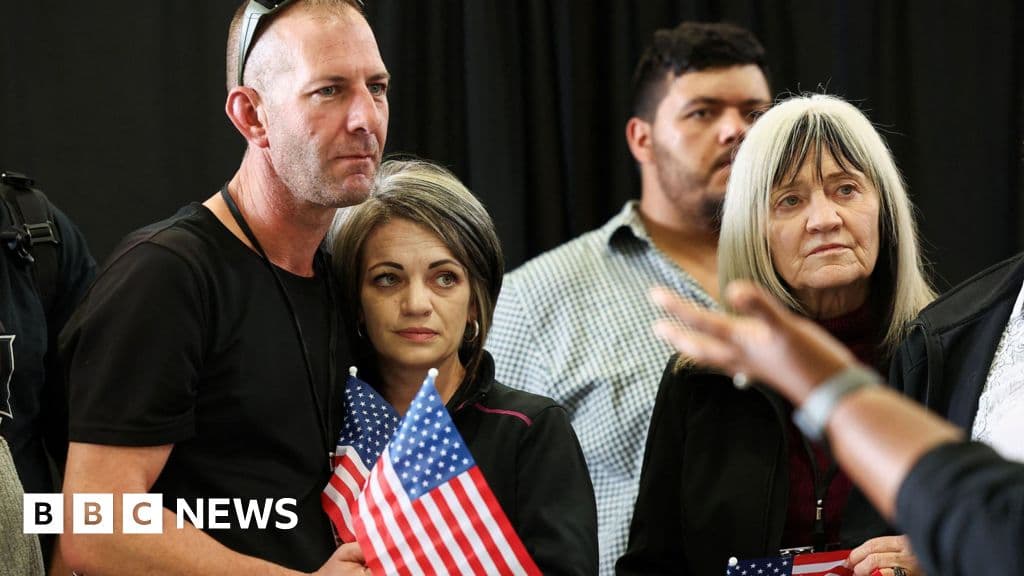
GlipzoIn a surprising turn of events, the United States has admitted 4,499 refugees since October 2025, with a striking 99.9% majority hailing from South Africa. This shift in refugee policy reflects the implications of President Donald Trump’s administration, which has redefined the landscape of who qualifies for refuge in the U.S. The data, released by the Refugee Processing Center, indicates that only three refugees from Afghanistan were included in this recent influx.
Under the previous Biden administration, which began in October 2023, the U.S. had a much broader acceptance rate, welcoming 125,000 refugees from 85 different countries. This contrasts sharply with Trump’s earlier policy that halted all admissions from war-torn regions while enabling specific groups like Afrikaners—a white minority in South Africa— to seek asylum.
Since Trump returned to office, diplomatic relations between the U.S. and South Africa have become increasingly strained. In an earlier statement, Trump suggested that prioritizing Afrikaners was a response to what he described as their persecution. However, the South African government has vigorously objected to this characterization, arguing that it misrepresents the reality on the ground.
The South African ambassador to the U.S., Ebrahim Rasool, faced expulsion after accusing Trump of promoting a narrative of “white victimhood”, which he labeled as supremacist. Tensions escalated when Trump confronted Cyril Ramaphosa, the South African President, in an Oval Office meeting earlier this year, reiterating claims of genocide against white farmers in South Africa. Ramaphosa countered these claims, supported by John Steenhuisen, leader of the Democratic Alliance, who emphasized that most farmers wished to remain in South Africa and contribute positively to the nation.
The shift in U.S. refugee policy is more than just numbers—it's indicative of broader political narratives and international relations. The South African government has publicly denounced the prioritization of Afrikaners, asserting that claims of widespread white genocide have been discredited and lack substantive evidence. Prominent figures from the Afrikaner community, including academics and business leaders, have also voiced their concerns, labeling the relocation plan as racist. Their open letter underscores a significant divide between the U.S. perception and South Africa's realities.
As the first group of 68 South African refugees arrived in the U.S. in May 2022, the numbers have steadily increased, with 2,848 refugees arriving during the early months of 2023. The highest concentration of these refugees is currently in Texas, where 543 individuals have resettled, integrating into various local communities.
Looking ahead, the future of U.S. refugee admissions remains uncertain. With ongoing tensions between the U.S. and South Africa, the landscape could change depending on political pressures and international relations. As the Biden administration's policies come under scrutiny and Trump's narrative continues to gain traction, the question arises: will the U.S. continue to prioritize refugees based on race and national origin?
As this situation evolves, it’s important to keep an eye on how these policies affect both the refugees seeking safety and the geopolitical dynamics at play. The implications of these changes resonate not only in the U.S. but also in countries grappling with issues of race, identity, and human rights.
Go to BBCAfrica.com for more updates from the African continent and follow us on Twitter @BBCAfrica, Facebook at BBC Africa, or Instagram at bbcafrica for the latest developments in global affairs.

Tensions soar as the US and Iran engage in air strikes near the Strait of Hormuz, raising concerns over global oil supply and regional stability.
BBC World
Trump's international interventions face serious stalemates. What will this mean for U.S. foreign policy? Explore the critical challenges ahead.
Indian Express
Tehran denies resignation of President Masoud Pezeshkian amid claims of IRGC influence. What does this mean for Iran's political stability? Click to learn more!
Indian Express