
Image: BBC World
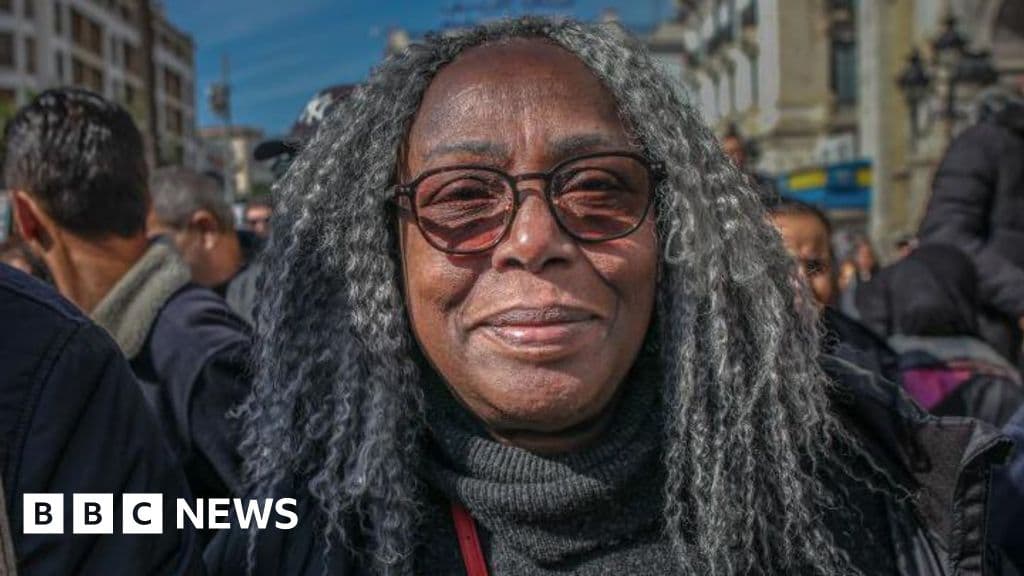
Saadia Mosbah, a leading anti-racism activist in Tunisia, has been sentenced to eight years in prison, raising alarms over human rights in the region. What’s next?
GlipzoIn a troubling development for human rights in Tunisia, Saadia Mosbah, a prominent anti-racism activist, has been sentenced to eight years in prison following her conviction on charges of money laundering and illicit enrichment. The court also imposed a hefty fine of £26,000 ($35,000). This verdict has sparked widespread outrage among human rights advocates and civil society organizations, who view it as a significant blow to the struggle for equality and justice in the North African nation.
Mosbah, aged 66, is the head of the anti-racism group Mnèmty. Her activism has been particularly vocal concerning the rights of sub-Saharan migrants in Tunisia, a community facing increased hostility and discrimination. The situation has grown more dire since a controversial speech by President Kais Saied in 2023, where he labeled migrants as a demographic threat, framing their presence in the country as problematic.
Since the dissolution of parliament by President Saied in 2021, there has been a marked decline in civil liberties and political freedoms within Tunisia. Opposition figures and various human rights organizations have expressed alarm at what they describe as a systematic dismantling of civil society. The government's actions have included the suspension of activities for key organizations, such as the Tunisian Forum for Economic and Social Rights and the Association of Democratic Women. These organizations have been recognized for their defense of civil liberties, making the crackdown particularly concerning.
Mosbah's lawyer, Hela Ben Salem, described the verdict as a shocking development. She asserted that it forms part of a broader strategy to undermine civil society groups, shifting the blame for the state's failures regarding migration onto these organizations. This highlights the precarious position of activists in Tunisia, where dissent is increasingly met with severe repercussions.
During the recent court hearing, Mosbah was tried alongside other activists, with all pleading not guilty. The court's decision to impose such a lengthy sentence raises critical questions about the legal environment for activists in Tunisia. Her son received a three-year prison sentence, while another campaigner was sentenced to two years in jail.
In a statement released just before the hearing, the Observatory for the Protection of Human Rights Defenders and the World Organisation Against Torture called for Mosbah's immediate release, citing her age and health concerns. They noted that her prosecution is indicative of a broader pattern of escalating repression against civil society in Tunisia, which includes media smear campaigns and new restrictions on NGOs focused on migration.
The timing of Mosbah's sentencing is critical, as Tunisia grapples with a rising tide of migration from across Africa. The country has increasingly become a transit point for migrants seeking to reach Europe, leading to heightened pressure on the government to manage this complex humanitarian situation. In response, authorities have ramped up security measures and enacted tougher legal frameworks to combat irregular migration networks. This has resulted in the deportation of thousands of migrants back to their home countries, raising humanitarian concerns.
Rights organizations warn that these measures not only threaten the safety of migrants but also significantly hinder humanitarian efforts. The crackdown on civil society risks further narrowing the space for independent advocacy, which is essential for addressing the rights of migrants and other marginalized communities.
The conviction of Saadia Mosbah serves as a stark reminder of the fragile state of human rights and civil liberties in Tunisia. As the government intensifies its crackdown on dissent, the implications for activists and civil society groups are profound. The focus on Mosbah's case underscores the growing risks faced by those advocating for marginalized communities, particularly in the context of rising anti-migrant sentiment fueled by political rhetoric.
This situation is not just a local issue; it resonates globally as countries grapple with migration and human rights. Observers are closely monitoring how this case will impact the broader landscape of activism in Tunisia. Will it deter future advocacy, or will it galvanize more support for human rights defenders?
As Tunisia faces increasing scrutiny from international organizations and human rights bodies, the path forward remains uncertain. Activists and advocates are likely to continue their fight for justice, but the government's ongoing repression poses significant challenges. The international community must remain vigilant, advocating for the rights of individuals like Mosbah and supporting civil society organizations that play a crucial role in defending human rights.
The upcoming months will be critical in determining whether Tunisia will choose to uphold its commitments to human rights or continue down a path of repression. All eyes are on the developments surrounding Mosbah's case and the government's responses to growing domestic and international pressure.

Tensions soar as the US and Iran engage in air strikes near the Strait of Hormuz, raising concerns over global oil supply and regional stability.
BBC World
Trump's international interventions face serious stalemates. What will this mean for U.S. foreign policy? Explore the critical challenges ahead.
Indian Express
Tehran denies resignation of President Masoud Pezeshkian amid claims of IRGC influence. What does this mean for Iran's political stability? Click to learn more!
Indian Express