
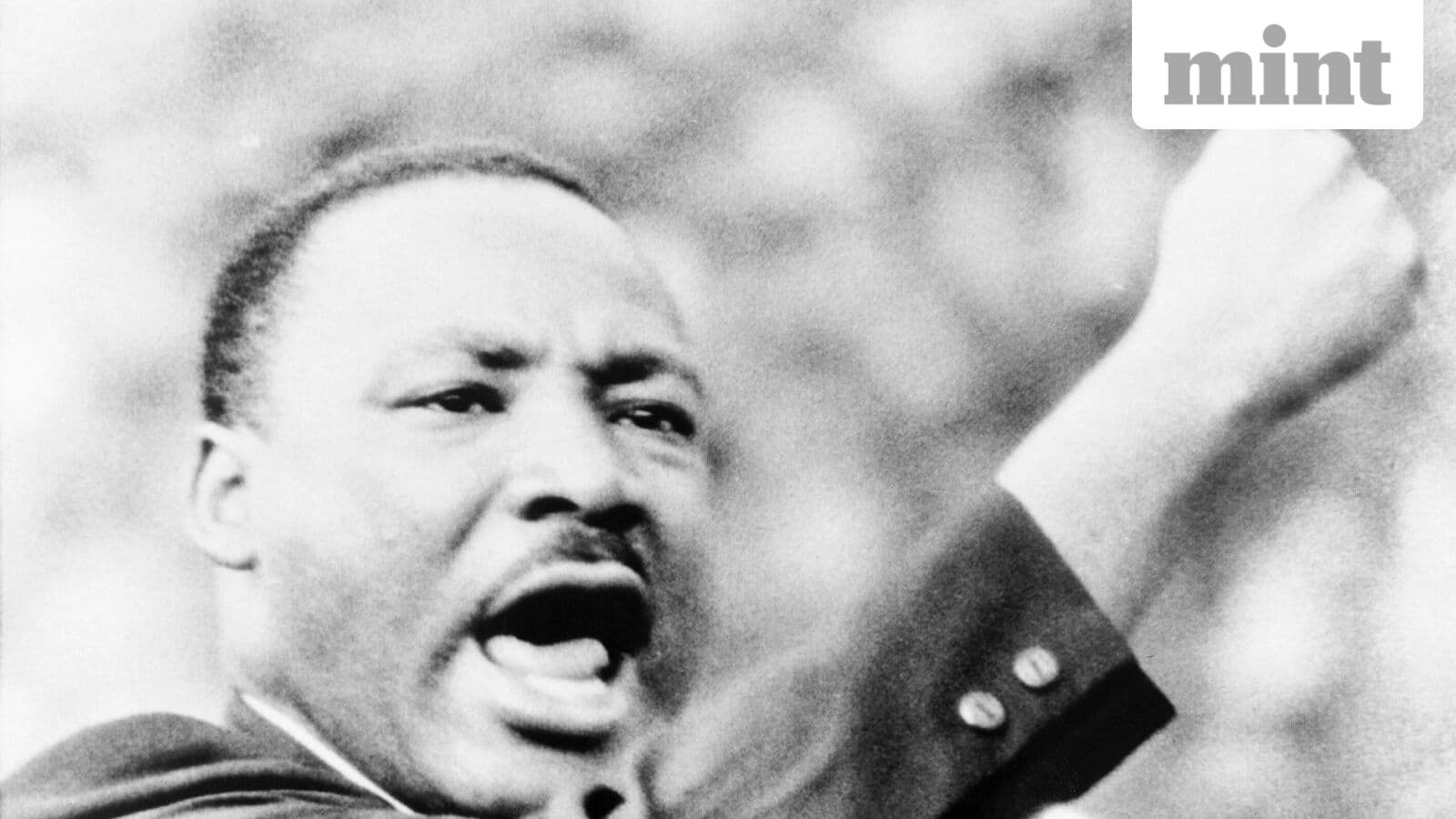
Image: Mint (Business)
Discover the profound wisdom of Martin Luther King Jr. on nonviolence and empathy as powerful tools for social change in today's polarized world.
GlipzoIn a world often clouded by division and anger, Martin Luther King Jr.’s profound assertion that 'darkness cannot drive out darkness' resonates more than ever. This idea, first eloquently expressed in a sermon during 1957 and later included in his influential book Strength to Love, serves as a powerful reminder of the enduring value of empathy and nonviolence in the pursuit of justice.
King’s philosophy emerged during a time of intense racial strife in America, marked by systemic oppression and violence. He led significant efforts, including the Montgomery Bus Boycott, where he faced constant threats to his life, including the bombing of his own home. Instead of responding to hatred with more hatred, King championed the strategy of nonviolent resistance, a decision grounded in a deep understanding of the dynamics of conflict.
In the face of severe hostility, King brilliantly recognized that responding with aggression would only legitimize the oppressor’s tactics. By choosing not to retaliate, he not only maintained moral superiority but also effectively disrupted the machinery of segregation. His philosophy transformed the nature of resistance into a powerful societal force.
The Montgomery Bus Boycott lasted an impressive 381 days, showcasing that marginalized communities could enact significant change by withdrawing their support from corrupt systems. This movement illustrated that nonviolent actions could lead to profound economic and social shifts without resorting to violence.
King’s assertion about light and love as forces of change remains relevant across various contexts today, including polarized societies and corporate environments. His message emphasizes that responding to aggression with kindness and understanding creates a new paradigm, breaking the cycle of retaliation.
In contemporary organizational settings, leaders who react to challenges with hostility risk compromising their integrity and effectiveness. Instead, embracing King’s approach encourages the establishment of psychological safety and ethical standards, fostering environments where constructive dialogue and respect prevail over conflict.
Throughout his journey, King consistently demonstrated the profound application of his philosophy under immense pressure. Whether founding the Southern Christian Leadership Conference or leading the monumental March on Washington, he remained steadfast in his commitment to nonviolence amidst societal upheaval.
During the Birmingham campaign, for instance, King meticulously trained activists to endure violence without retaliation. This disciplined approach not only showcased the power of nonviolent resistance but also highlighted the potential for change through steadfast moral courage.
King's legacy serves as a blueprint for modern movements advocating for justice and equality. Even as more militant factions emerged, advocating for immediate results through force, King remained unwavering in his belief in nonviolence. His commitment to this principle not only shaped the civil rights movement but also laid the groundwork for future generations of activists.
Today, as we navigate through social and political challenges, King's teachings remind us of the importance of patience and resilience. The ability to confront hatred with empathy can foster a culture of understanding, paving the way for transformative change.
In a world that often seems divided, the teachings of Martin Luther King Jr. encourage us to reassess our approaches to conflict resolution. As we reflect on his powerful message, it is essential to consider: - How can we apply nonviolent principles in our own lives and communities? - What role does empathy play in resolving current societal divisions? - Are we prepared to uphold the standards of dialogue and respect that King exemplified?
As we continue to grapple with issues of inequality and injustice, let us remember that darkness cannot drive out darkness. By embracing King’s philosophy of nonviolence and empathy, we can illuminate the path toward a more equitable and compassionate society. The challenge now lies in applying these lessons to our everyday interactions and broader societal structures, ensuring that the legacy of King continues to inspire future generations.

Tensions soar as the US and Iran engage in air strikes near the Strait of Hormuz, raising concerns over global oil supply and regional stability.
BBC World
Trump's international interventions face serious stalemates. What will this mean for U.S. foreign policy? Explore the critical challenges ahead.
Indian Express
Tehran denies resignation of President Masoud Pezeshkian amid claims of IRGC influence. What does this mean for Iran's political stability? Click to learn more!
Indian Express