
Image: Indian Express
ITBP jawan Vikas Singh takes a bold stand for justice after his mother's amputation due to alleged medical negligence. What happens next?
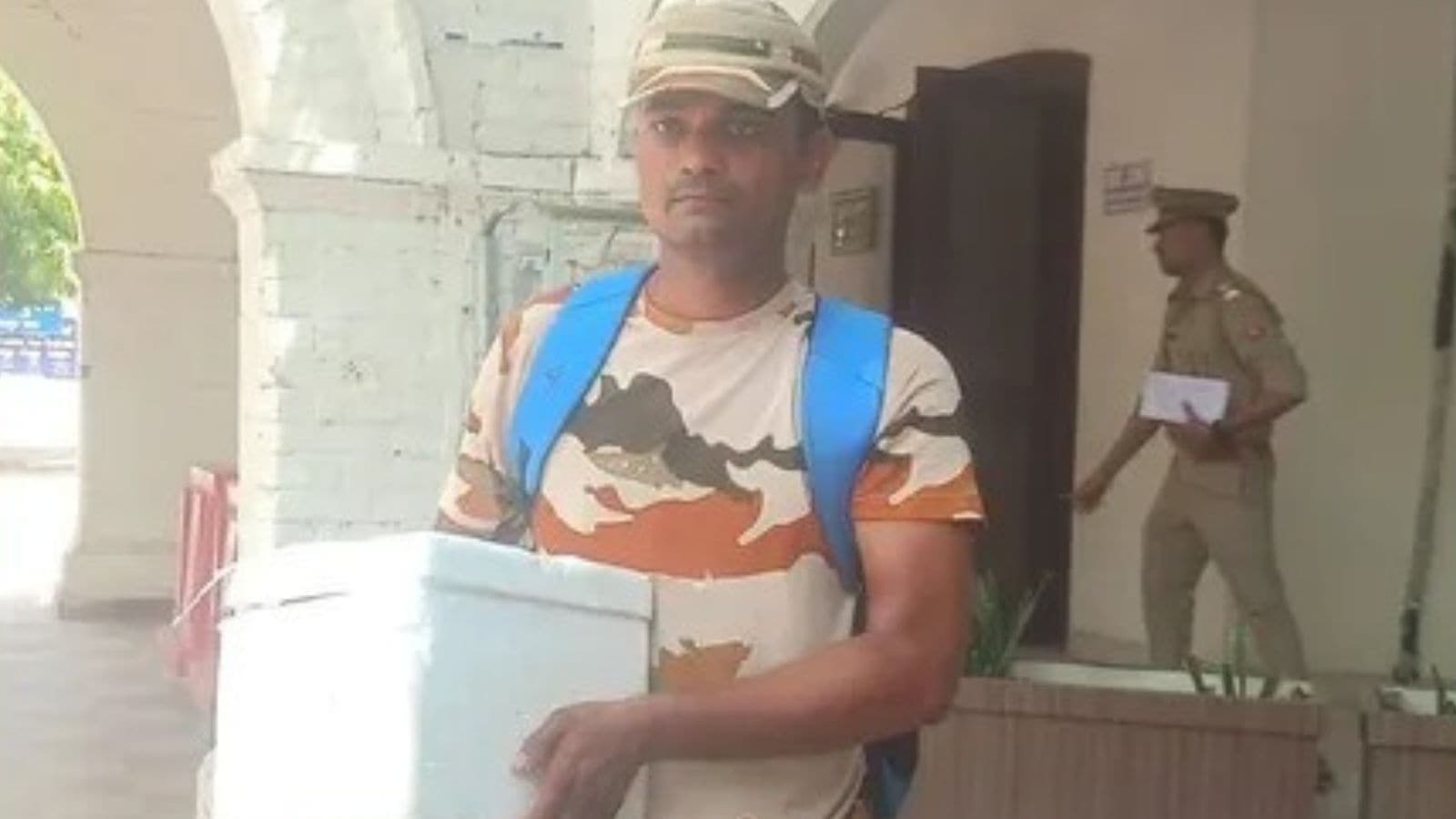
GlipzoIn a deeply unsettling incident that has drawn significant media attention, Vikas Singh, a jawan from the Indo-Tibetan Border Police (ITBP), has taken extraordinary steps to advocate for his ailing mother. On May 10, Singh's mother, Nirmala Devi, aged 56, was admitted to a private hospital in Kanpur due to severe breathing difficulties. Unfortunately, due to what Singh alleges was medical negligence, his mother’s right hand had to be amputated. This disturbing claim has prompted Singh to seek justice, culminating in an unprecedented act where he brought his mother’s amputated hand to the Kanpur Police Commissionerate.
Singh's dramatic appeal for justice took place on Monday, when he presented the amputated hand in a thermocol box, seeking accountability from the private hospital involved. His actions have led to significant discussions around medical malpractice, with the ITBP taking a stand alongside him. On Saturday, senior ITBP officials joined Singh at the Police Commissionerate to formally address these serious concerns, emphasizing the need for a thorough investigation into the alleged negligence.
The situation escalated when Singh expressed frustration over the perceived inaction of local police regarding his complaints against the hospital. His allegations suggest that the hospital staff failed to provide appropriate care, leading to the dire consequences that followed. According to the Additional Commissioner of Police (Law and Order), Vipin Tada, the complaint was referred to the Chief Medical Officer (CMO) after a thorough review of the jawan's claims.
The CMO, Hari Dutt, confirmed that the inquiry report has been received, but due to Singh's objections regarding some findings, further examination of those points is necessary. Dutt clarified that the objection letter has been sent for additional evaluation and that a fresh report will be compiled accordingly.
Singh’s account of the events leading to his mother’s amputation paints a troubling picture. After her admission to the private hospital, he noticed alarming changes in her health condition. He recounted that within a day, Nirmala Devi’s right hand became swollen and discolored. Singh claims that when he inquired about her condition, he was told it was a temporary issue caused by the intravenous drip that had been improperly administered.
When he sought answers from the hospital, he was met with vague reassurances. However, when his mother was eventually transferred to another medical facility, doctors there revealed the grim reality: her hand had suffered irreversible damage, necessitating amputation. This revelation has fueled Singh’s pursuit of justice and accountability from the original hospital.
Singh’s actions have not gone unnoticed, sparking conversations about medical ethics and patient rights across social media platforms. A video featuring the 32nd Battalion Commandant, Gaurav Prasad, emphasizes the ITBP's commitment to justice in this case. Prasad stated, “We have full faith in the commissioner and are confident that justice will be done once the report is released.” This statement reflects the determination of the ITBP to support its personnel in their quest for accountability.
Despite claims that the ITBP personnel had “gheraoed” the Police Commissioner’s office, both the ITBP and local police have dismissed these as unfounded rumors. Prasad clarified that the ITBP officials were present for a scheduled meeting to address their concerns and were not engaging in any disruptive behavior.
The incident raises critical questions about medical standards and patient safety in hospitals. As medical negligence cases become more prevalent, it is essential for healthcare institutions to uphold high standards of care and accountability. Singh’s case is not just about one individual’s suffering; it reflects a broader issue of the need for systemic change in how hospitals operate and respond to patient needs.
The formation of the joint investigation committee marks a significant step forward in addressing the allegations surrounding Nirmala Devi's treatment. As the committee prepares to revisit the concerns raised by Singh, the outcomes of this inquiry will likely have far-reaching implications for the involved hospital, as well as for medical practices in the region.
In the coming weeks, all eyes will be on the Police Commissioner and the CMO as they release their findings. Will they uphold Singh's claims and hold the hospital accountable, or will this case be another example of unaddressed medical malpractice? Only time will tell, but the public’s interest and concern for justice remain high.
In conclusion, the actions taken by Vikas Singh serve as a poignant reminder of the need for vigilance in patient care, and the ongoing fight for justice in cases of medical negligence is far from over. The outcome of this investigation will undoubtedly resonate with many who have faced similar challenges and will call for greater accountability in healthcare.

Shocking findings from Nottingham's maternity unit reveal a toxic culture and alarming neglect. What can be done to improve care? Discover the details.
BBC Health
Discover how daraxonrasib, a new pill, is nearly doubling survival rates for pancreatic cancer patients, offering hope in a challenging battle against this deadly disease.
BBC Health
Waste companies propose a £5 deposit on vapes to encourage proper disposal and curb littering as the environmental impact of vapes increases.
BBC Business