
Image: BBC World
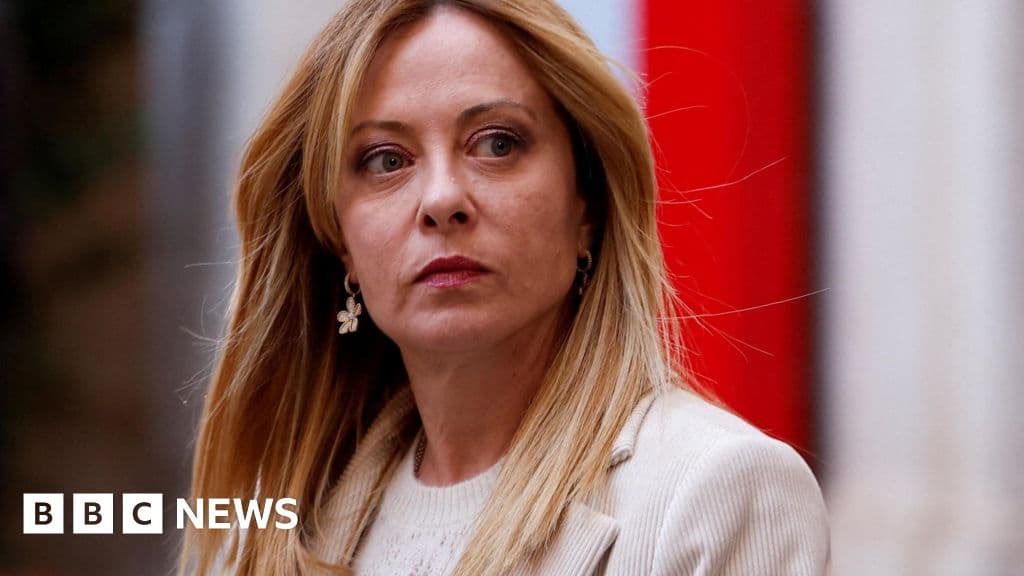
Italian PM Giorgia Meloni condemns Trump’s 'unacceptable' criticism of Pope Leo XIV, highlighting a significant clash in political and religious discourse.
GlipzoIn a rare political clash, Italian Prime Minister Giorgia Meloni has openly condemned Donald Trump for his recent derogatory comments about Pope Leo XIV. Trump's remarks, deemed "unacceptable" by Meloni, came during a lengthy post on Truth Social, where he criticized the Pope for being "weak on crime" and ineffective in foreign policy. This public rebuke from Meloni highlights the tension between her position as a staunch ally of Trump and her responsibilities as a leader who must defend a figure as significant as the Pope.
Giorgia Meloni, who leads a right-wing coalition government and identifies as a Catholic, had previously refrained from denouncing Trump’s comments. However, she took a firm stand this time, stating, "The Pope is the head of the Catholic Church, and it is right and normal for him to call for peace and to condemn every form of war." This statement underscores the importance of the Pope’s role in advocating for peace amidst global conflicts.
The criticism from Meloni comes amid a backdrop of increasing scrutiny from opposition parties in Italy, who have accused her of being slow to respond to Trump’s provocative remarks. Matteo Salvini, leader of the populist League party and Meloni's coalition partner, also voiced his disapproval, stating that attacking the Pope is neither useful nor intelligent.
Following the backlash, Trump did not back down. He reiterated his stance, saying he would not apologize to the Pope, whom he labeled as "very weak." This is notable, given Trump's history of contentious relationships with various world leaders. His comments also reflect a broader pattern of his administration’s approach to international diplomacy, particularly regarding sensitive issues like nuclear proliferation.
In his posts, Trump specifically targeted the Pope's views on the Iran conflict, asserting that the pontiff was ineffective when it came to addressing threats posed by nations pursuing nuclear capabilities. He went as far as to suggest that if he were not in office, Pope Leo XIV would not have been elected, insinuating a political undercurrent to the papal election.
Amid these controversies, Pope Leo XIV maintained his focus on the Church’s mission of peace. En route to Algeria for an 11-day trip, he responded to Trump’s provocations by emphasizing that he does not view his role as a political one but rather as a messenger of peace. "I have no fear of the Trump administration or speaking out loudly about the message of the gospel," the Pope stated, firmly asserting his commitment to advocating for justice and compassion in the world.
The Pope's dignity and reverence for his position were evident as he expressed disinterest in engaging in a public debate with Trump. Instead, he emphasized that the suffering of innocent people across the globe should be prioritized over political squabbles.
The fallout from Trump’s remarks has not only affected political dynamics in Italy but also sparked a global conversation regarding the relationship between political leaders and religious figures. With over 70 million Catholics in the United States, Trump's comments pose a significant dilemma for many Catholic voters, including his own Vice President, JD Vance.
The Pope's criticism of politicians who disregard international law and promote neocolonial tendencies resonates deeply with many Catholics worldwide. Notably, prominent Italian commentator Massimo Faggioli remarked that Trump's attack is unprecedented in modern history, likening it to the public criticisms directed at the Pope by fascist leaders during World War II.
As the situation unfolds, it raises important questions about the future of political relations between the United States and the Vatican. Trump's brash approach may alienate not only the Pope but also a significant portion of the Catholic electorate. With Meloni's condemnation of Trump's comments, the Italian political landscape may shift, leading to a reevaluation of alliances.
Looking ahead, it will be crucial to observe how this controversy impacts global diplomatic relations and the Catholic Church's stance on international issues. The Pope’s continued advocacy for peace amidst rising tensions may draw further scrutiny from political figures who prioritize aggressive foreign policies.
As world leaders navigate these turbulent waters, the conversation surrounding faith and politics will likely remain a focal point, resonating with both religious and secular communities alike. What remains to be seen is how leaders like Meloni will balance their political alliances with the moral imperatives that the Pope’s message embodies. The unfolding dynamics could potentially reshape not only Italian politics but also the broader international landscape of religious and political discourse.

Tensions soar as the US and Iran engage in air strikes near the Strait of Hormuz, raising concerns over global oil supply and regional stability.
BBC World
Trump's international interventions face serious stalemates. What will this mean for U.S. foreign policy? Explore the critical challenges ahead.
Indian Express
Tehran denies resignation of President Masoud Pezeshkian amid claims of IRGC influence. What does this mean for Iran's political stability? Click to learn more!
Indian Express