
Image: BBC Health
Discover how six-year-old Saffie's vision was restored through groundbreaking gene therapy, changing her life and offering hope for others with LCA.
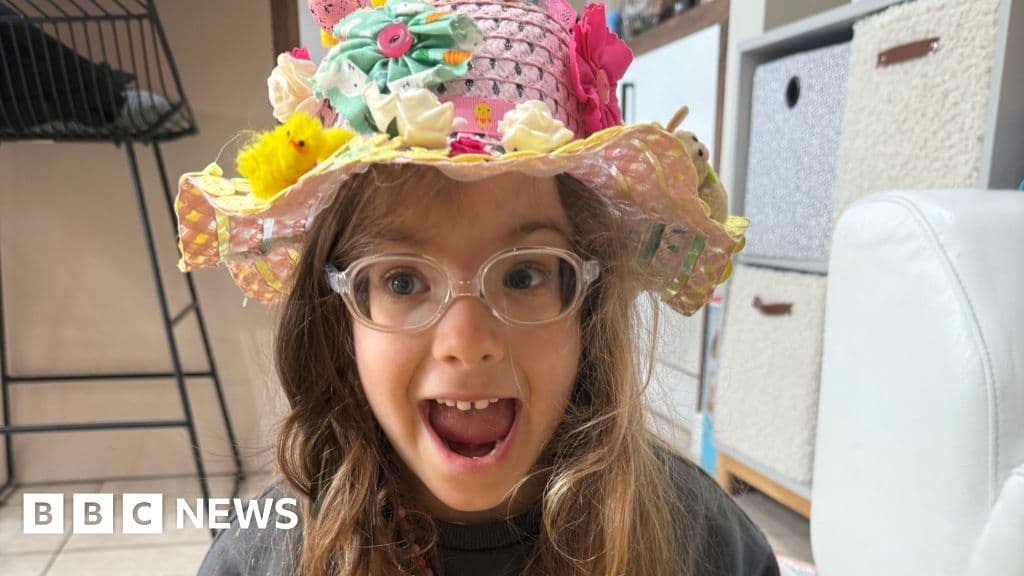
GlipzoIn a remarkable medical breakthrough, six-year-old Saffie Sandford from Stevenage has undergone a life-altering gene therapy that restored her vision, bringing joy and relief to her family. Her mother, Lisa Sandford, describes the experience as akin to having a magic wand waved over her daughter, allowing her to see clearly in the dark for the first time. This transformation comes after Saffie was diagnosed with Leber's Congenital Amaurosis (LCA), a rare inherited condition that severely impairs vision.
The medical journey began when Saffie, who had been wearing glasses since the age of two, was diagnosed with LCA at five. This condition prevents the eye cells from producing a vital protein needed for normal vision, resulting in significant vision loss. Without treatment, doctors warned that Saffie would likely be blind by the age of 30. The family’s hope was reignited when they learned about Luxturna therapy, which was made available through the NHS at Great Ormond Street Hospital (GOSH).
Saffie’s treatment marks a historic milestone as it was the first instance of Luxturna being used for one of the genetic causes of LCA at GOSH. The therapy involves a one-time procedure where a healthy copy of the defective gene is injected directly into each eye. Saffie underwent the first procedure in April 2025 and the second in September 2025.
Prior to her diagnosis, the family had no idea that both Lisa and her partner, Tam, were carriers of the gene responsible for LCA. Lisa recalled the shock of the diagnosis, stating, "It was such a rollercoaster of a journey, but we were so relieved and grateful when we heard there was a treatment available on the NHS."
The results of the gene therapy have been nothing short of astonishing. Lisa recounted how everyday activities were previously a struggle for Saffie, especially in low-light situations. "We had to rely on torches just to do everyday things like eat a meal, do some colouring, and attend kids' parties. Life was really, really hard. She missed out on a lot," Lisa said.
After the treatment, Saffie experienced a significant improvement in her vision. Lisa described a heartwarming moment during Halloween when Saffie joyfully exclaimed, "I can see!" while trick-or-treating in the dark. The family was overwhelmed with emotion, celebrating the return of their daughter’s sight and the newfound freedom it afforded her.
The researchers at GOSH, in collaboration with University College London, conducted studies that demonstrated how Luxturna can enhance visual pathways at a crucial stage of brain development. While the treatment does not cure LCA, it has shown promise in improving sight, particularly in younger children who are still developing visually.
The clinical team monitored 15 children aged between 15 months and 12 years who received gene therapy from 2020 to 2023. They found that the youngest patients exhibited more substantial improvements, as their visual pathways were more malleable during this critical period.
Consultant ophthalmologist Rob Henderson emphasized the significance of this breakthrough, stating, "For the first time, we've been able to show objectively that gene therapy can strengthen the visual pathways in babies and young children who are living with this rare eye condition."
The success of Saffie's treatment highlights the extraordinary potential of gene therapy in transforming the lives of children with inherited retinal diseases. For many families grappling with similar conditions, even minor enhancements in vision can lead to profound changes in their children's quality of life. This case underscores the importance of continued research and the development of age-appropriate measures to assess treatment outcomes.
Going forward, the medical community will likely focus on expanding access to such innovative therapies, ensuring that more children can benefit from advancements in gene therapy. As research progresses, we can expect to see even more breakthroughs in the fight against inherited eye conditions, offering hope to families worldwide.
As gene therapy continues to evolve, it opens new avenues for treating various genetic eye disorders. The success of treatments like Luxturna paves the way for further investigations into other inherited conditions and highlights the critical need for ongoing support and funding in genetic research. Families affected by conditions like LCA can look forward to a future filled with possibilities, where advancements in science may soon restore vision to many more children like Saffie.
This inspiring story not only serves as a beacon of hope for those affected by rare eye conditions but also emphasizes the essential role of medical advancements in reshaping lives. The journey of gene therapy is just beginning, and its implications could be monumental in the realm of pediatric ophthalmology.
What to Watch For: Keep an eye on ongoing research and clinical trials as they may lead to exciting developments in gene therapies for various eye conditions, potentially transforming the landscape of pediatric vision care.

Shocking findings from Nottingham's maternity unit reveal a toxic culture and alarming neglect. What can be done to improve care? Discover the details.
BBC Health
Discover how daraxonrasib, a new pill, is nearly doubling survival rates for pancreatic cancer patients, offering hope in a challenging battle against this deadly disease.
BBC Health
Waste companies propose a £5 deposit on vapes to encourage proper disposal and curb littering as the environmental impact of vapes increases.
BBC Business