
Image: The Hindu
Political tensions escalate as the Election Commission's transfer of West Bengal officials sparks fierce backlash from opposition parties. What’s next?
GlipzoA recent decision by the Election Commission of India (ECI) to transfer West Bengal's Chief Secretary and Director General of Police (DGP) has ignited a fierce political clash in Delhi. The timing of this move, coming immediately after the announcement of assembly election dates, has raised eyebrows and sparked allegations of political manipulation.
On March 16, 2026, the ECI declared that elections for the 294 seats in West Bengal would occur in two phases: on April 23 and April 29, with counting set for May 4. This decision was met with immediate backlash, particularly from opposition parties, who contend that the ECI is acting under the influence of the Bharatiya Janata Party (BJP) at the national level.
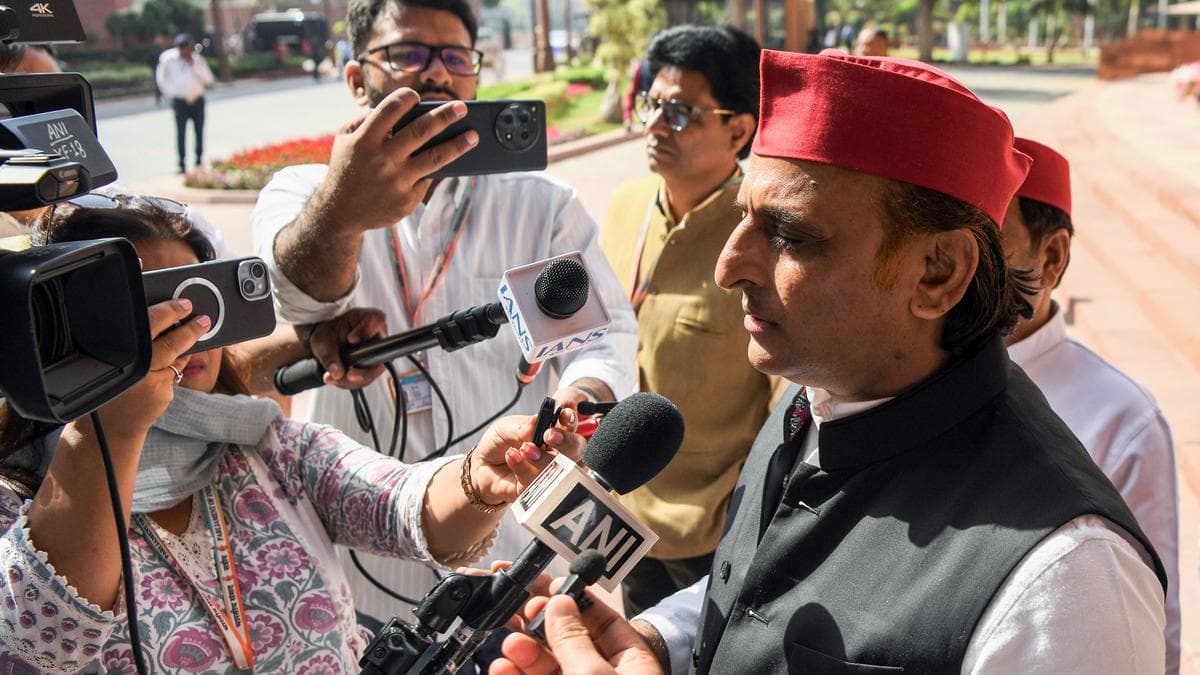
Akhilesh Yadav, the National President of the Samajwadi Party, voiced his strong disapproval, alleging that the BJP is orchestrating the removal of officials in regions where it does not hold power. He stated, "Whenever elections are held, and if the State Government is not run by the party ruling in Delhi, the first thing they do is remove the DGP and the chief secretary." This statement underscores a growing concern among opposition leaders regarding the impartiality of the ECI.
Yadav further contrasted this situation with Uttar Pradesh, where the BJP is in control. He questioned why similar actions had not been taken there during past elections, citing that the DGP remained unchanged despite numerous complaints. His remarks reflect a broader sentiment among the opposition that the ECI's actions are politically motivated rather than based on objective assessments of governance.
Leaders from the ruling Trinamool Congress (TMC) have also criticized the ECI's decision. Sougata Roy, a party MP, labeled the transfers as “wrong” and an affront to the democratic process in West Bengal. Another TMC member, Kirti Azad, went so far as to describe the ECI as an “extended arm of the BJP,” suggesting that institutional integrity is under threat.
The TMC's Sagarika Ghose echoed these sentiments, arguing that the early morning transfers indicated a misuse of authority by the ECI aimed at undermining the elected government. She further claimed that around 50 lakh individuals in the state might be at risk of losing their voting rights, raising alarm about the potential disenfranchisement of voters in the upcoming elections.
In response to the barrage of criticisms, Union Minister Giriraj Singh defended the integrity of India’s democratic institutions, asserting that the ECI is a cornerstone of democracy. Singh accused opposition factions of attempting to destabilize these institutions, a claim that highlights the ongoing struggle between the ruling party and its adversaries.
Anurag Thakur, a former Union Minister and current BJP MP, reiterated that the transfer of officials during elections is not a new phenomenon, pointing out that the ECI has always made adjustments as necessary for the electoral process. This defense emphasizes the BJP’s stance that their actions are consistent with established protocols rather than politically motivated maneuvers.
The current political environment in West Bengal is charged, with accusations flying from all sides. The TMC is poised to challenge the BJP's narrative fiercely, as they prepare for the upcoming elections. The conflict over the ECI's transfers could significantly influence voter sentiment, particularly among those who feel that the integrity of the electoral process is being compromised.
Why It Matters: The clash over the ECI's recent actions is emblematic of a broader trend in Indian politics, where institutional integrity and electoral fairness are increasingly called into question. The outcome of this political slugfest could set important precedents for future elections, impacting not just West Bengal, but the entire landscape of Indian democracy.
As the election dates loom closer, the political climate in West Bengal is likely to grow even more heated. The TMC will likely ramp up its criticisms of the ECI, while the BJP will continue to defend its actions and attempt to portray itself as the guardian of democracy.
Key Factors to Watch: - How the TMC mobilizes its base in response to the ECI’s transfers. - The potential impact of voter sentiment regarding the perceived partisanship of the ECI. - Whether the BJP can effectively counter the opposition's narrative and maintain its influence in West Bengal. - The broader implications of this conflict on the relationship between state governments and the central authority in India.
As the situation unfolds, all eyes will be on West Bengal, where the results of this political showdown could resonate well beyond the state borders.

Tensions soar as the US and Iran engage in air strikes near the Strait of Hormuz, raising concerns over global oil supply and regional stability.
BBC World
Trump's international interventions face serious stalemates. What will this mean for U.S. foreign policy? Explore the critical challenges ahead.
Indian Express
Tehran denies resignation of President Masoud Pezeshkian amid claims of IRGC influence. What does this mean for Iran's political stability? Click to learn more!
Indian Express