
Image: BBC World
Nearly 400 individuals in Nigeria are sentenced for links to Boko Haram and ISWAP amid rising insecurity. What does this mean for the country's future?
GlipzoIn a significant legal move, nearly 400 individuals in Nigeria have been sentenced due to their connections with militant Islamic factions, primarily Boko Haram and the Islamic State West Africa Province (ISWAP). This unprecedented mass trial highlights the government's response to escalating security challenges faced by Africa's most populous nation. Sentences handed down varied widely, ranging from five years to life imprisonment, as part of a broader strategy to combat rising violence and instability in the region.
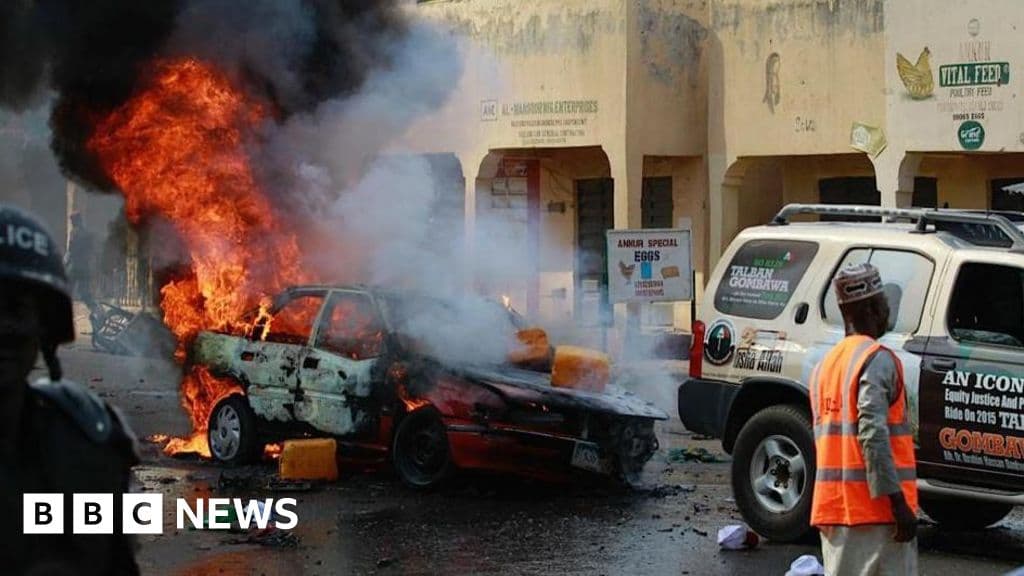
The trials were conducted amid increasing pressure on the Nigerian government to effectively address the rampant insecurity plaguing the country. With a myriad of armed groups operating throughout Nigeria, including separatists and notorious kidnapping gangs, the stakes are high. Boko Haram, which has been waging an insurgency since 2009, has been responsible for the deaths of tens of thousands and the displacement of over two million people. The humanitarian crisis continues to deepen, prompting urgent calls for action from both national and international leaders.
Boko Haram's insurgency has wreaked havoc in the northeastern part of Nigeria, and the government's response has increasingly come under scrutiny. In light of this ongoing crisis, the United States has issued a travel advisory urging its citizens to reconsider travel plans to Nigeria due to deteriorating security conditions. This advisory underscores the perception of Nigeria as a nation grappling with significant threats to safety and stability.
The federal high court in Abuja recently presided over the mass trials, with more than 500 suspects facing various charges related to supporting militant activities. These charges included participating in attacks, financing operations, providing arms, and logistical support. On Friday, the court delivered its verdicts, convicting 386 individuals while acquitting two, discharging eight, and adjourning the cases of 112 others. Among the accused, five individuals admitted guilt for aiding militant groups by selling livestock, supplying food, and sharing sensitive information.
The convictions and sentences handed down represent a critical step in the Nigerian government's efforts to restore order and security. However, the situation remains precarious. With armed groups continuing to carry out attacks and instill fear in communities, many question whether these mass trials will have a lasting impact on curbing the violence. The government's approach, which includes both military action and judicial proceedings, reflects an attempt to tackle the multifaceted nature of the crisis.
The U.S. airstrikes conducted on Christmas Day in northern Sokoto state aimed at a militant group known as Lakurawa add another layer of complexity to the situation. President Donald Trump had previously alleged that Christians were facing persecution in Nigeria, a claim that the Nigerian government vehemently denied, asserting that individuals of all faiths are suffering due to the violence.
Nigeria's struggle with militant groups like Boko Haram and ISWAP is not just a local issue; it has global ramifications. The international community is increasingly aware of the humanitarian crisis, as well as the regional stability risks posed by unchecked militant activity. The mass sentencing serves as a stark reminder of the challenges Nigeria faces in combating extremism and the need for comprehensive strategies that encompass military, social, and political solutions.
As the Nigerian government navigates these turbulent waters, the focus will be on the effectiveness of their strategies moving forward. Will these convictions deter future militant activities? Or will they lead to further entrenchment of these groups amidst a backdrop of violence and instability? The answers to these questions will be crucial not only for Nigeria but for the broader West African region, where security issues often spill across borders.
As Nigeria grapples with these ongoing challenges, observers will be watching closely for several key developments: - Continued military operations: Will the government escalate military actions against remaining militant groups? - Humanitarian responses: How will the international community respond to the humanitarian needs of the millions displaced? - Political implications: What impact will these trials have on the upcoming elections and public trust in the government? - Regional cooperation: Will Nigeria seek stronger alliances with neighboring countries to tackle cross-border militant threats?
The path forward is fraught with uncertainty, but the stakes are undeniably high for Nigeria and its citizens. The world will be looking to see how the nation addresses these profound security challenges in the coming months and years.
---

Tensions soar as the US and Iran engage in air strikes near the Strait of Hormuz, raising concerns over global oil supply and regional stability.
BBC World
Trump's international interventions face serious stalemates. What will this mean for U.S. foreign policy? Explore the critical challenges ahead.
Indian Express
Tehran denies resignation of President Masoud Pezeshkian amid claims of IRGC influence. What does this mean for Iran's political stability? Click to learn more!
Indian Express