
Image: The Hindu
Mamata Banerjee claims an 'unofficial' President's rule in West Bengal, raising concerns ahead of upcoming assembly elections. What does this mean for voters?
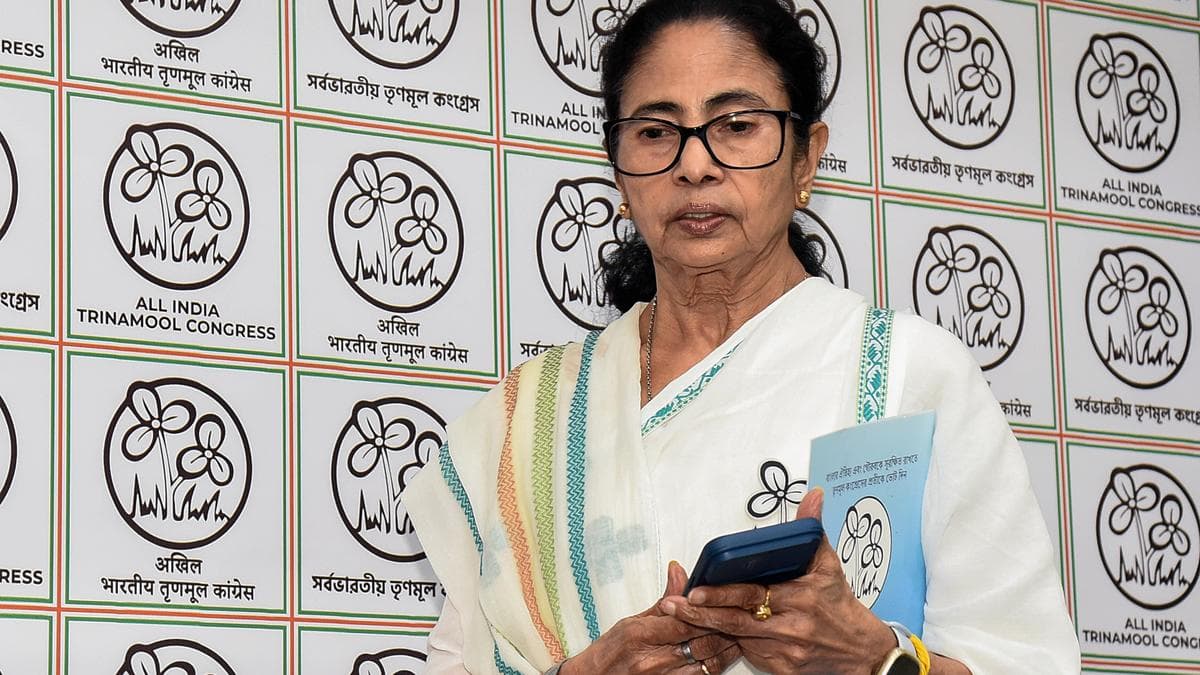
GlipzoIn a stunning announcement on March 20, 2026, West Bengal's Chief Minister Mamata Banerjee accused the central government of imposing an "unofficial" and "self-declared" President's rule in the state. This revelation came during the release of her party, the All India Trinamool Congress (AITC), manifesto for the upcoming Assembly elections. Banerjee, who is seeking her fourth consecutive term, stated that the actions of the central government indicate a profound fear of the people of West Bengal.
"President’s rule has been imposed in West Bengal. Modi ji (Prime Minister Narendra Modi) has to hold elections in West Bengal under President’s rule. It is such a shame. They fear the people of Bengal so much," she declared, highlighting her concerns regarding the integrity of the electoral process. Banerjee's comments underscore the political tension in the state as elections approach.
Mamata Banerjee expressed her outrage over the transfer of senior state officials by the Election Commission, which she claims could jeopardize fair elections. Recently, around 50 senior officials were transferred, including the Chief Secretary, Home Secretary, and the Director General of Police. Banerjee questioned how officials unfamiliar with West Bengal's unique language, culture, and geography could effectively oversee the electoral process.
She cautioned that the rapid transfers could lead to a lack of understanding and connection with the electorate, raising concerns about the potential for electoral malpractice. Banerjee's apprehension is compounded by the fact that the judicial review of around 60 lakh elector cases may not be completed before the elections. "Only 22 lakh cases have been adjudicated so far, out of which 10 lakh names have been deleted," she stated, indicating a significant reduction in the voter base.
Banerjee went on to allege that the central government has sinister plans to disenfranchise voters through initiatives like the National Register of Citizens (NRC) and the Census. She asserted that these moves could lead to the loss of citizenship for many residents, particularly targeting specific communities. Furthermore, she claimed there were intentions to divide West Bengal by creating a separate state from parts of north Bengal and Bihar. "They do not want West Bengal to exist," she asserted, voicing her fears for the state's future.
The Chief Minister emphasized that the right to vote is paramount and expressed her belief that this right is currently under threat by the Election Commission, allegedly at the behest of the BJP (Bharatiya Janata Party). With a passionate plea, she urged the electorate not to look for alternatives if they wish to preserve West Bengal’s integrity. "It is not the time to look elsewhere if you want to save Bengal," she implored.
As part of her campaign strategy, Banerjee advised the public to reject any monetary incentives offered by the BJP, asserting that they should respond to such tactics with a definitive rebuke. She forecasted that lakhs of central forces would be deployed in West Bengal during the elections, raising concerns about the logistical implications on local resources. "Who will feed them? We are already facing a shortage of LPG cylinders," she queried, highlighting the ongoing challenges in governance.
Banerjee announced that her campaign would commence after the observance of Id-ul-Fitr, which falls on March 21, 2026. The AITC has already made public its candidate list for the 294-member West Bengal Assembly, with crucial elections scheduled for April 23 and April 29, 2026. The counting of votes will take place on May 4, 2026.
Mamata Banerjee's accusations and the unfolding political drama in West Bengal not only reflect the heated atmosphere surrounding the forthcoming elections but also signify a crucial moment for the state's democratic processes. As the elections draw nearer, all eyes will be on how the Election Commission manages these allegations and the integrity of the electoral process. The looming questions about citizenship rights and state division could also shape voter sentiment and influence turnout.
As the political landscape evolves, it remains to be seen how the electorate will respond to Banerjee's calls for unity and resistance against perceived encroachments on their rights. In a state known for its vibrant political culture, the upcoming elections could very well define the future of governance in West Bengal, making it imperative for citizens to stay informed and engaged as they head to the polls.

Tensions soar as the US and Iran engage in air strikes near the Strait of Hormuz, raising concerns over global oil supply and regional stability.
BBC World
Trump's international interventions face serious stalemates. What will this mean for U.S. foreign policy? Explore the critical challenges ahead.
Indian Express
Tehran denies resignation of President Masoud Pezeshkian amid claims of IRGC influence. What does this mean for Iran's political stability? Click to learn more!
Indian Express