
Image: BBC World
US and Israeli strikes on Iran's infrastructure escalate tensions. What does this mean for the region and global stability? Click to learn more.
GlipzoIn a dramatic escalation of hostilities, President Donald Trump has announced a series of targeted strikes against critical infrastructure in Iran. This announcement came shortly before a deadline for negotiations aimed at reaching an 'acceptable' deal to end the ongoing conflict involving the United States and Israel. Trump’s threats included promises to bomb the nation 'back to the Stone Ages' if an agreement was not finalized by Tuesday night, warning that a 'whole civilization will die tonight' without a resolution.
These comments have raised alarms regarding the potential humanitarian consequences of such military action, particularly as attacks on infrastructure essential for daily life in Iran have already begun. According to BBC Verify, recent strikes have damaged schools and hospitals, further complicating the already dire situation for ordinary Iranians affected by the ongoing conflict.
In the past two weeks, US and Israeli airstrikes have targeted critical industrial sites across Iran, with BBC Verify confirming attacks on: - At least two steel plants - Three bridges - A pharmaceutical plant
These actions have sparked outrage and concern among senior Democrats in the US Congress and officials at the United Nations, who warn that such military strikes could constitute war crimes. However, President Trump dismissed these concerns during a news conference, indicating his unwavering stance on the military operations.
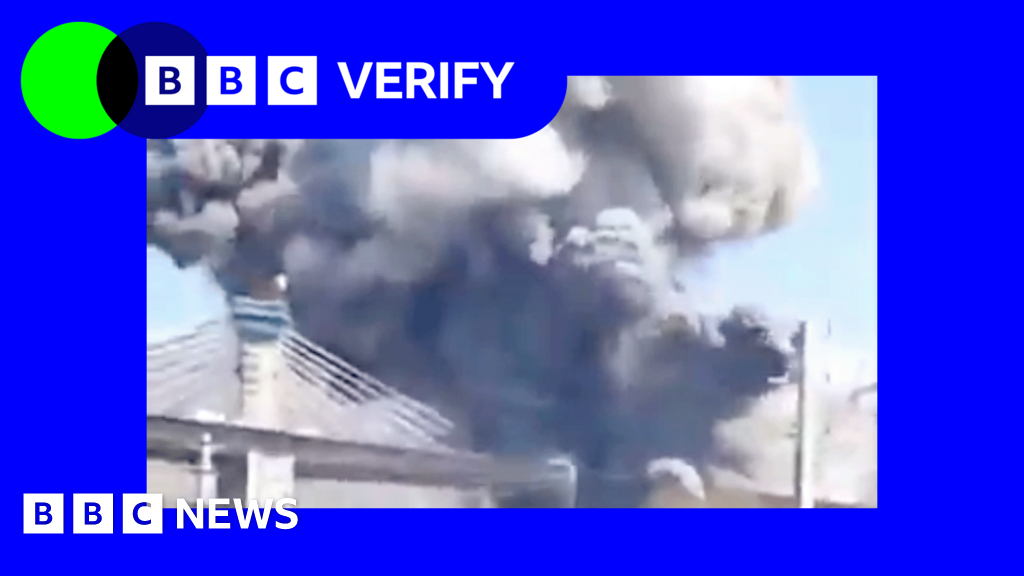
One of the most significant attacks occurred on a bridge under construction in Karaj, where US aircraft strikes resulted in the deaths of at least 13 people. Footage verified by BBC showed a stark image of destruction, with a large gap in the bridge's structure and construction cranes left in ruins. Trump later shared this footage on social media, claiming that 'the biggest bridge in Iran comes tumbling down, never to be used again.'
The strikes on steel facilities have catastrophic implications for Iran's economy. On March 27, smoke was seen billowing from the Isfahan Mobarakeh Steel Company, Iran’s largest steel producer, halting operations. This plant reportedly contributed around $860 million to the Iranian economy between March 2025 and January 2026.
Moreover, satellite imagery has revealed significant damage to the Khuzestan Steel Company, Iran's second-largest steel manufacturer, with local officials estimating that repairs could take up to a year. Israeli Prime Minister Benjamin Netanyahu claimed that the strikes have disrupted as much as 70% of Iran's steel manufacturing capacity. According to Arman Mahmoudian, a research fellow at the University of South Florida's Global and National Security Institute, the loss of steel production could place nearly 20 million tons of output at risk, potentially impacting 3–3.5% of Iran’s GDP.
Further complicating the situation, the Israeli Defense Forces (IDF) recently conducted a strike on the Tofigh Daru Research & Engineering Company, a major Iranian pharmaceutical firm. The IDF alleged that the company was involved in the transfer of chemical substances for the development of chemical weapons, including fentanyl. However, these claims have not been independently verified by BBC.
While pharmaceuticals constitute a minor segment of Iran's economy, Mahmoudian cautioned that attacks on this sector could jeopardize access to essential medications, particularly during times of crisis. Reports suggest that Iran produces over 90% of its pharmaceuticals domestically, although this figure remains unconfirmed by external sources.
The impact of the military strikes has also extended to educational facilities. Recent images show extensive damage at Shahid Beheshti University in Tehran, with debris littering the campus following reported bombings. Similarly, Sharif University of Technology suffered damages from strikes, raising concerns about the safety of students and the broader implications for education in Iran.
Religious sites, which hold cultural significance, have not been spared, with reports indicating damage to various locations. This trend raises serious questions about the respect for cultural heritage amidst the ongoing military operations.
The current wave of US and Israeli strikes on Iranian infrastructure not only heightens regional tensions but also poses serious humanitarian concerns. With critical industries such as steel and pharmaceuticals under attack, the potential for widespread suffering among the Iranian populace is considerable.
As the conflict escalates, international observers are left to ponder the ramifications of these actions. The potential for further military engagement or retaliatory strikes increases the risk of a broader conflict, which could destabilize the region further.
As the deadline for a diplomatic resolution looms, all eyes are on Washington and Tehran. Will the ongoing military strikes force Iran to the negotiating table, or will they provoke a more severe response? The situation remains fluid, and the global community is watching closely. Key questions linger: What will be the long-term economic effects on Iran? How will these strikes impact the daily lives of ordinary Iranians? And what future military actions might follow if the current hostilities continue?
In conclusion, the unfolding situation demands careful monitoring, as the consequences of these strikes reach far beyond immediate military objectives, potentially reshaping the geopolitical landscape in the months to come.

Tensions soar as the US and Iran engage in air strikes near the Strait of Hormuz, raising concerns over global oil supply and regional stability.
BBC World
Trump's international interventions face serious stalemates. What will this mean for U.S. foreign policy? Explore the critical challenges ahead.
Indian Express
Tehran denies resignation of President Masoud Pezeshkian amid claims of IRGC influence. What does this mean for Iran's political stability? Click to learn more!
Indian Express