
Image: The Hindu
Taiwan reports a surge in Chinese military flights after a two-week lull, raising concerns about tensions in the region ahead of Trump's China visit.
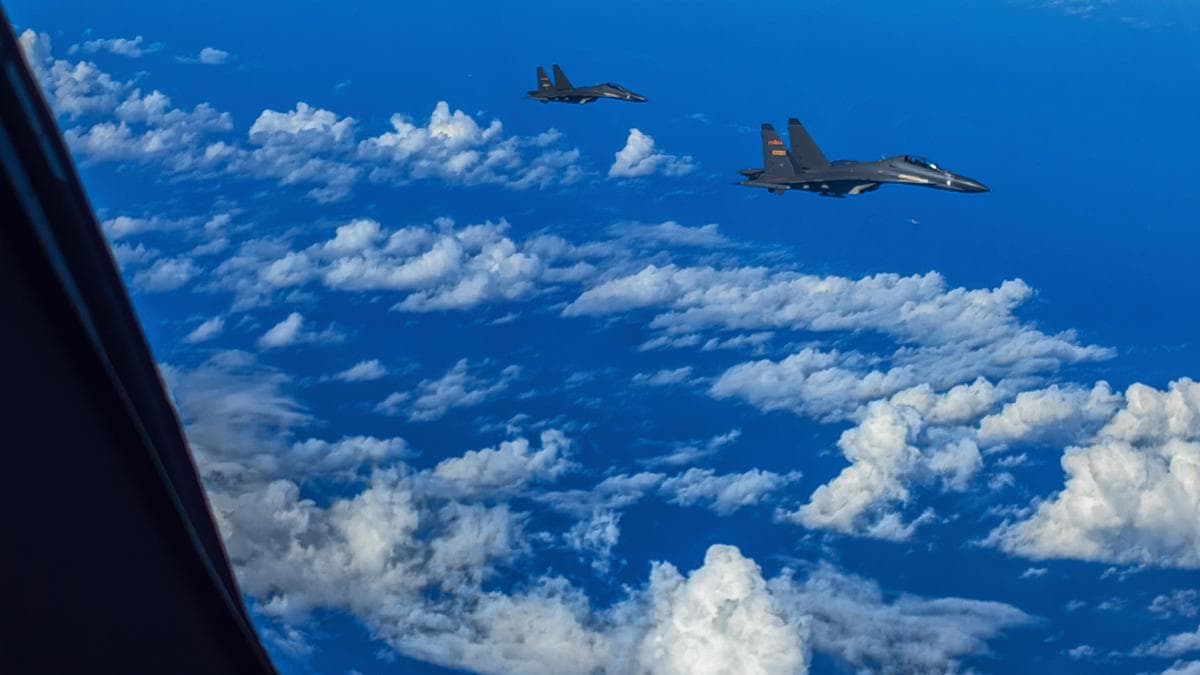
GlipzoIn a significant development, Taiwan's Defence Ministry reported a notable increase in Chinese military flights around the island on March 14, 2026. This surge, which saw 26 Chinese military aircraft detected, comes after a period of reduced activity that raised eyebrows among military analysts. The heightened presence of these aircraft included 16 that entered Taiwan's Air Defence Identification Zone (ADIZ), indicating a possible shift in China's military strategy.
This sudden uptick in military flights follows a lull in activity, where no Chinese aircraft were reported crossing the median line into Taiwanese airspace for an entire week between February 27 and March 5, 2026. The absence of flights during this period was particularly striking, especially given the context of China's annual legislative meeting, which often correlates with reduced military operations.
The Defence Ministry's observations also included the sighting of seven naval vessels in proximity to Taiwan, a trend that underscores the continued military pressure China exerts over the island. Analysts have speculated that the recent drop in flights could be linked to multiple factors: - China's legislative meeting, which historically sees a decrease in military maneuvers. - A potential strategy to ease tensions with the United States, especially with U.S. President Donald Trump scheduled to visit China from March 31 to April 2, 2026. - A possible transition in China's military training focus, signaling a new phase in its military modernization efforts.
Despite the resurgence in Chinese military activity, Taiwan's military has remained vigilant and has not changed its defensive posture. Defence Minister Wellington Koo emphasized that the Chinese navy continues to operate actively in nearby waters, indicating that the threat remains ever-present.
The relationship between China and Taiwan has been fraught with tension since 1949, following the Chinese Civil War. After the Communist Party's victory, the Nationalist Party retreated to Taiwan, where it established a separate government. Over the decades, China has maintained its stance of reclaiming Taiwan, often through military posturing, which includes frequent incursions into Taiwanese airspace and naval operations in adjacent waters.
China's military has displayed an increasing frequency of exercises and operations, a trend that has alarmed many in Taiwan and the international community. The People's Liberation Army (PLA) conducts regular drills that are seen as rehearsals for possible military action against Taiwan, raising concerns about regional stability.
The recent spike in Chinese military flights could have several implications for regional security and international relations. As tensions continue to rise, several factors warrant close monitoring: - U.S.-China Relations: As the U.S. navigates its diplomatic relationship with China, military actions around Taiwan may influence discussions and negotiations on broader geopolitical issues. - Taiwan's Defence Strategy: With China's military activities intensifying, Taiwan may need to reassess its defense strategies and capabilities to ensure its sovereignty and security. - International Reactions: Other nations, particularly those in the Asia-Pacific region, will likely be watching these developments closely, as they could affect their security policies and alliances.
In conclusion, the return of Chinese military flights around Taiwan after a brief hiatus highlights the ongoing volatility in the region. As both China and Taiwan prepare for potential escalations, the international community must remain vigilant. The coming weeks will be crucial, particularly with the impending visit of U.S. President Donald Trump to China, which may shape the future dynamics of cross-strait relations.
Looking forward, observers should keep a close watch on: - Chinese military maneuvers and their implications for Taiwan’s defense policies. - The outcomes of Trump's visit to China and any potential agreements or tensions that arise. - The response from the United States and its allies regarding China’s military activities in the region.
The situation remains fluid, and the actions taken by both China and Taiwan in the upcoming weeks will be pivotal in shaping the future of cross-strait relations and regional security.

Tensions soar as the US and Iran engage in air strikes near the Strait of Hormuz, raising concerns over global oil supply and regional stability.
BBC World
Trump's international interventions face serious stalemates. What will this mean for U.S. foreign policy? Explore the critical challenges ahead.
Indian Express
Tehran denies resignation of President Masoud Pezeshkian amid claims of IRGC influence. What does this mean for Iran's political stability? Click to learn more!
Indian Express