

Image: Mint (Business)
As the US-Israeli conflict intensifies, a coalition of 21 countries, including the United Arab Emirates (UAE) and Bahrain, has issued a strong condemnation against Iran's aggressive actions in the Gulf region. This joint statement highlights concerns over Tehran's attacks on civilian shipping and the closure of the Strait of Hormuz, a critical maritime passage for global oil transport.
The statement, released amid the escalating conflict in the Middle East, marks a significant diplomatic effort from major world powers. The coalition includes prominent nations such as the United Kingdom, France, Germany, Italy, Japan, and Australia, among others. Together, these countries have expressed their alarm over Iran’s repeated assaults on unarmed commercial vessels and its targeting of vital civilian infrastructure, which includes oil and gas facilities.
Iran’s actions have raised serious concerns about the safety of international shipping routes, particularly through the Strait of Hormuz, which sees about 20% of the world's oil transported through its waters. The leaders have called for an immediate halt to Iran's threats, including the laying of mines and drone attacks that jeopardize commercial shipping.
The condemnation comes as the war in Iran enters its fourth week, following a series of US and Israeli airstrikes that targeted Iranian military assets. Notably, the conflict escalated dramatically after the death of Ayatollah Ali Khamenei, Iran's Supreme Leader, during the initial wave of strikes in February. His assassination has led to heightened tensions and threats of retaliation from Tehran, which has vowed to respond aggressively to any perceived assaults.
In retaliation to these strikes, the Islamic Revolutionary Guard Corps (IRGC) has effectively closed the Strait of Hormuz, significantly impacting global oil supply. Additionally, Iran has launched missile attacks targeting both Israel and US military installations within the region, exacerbating an already volatile situation.
In light of these tensions, the coalition of nations has not only condemned Iran's actions but also offered to take proactive measures to ensure the safety of maritime navigation through the Strait. They have welcomed the International Energy Agency's (IEA) announcement to release 400 million barrels of oil from emergency reserves to stabilize the market amid fears of disruptions in oil supply.
Key points from the joint statement include: - A strong demand for Iran to cease hostile actions against commercial shipping. - A commitment to collaborate on increasing oil production to stabilize global markets. - An affirmation of support for the United Nations Security Council Resolution 2817, which aims to ensure peace and security in the region.
Interestingly, the U.S. stance appears to be shifting. Recently, President Donald Trump indicated a desire to potentially scale back military operations in the Middle East, which contrasts sharply with the ongoing military buildup, including the deployment of three amphibious assault ships and 2,500 Marines to the region. This contradictory approach raises questions about the U.S. strategy moving forward.
Meanwhile, Iran's President Masoud Pezeshkian has made overtures to improve relations with neighboring Arab nations, referring to them as brothers and suggesting the formation of an **

Survivors of the Laos cave rescue are aiding efforts to find the last two missing men trapped inside, sharing crucial insights for the search operation.
BBC World
A year after the tragic Air India crash, the Ali family reflects on grief, unanswered questions, and the enduring bonds of love in the face of loss.
BBC Business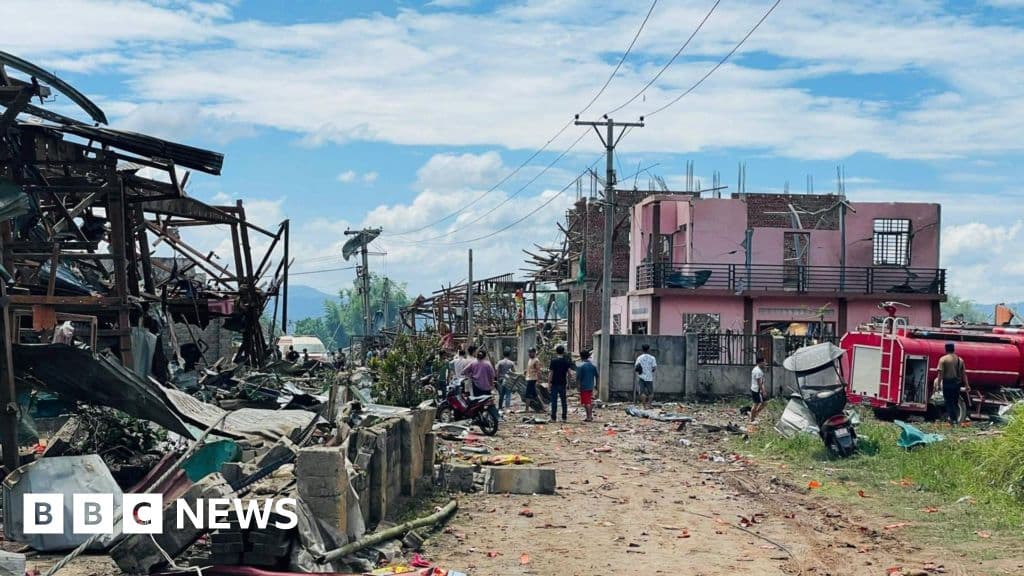
A devastating explosion in Myanmar's Kaung Tat village has killed at least 55 people, raising serious safety concerns and questions about civilian protection in conflict zones.
BBC World