
Image: Mint (Business)
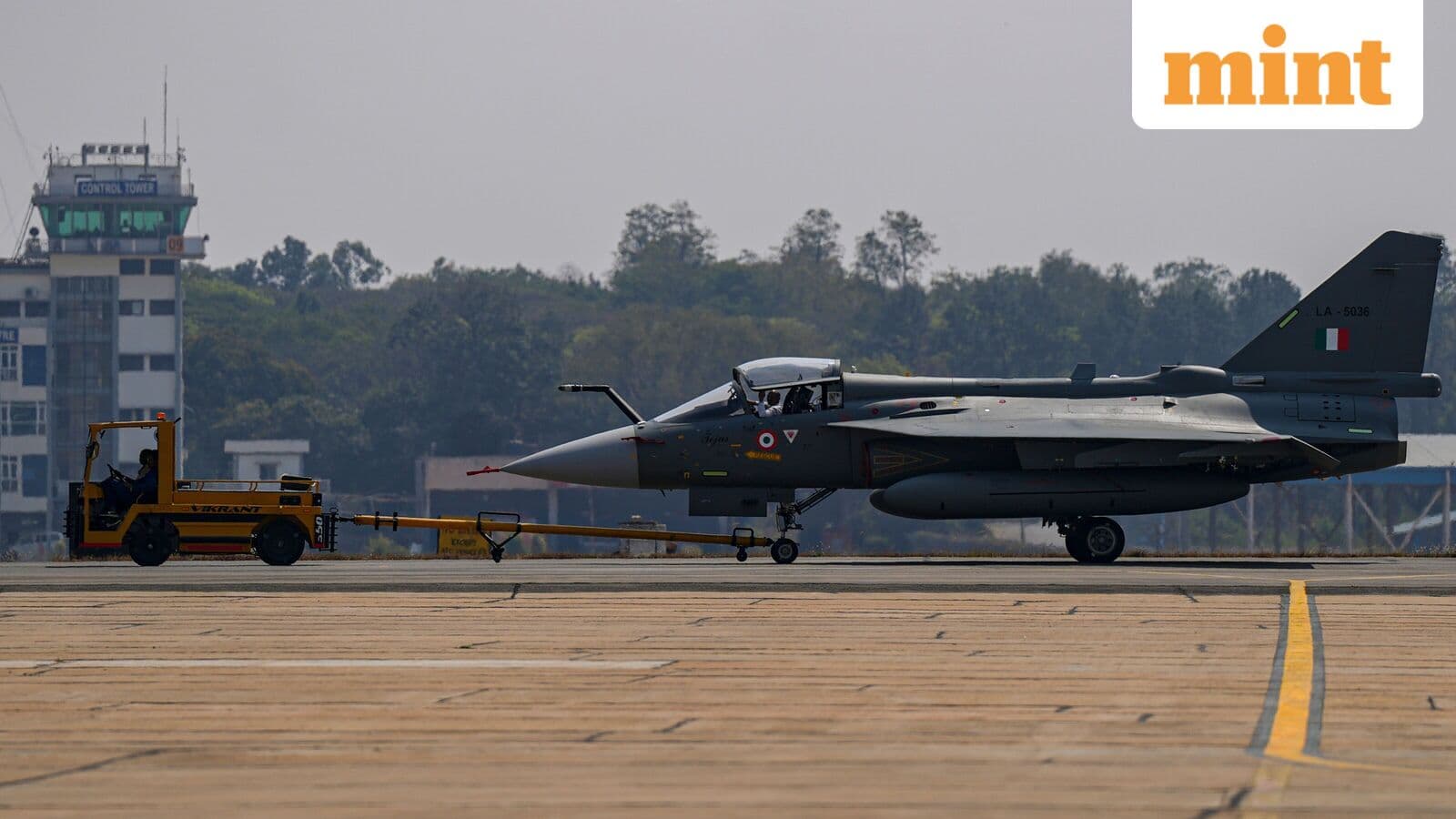
HAL penalizes GE Aerospace for delays in Tejas Mk-1A engines, but jets are set to return to the skies next week. What does this mean for India's defense?
GlipzoHindustan Aeronautics Limited (HAL) has taken a significant step in addressing the delayed delivery of F404-IN20 engines from GE Aerospace that are critical for the operation of the Tejas Light Combat Aircraft Mk-1A. This development was highlighted in an official statement released on Thursday, where HAL's chairman and managing director, DK Sunil, confirmed that penalties have been imposed on GE Aerospace due to these delays.
The contract between HAL and GE Aerospace includes a provision that allows HAL to claim liquidated damages for any delay in the delivery of engines intended for the Tejas aircraft. HAL officials stated, "The cost is being imposed as per the contract," emphasizing the accountability measures in place to ensure timely delivery.
In a positive turn of events, Sunil also announced that the Tejas light combat jets are expected to resume operations as early as next week. These jets had been grounded for nearly two months due to a software issue affecting the jet’s brake system. The grounding occurred after one of the aircraft sustained damage following a runway overshoot attributed to a suspected brake failure. Fortunately, a local modification committee has approved the necessary corrections, paving the way for the aircraft to return to the skies.
According to Sunil, the operational readiness of the Tejas LCA Mk-1 fleet, which is the first variant of the Tejas, is set to improve significantly, with flights anticipated to resume in April. This news brings a sense of relief as the Indian Air Force (IAF) eagerly awaits the return of these jets.
The ongoing delays in the Tejas Mk-1A program can be traced back to GE Aerospace's failure to meet delivery deadlines for the F-404 engines. Although the contract stipulates the delivery of 99 engines at a cost of $176 million, GE has only managed to supply six engines to date. The initial engine delivery was completed in March 2025, which is significantly behind schedule.
In February 2021, the Indian government finalized a massive deal worth ₹48,000 crore with HAL to procure 83 Tejas Mk-1A jets for the IAF. This deal was initially projected to see the first deliveries by March 2024, but complications related to engine supplies and certification processes have resulted in delays.
Sunil mentioned that GE Aerospace has committed to delivering an additional 20 engines by the end of this year. There are currently twenty Tejas LCA Mk-1As ready for deployment, with five equipped with the new engines. The IAF is expected to conduct a review of the program in May, after which deliveries will commence, contingent upon the completion of trials for the ASRAAM (Advanced Short-Range Air-to-Air Missile) and certain radar software upgrades.
In response to the delivery delays, GE Aerospace has cited supply chain constraints as the primary reason for their lag in production. The company has assured HAL that they are actively ramping up production to meet the demands of the Indian order.
HAL’s chairman noted that the sixth engine is anticipated to be delivered by the end of this month. This delivery is crucial for enhancing the operational readiness of the Tejas fleet, ensuring that the aircraft can be deployed effectively once all issues have been resolved.
The Tejas Mk-1A program is more than just a procurement initiative; it represents India's commitment to enhancing its indigenous defense capabilities. The aircraft is designed to bolster the IAF's operational strength and reduce reliance on foreign imports.
As these jets prepare to return to operational status, the focus will shift to the timely delivery of engines and the successful integration of advanced weaponry systems, including the ASRAAM missile. The outcome of these developments will significantly influence India’s defense posture in the region, especially amid evolving geopolitical dynamics.
Looking ahead, the defense sector will be keenly watching how GE Aerospace manages to fulfill its commitments and whether HAL can effectively integrate these new engines into the Tejas fleet without further delays. The upcoming review by the IAF in May will be pivotal in determining the future trajectory of the Tejas Mk-1A program.
As the situation unfolds, it will be essential to monitor the production ramp-up efforts by GE Aerospace and the successful completion of required trials. The intersection of technology, defense strategy, and international collaboration will be crucial as India strives to solidify its standing in aerospace and military capabilities.
In summary, while the penalties imposed on GE Aerospace signal a serious approach to addressing the delays, the real measure of success will be in the forthcoming operational readiness of the Tejas jets and the fulfillment of the supply commitments that have far-reaching implications for India’s defense landscape.

Tensions soar as the US and Iran engage in air strikes near the Strait of Hormuz, raising concerns over global oil supply and regional stability.
BBC World
Trump's international interventions face serious stalemates. What will this mean for U.S. foreign policy? Explore the critical challenges ahead.
Indian Express
Tehran denies resignation of President Masoud Pezeshkian amid claims of IRGC influence. What does this mean for Iran's political stability? Click to learn more!
Indian Express