
Image: BBC World
Macron criticizes Trump's inconsistent approach to Iran, advocating for a serious strategy amid rising tensions. Discover the implications for global alliances.
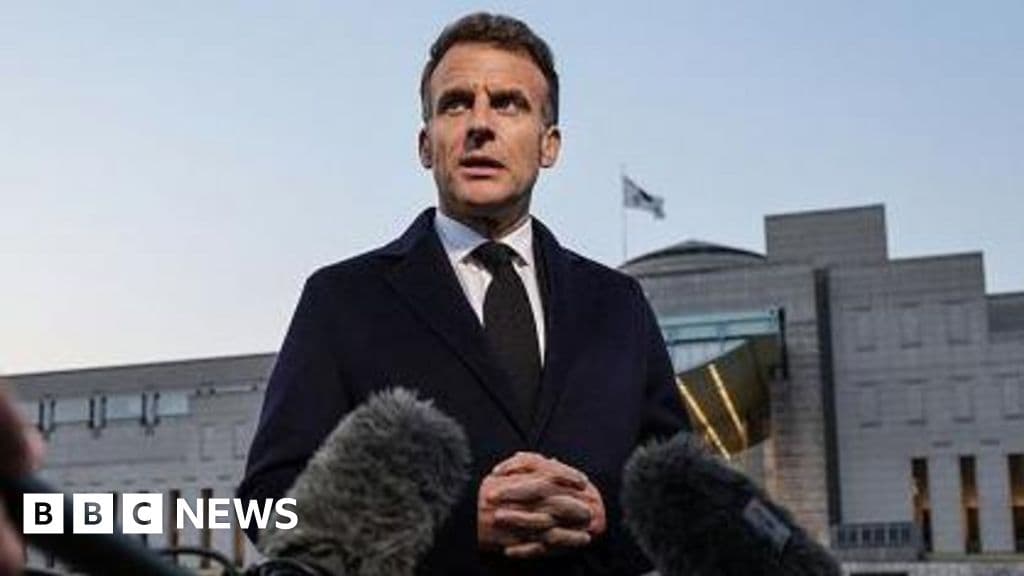
GlipzoIn a pointed critique of U.S. President Donald Trump's approach to the ongoing conflict in Iran, French President Emmanuel Macron emphasized the need for a more serious and stable strategy. During his arrival in South Korea for a state visit, Macron stated that the situation requires careful handling rather than the inconsistent rhetoric that has characterized Trump's statements.
"This is not a show. We are talking about war and peace and the lives of men and women," Macron remarked, underlining the gravity of the situation. He further stressed, "When you want to be serious, you don't say every day the opposite of what you said the day before," indicating his concern over the mixed messages emanating from the Trump administration.
Macron's comments come as the conflict in Iran enters its second month, raising questions about the implications of U.S. foreign policy. While European nations, including France, have supported certain U.S. operations in the region, they have been cautious about becoming deeply embroiled in the war. The French president highlighted the importance of clarity and commitment in international alliances, stating, "Alliances like NATO are valuable because of what is unspoken—meaning the trust behind them."
The inconsistency in Trump's statements has raised alarms. At various points, he has suggested that a ceasefire was imminent, claimed that the war had already been won, or insisted that the U.S. would continue its military efforts. Macron criticized this lack of coherence, suggesting that such erratic communication undermines trust among allies.
In addition to his remarks on the Iran conflict, Macron addressed Trump's recent comments regarding the U.S.'s commitment to NATO. The French leader articulated that questioning the reliability of such alliances could erode the very foundations of cooperation. "Partners sign agreements and show up if issues arise, rather than commenting on them every day to say that you will or will not respect them," he explained.
He expressed frustration over the U.S. and Israeli military operations, which Macron felt were executed without sufficient collaboration or consultation with their allies. He pointed out, "They then lament that they are alone in an operation they decided on alone. It's not our operation."
Macron also revisited the topic of U.S. airstrikes on Iran, which Trump claimed had decimated the nation's nuclear capabilities. However, following the escalation of hostilities in February 2026, Trump described the situation as the last opportunity to address Iran's nuclear weapons program. Macron countered this narrative, stating, "I remind you that six months ago we were told that everything had been destroyed and all had been sorted out."
He called for international observers to monitor Iran's nuclear development and emphasized the need for a more robust framework to prevent further enrichment of nuclear materials. Macron warned, "You still have today and you'll still have in the future people who have the know-how, hidden laboratories, etc. So, it's not targeted military action, even lasting a few weeks, which can sort out the nuclear problem for good."
In a separate yet related context, Trump has been openly critical of Macron, suggesting that France has not contributed adequately to the war against Iran. During a private luncheon, he mocked Macron's accent and made derogatory comments about his marriage to Brigitte Macron, which have sparked backlash in France.
Macron, however, dismissed Trump's comments as "neither elegant nor up to standard," stating, "I won't respond to them; they don't deserve a reply." The remarks about Macron's marriage, particularly, have been met with widespread disapproval across the political spectrum in France, prompting even critics of the French president to defend him.
In retaliation for the strikes on Iranian territory, Iran has closed the Strait of Hormuz, a crucial maritime route for global oil transportation. Trump's response to this crisis has been to suggest that the affected nations should take it upon themselves to resolve the issue.
In response, Macron labeled military intervention to reopen the Strait as "unrealistic," arguing that it would take too long and pose significant risks. He underscored the need for diplomatic solutions rather than military escalations, stressing that such actions could lead to further destabilization in the region.
As the situation develops, Macron's emphasis on a more stable and coherent approach to foreign policy may resonate with other European leaders who are equally concerned about the implications of Trump's unpredictable strategies. The ongoing conflict in Iran and its ramifications for international relations, particularly among NATO allies, will likely dominate discussions in upcoming diplomatic engagements.
Understanding Macron's stance is crucial as it reflects a broader concern among European leaders about U.S. foreign policy and its potential to destabilize global alliances. As tensions continue to rise in Iran and the surrounding regions, the call for a unified and serious approach becomes increasingly vital for maintaining peace and security.
Moving forward, observers will need to watch how international coalitions respond to the ongoing conflict and whether a more collaborative strategy emerges to address the complex challenges posed by Iran's nuclear aspirations and its regional activities.

Tensions soar as the US and Iran engage in air strikes near the Strait of Hormuz, raising concerns over global oil supply and regional stability.
BBC World
Trump's international interventions face serious stalemates. What will this mean for U.S. foreign policy? Explore the critical challenges ahead.
Indian Express
Tehran denies resignation of President Masoud Pezeshkian amid claims of IRGC influence. What does this mean for Iran's political stability? Click to learn more!
Indian Express