
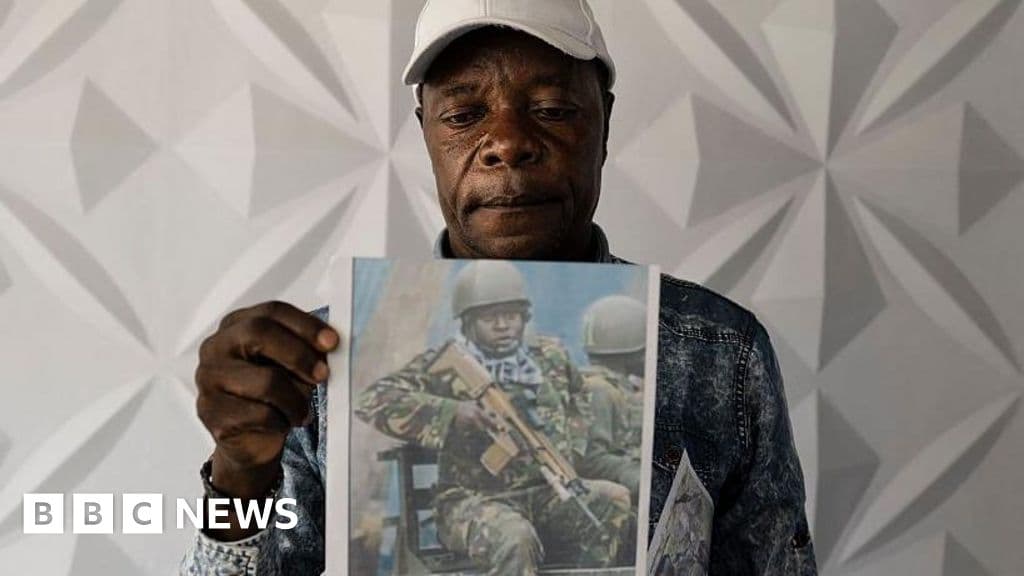
Image: BBC World
Kenya's Foreign Minister announces Russia will stop enlisting Kenyan nationals for the Ukraine conflict, addressing concerns of human trafficking and recruitment abuses.
GlipzoIn a significant diplomatic development, Kenya's Foreign Minister Musalia Mudavadi announced that Russia has committed to ceasing the recruitment of Kenyan nationals to participate in the ongoing conflict in Ukraine. This announcement came during a press conference in Moscow, where Mudavadi was joined by his Russian counterpart, Sergei Lavrov.
Mudavadi emphasized the importance of this agreement, stating, "I want to make it clear that we have now agreed that Kenyans shall not be enlisted through the [Russian] Ministry of Defence - they will no longer be eligible to be enlisted. There will be no further enlisting." This statement reflects a growing concern within Kenya regarding the involvement of its citizens in foreign conflicts, particularly those where they have been misled or coerced into combat roles.
A Kenyan intelligence report from February had raised alarms about the recruitment of over 1,000 citizens to fight for Russia in Ukraine. Many Kenyans were reportedly promised lucrative civilian jobs, only to find themselves thrust into the battlefield. This deception has raised significant ethical and legal questions about the methods employed by recruitment agencies, some of which are alleged to have ties to human trafficking networks.
During the press conference, Lavrov refrained from commenting on the specifics of the agreement but noted that all enlisted Kenyans had done so voluntarily and in accordance with Russian law, which allows for contract termination under certain conditions. This assertion, however, has done little to alleviate concerns among the families of those who have gone to fight.
In light of the troubling situation, Mudavadi is actively pursuing the repatriation of Kenyans who wish to return home from Ukraine. As of now, 27 individuals who had previously fought for Russian forces have been successfully brought back, with the Kenyan government providing psychological support to help them recover from their experiences.
Additionally, the Kenyan government has taken steps to combat the recruitment issue by shutting down over 600 recruitment agencies suspected of exploiting citizens with false job promises. Mudavadi's efforts indicate a proactive approach by the Kenyan government to protect its citizens from being lured into dangerous situations abroad.
The issue has sparked considerable public outcry within Kenya. In February, families of those believed to be fighting in Ukraine organized a protest outside the Kenyan parliament, demanding that the government take action and facilitate the return of their loved ones. This grassroots movement has highlighted the desperation felt by families caught in this crisis and the need for government intervention.
Moreover, as Mudavadi engages in discussions in Moscow, he also aims to negotiate better access for Kenyans to the Russian job market in a bid to foster stronger bilateral relations beyond the context of the Ukraine conflict. He stated, "We do not want for any reason our partnership with Russia to be defined from the lenses of the special operation [in Ukraine] agenda only. The relationship between Kenya and Russia is much broader than that."
The recruitment of foreign nationals to fight in conflicts is not unique to Russia. Ukrainian intelligence has reported that more than 1,700 individuals from 36 African nations have been enlisted to fight for Russia, highlighting a concerning trend of international recruitment in war zones. This has raised alarms about the ethical implications and the safety of individuals who may be misled into participating in warfare.
Countries like South Africa have also faced similar challenges, having recently repatriated 17 citizens who claimed they were deceived into fighting in Ukraine's Donbas region. This pattern underscores the need for increased vigilance and protective measures for citizens at risk of exploitation.
As the situation evolves, it will be crucial for Kenyan authorities to continue monitoring the recruitment landscape to ensure the safety of its citizens. The commitment from Russia to cease the enlistment of Kenyans is a positive step, but ongoing vigilance is necessary to prevent future abuses.
Looking forward, the Kenyan government must remain proactive in addressing the underlying issues that lead to recruitment, including economic instability and lack of job opportunities. The future of Kenya's relationship with Russia may hinge on how well these diplomatic discussions extend beyond military concerns and into cooperative economic initiatives.
As both nations navigate this complex landscape, the key will be establishing a partnership that prioritizes the welfare of citizens while fostering mutual benefits in trade and employment.

Tensions soar as the US and Iran engage in air strikes near the Strait of Hormuz, raising concerns over global oil supply and regional stability.
BBC World
Trump's international interventions face serious stalemates. What will this mean for U.S. foreign policy? Explore the critical challenges ahead.
Indian Express
Tehran denies resignation of President Masoud Pezeshkian amid claims of IRGC influence. What does this mean for Iran's political stability? Click to learn more!
Indian Express