
Glipzo
WorldTechnologyBusinessSportsEntertainmentScienceHealthPolitics
Glipzo
WorldTechnologyBusinessSportsEntertainmentScienceHealthPolitics
  1. Home
  2. /
  3. Politics
  4. /
  5. Judge Rules Pentagon's Press Policy Violates First Amendment
Judge Rules Pentagon's Press Policy Violates First Amendment

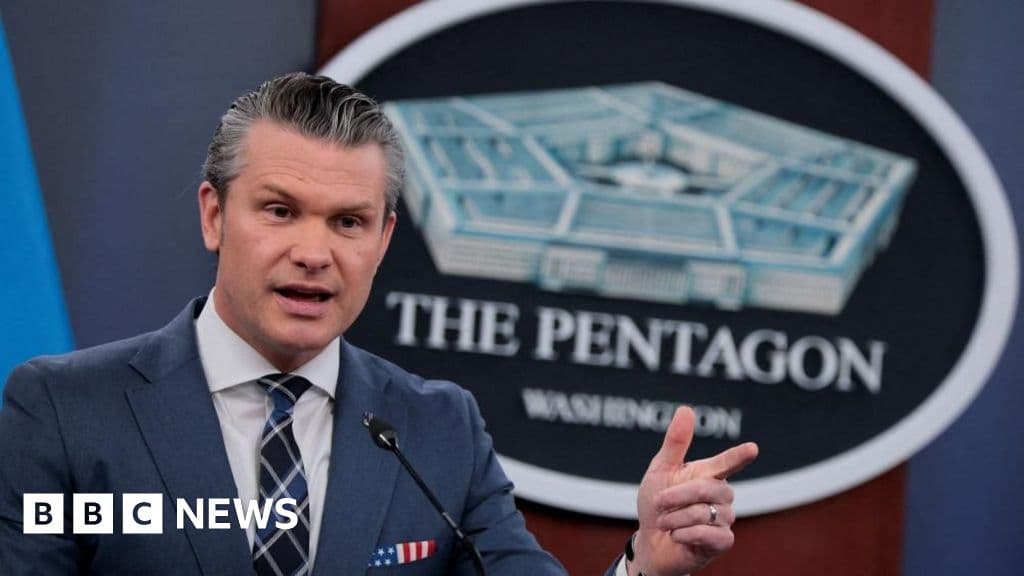
Image: BBC World

Politics
Saturday, March 21, 20264 min read

Judge Rules Pentagon's Press Policy Violates First Amendment

A federal judge strikes down Pentagon's press policy, ruling it violates the Constitution. What does this mean for press freedoms moving forward?

Glipzo News Desk|Source: BBC World

Share
Glipzo

Key Highlights

  • Federal judge rules Pentagon's press restrictions violate the Constitution.
  • Key policies limiting journalist access to be overturned.
  • Court emphasizes journalists must operate without undue constraints.
  • Pentagon to appeal ruling that impacts press freedom.
  • PPA calls for immediate reinstatement of press credentials.

In this article

  • Federal Judge Takes a Stand Against Pentagon Press Policies In a landmark decision for press freedom, a **federal judge** has determined that the Pentagon's recent policy regarding journalist access infringes upon the **First and Fifth Amendments** of the United States Constitution. This ruling comes as a significant victory for **The New York Times**, which filed a lawsuit against the Department of Defense (DoD) after the implementation of stringent restrictions that limited reporters’ ability to collect and disseminate information from the Pentagon. The case was presided over by **District Judge Paul L. Friedman**, who found that the new policy, enacted in **October**, created unreasonable barriers for journalists seeking to cover the military and national defense issues. The ruling has sparked a broader conversation about media access to government institutions and the implications for press freedom in the United States.
  • Pentagon's Policy: A Move Towards Increased Control The Pentagon's controversial policy mandated that journalists sign an agreement stipulating that any information collected must receive prior approval before publication, regardless of whether it was classified. This requirement led many prominent media outlets—including **CBS News**, **ABC News**, **NBC News**, **CNN**, **Fox News**, and **BBC News**—to refuse to comply, resulting in the revocation of their access to the Pentagon. As a consequence, access became increasingly limited to smaller, often conservative, media organizations that chose to adhere to the new guidelines. In his ruling, Judge Friedman emphasized that the policy had the potential to inhibit essential journalistic practices. He noted that the vague language of the policy could lead to a chilling effect on reporters' efforts to ask critical questions of Department employees. The judge stated, "To state the obvious, obtaining and attempting to obtain information is what journalists do," reinforcing the idea that investigative journalism is vital to a functioning democracy.
  • Key Restrictions Overturned Among the most significant aspects of Friedman’s ruling was the invalidation of a clause that allowed the Pentagon to bar journalists from the building for supposedly soliciting sensitive information. The judge pointed out that this could unfairly categorize standard journalistic inquiries as security risks. He further asserted that access to the Pentagon should not be treated as a privilege that can be revoked arbitrarily or based on an individual's viewpoint. While some aspects of the policy remain intact, such as the requirement for escorts in certain areas of the Pentagon, the ruling marks a critical step towards preserving journalistic freedoms. In response to the decision, Pentagon spokesman **Sean Parnell** expressed disagreement with the ruling and announced plans to pursue an appeal.
  • The Pentagon's Justification for New Policies The Pentagon has defended its policy as a necessary measure to safeguard national security and prevent unauthorized leaks of sensitive information. Officials have maintained that the requirements do not compel journalists to seek prior approval for their stories but rather aim to ensure the security of defense personnel and operations. However, the **Pentagon Press Association (PPA)**, which advocates for the rights of defense reporters, contended that the policy would severely limit journalists' ability to communicate with sources without government oversight. Following the ruling, the PPA celebrated the decision and called for the immediate reinstatement of credentials for all its members.
  • Why This Ruling Matters for Press Freedom This ruling holds profound implications for press freedom and the relationship between the media and government institutions. With a growing trend of government entities imposing restrictive policies on media access, this decision reinforces the essential role of journalists in holding power accountable. The ruling underscores the importance of transparency and the need for journalists to operate without undue constraints, especially when covering matters of national interest. As access to information becomes increasingly regulated, this case sets a precedent that could influence similar legal battles in the future.
  • Looking Ahead: The Future of Pentagon Access As the Pentagon prepares to challenge the ruling, the media landscape will be watching closely. The outcome of the appeal could either reinforce or undermine the principles of press freedom established by this decision. Key questions remain: Will the Pentagon modify its policies in light of the ruling, or will it continue to impose strict controls? How will this impact the broader relationship between the media and the military? The answers to these questions will shape the future of journalistic access in government institutions and the protection of First Amendment rights across the United States.

Federal Judge Takes a Stand Against Pentagon Press Policies In a landmark decision for press freedom, a **federal judge** has determined that the Pentagon's recent policy regarding journalist access infringes upon the **First and Fifth Amendments** of the United States Constitution. This ruling comes as a significant victory for **The New York Times**, which filed a lawsuit against the Department of Defense (DoD) after the implementation of stringent restrictions that limited reporters’ ability to collect and disseminate information from the Pentagon. The case was presided over by **District Judge Paul L. Friedman**, who found that the new policy, enacted in **October**, created unreasonable barriers for journalists seeking to cover the military and national defense issues. The ruling has sparked a broader conversation about media access to government institutions and the implications for press freedom in the United States.

Pentagon's Policy: A Move Towards Increased Control The Pentagon's controversial policy mandated that journalists sign an agreement stipulating that any information collected must receive prior approval before publication, regardless of whether it was classified. This requirement led many prominent media outlets—including **CBS News**, **ABC News**, **NBC News**, **CNN**, **Fox News**, and **BBC News**—to refuse to comply, resulting in the revocation of their access to the Pentagon. As a consequence, access became increasingly limited to smaller, often conservative, media organizations that chose to adhere to the new guidelines. In his ruling, Judge Friedman emphasized that the policy had the potential to inhibit essential journalistic practices. He noted that the vague language of the policy could lead to a chilling effect on reporters' efforts to ask critical questions of Department employees. The judge stated, "To state the obvious, obtaining and attempting to obtain information is what journalists do," reinforcing the idea that investigative journalism is vital to a functioning democracy.

Key Restrictions Overturned Among the most significant aspects of Friedman’s ruling was the invalidation of a clause that allowed the Pentagon to bar journalists from the building for supposedly soliciting sensitive information. The judge pointed out that this could unfairly categorize standard journalistic inquiries as security risks. He further asserted that access to the Pentagon should not be treated as a privilege that can be revoked arbitrarily or based on an individual's viewpoint. While some aspects of the policy remain intact, such as the requirement for escorts in certain areas of the Pentagon, the ruling marks a critical step towards preserving journalistic freedoms. In response to the decision, Pentagon spokesman **Sean Parnell** expressed disagreement with the ruling and announced plans to pursue an appeal.

The Pentagon's Justification for New Policies The Pentagon has defended its policy as a necessary measure to safeguard national security and prevent unauthorized leaks of sensitive information. Officials have maintained that the requirements do not compel journalists to seek prior approval for their stories but rather aim to ensure the security of defense personnel and operations. However, the **Pentagon Press Association (PPA)**, which advocates for the rights of defense reporters, contended that the policy would severely limit journalists' ability to communicate with sources without government oversight. Following the ruling, the PPA celebrated the decision and called for the immediate reinstatement of credentials for all its members.

Why This Ruling Matters for Press Freedom This ruling holds profound implications for press freedom and the relationship between the media and government institutions. With a growing trend of government entities imposing restrictive policies on media access, this decision reinforces the essential role of journalists in holding power accountable. The ruling underscores the importance of transparency and the need for journalists to operate without undue constraints, especially when covering matters of national interest. As access to information becomes increasingly regulated, this case sets a precedent that could influence similar legal battles in the future.

Looking Ahead: The Future of Pentagon Access As the Pentagon prepares to challenge the ruling, the media landscape will be watching closely. The outcome of the appeal could either reinforce or undermine the principles of press freedom established by this decision. Key questions remain: Will the Pentagon modify its policies in light of the ruling, or will it continue to impose strict controls? How will this impact the broader relationship between the media and the military? The answers to these questions will shape the future of journalistic access in government institutions and the protection of First Amendment rights across the United States.

Did you find this article useful? Share it!

Share

Related Articles

Critical UPSC Current Affairs Highlights: April 13-19, 2026
Politics
Apr 20, 2026

Critical UPSC Current Affairs Highlights: April 13-19, 2026

Stay updated with key UPSC current affairs from April 13-19, 2026. Explore language recognition, court rulings, and legislative changes shaping India.

Indian Express
Shocking: NSA Utilizes Anthropic’s Mythos Despite Blacklist
Politics
Apr 20, 2026

Shocking: NSA Utilizes Anthropic’s Mythos Despite Blacklist

The NSA is using Anthropic's Mythos AI tool despite a Pentagon blacklist, raising concerns over cybersecurity vulnerabilities and ethical AI use.

Indian Express
Ontario Premier Doug Ford to Sell Controversial $21M Jet
Politics
Apr 20, 2026

Ontario Premier Doug Ford to Sell Controversial $21M Jet

Ontario Premier Doug Ford announces the sale of a $21M jet amid public outcry. Discover the implications for his leadership and future governance.

BBC World

Categories

  • World
  • Technology
  • Business
  • Sports

More

  • Entertainment
  • Science
  • Health
  • Politics

Explore

  • Web Stories
  • About Us
  • Contact

Legal

  • Privacy Policy
  • Terms of Service

© 2026 Glipzo. All rights reserved.

