
Image: Mint (Business)
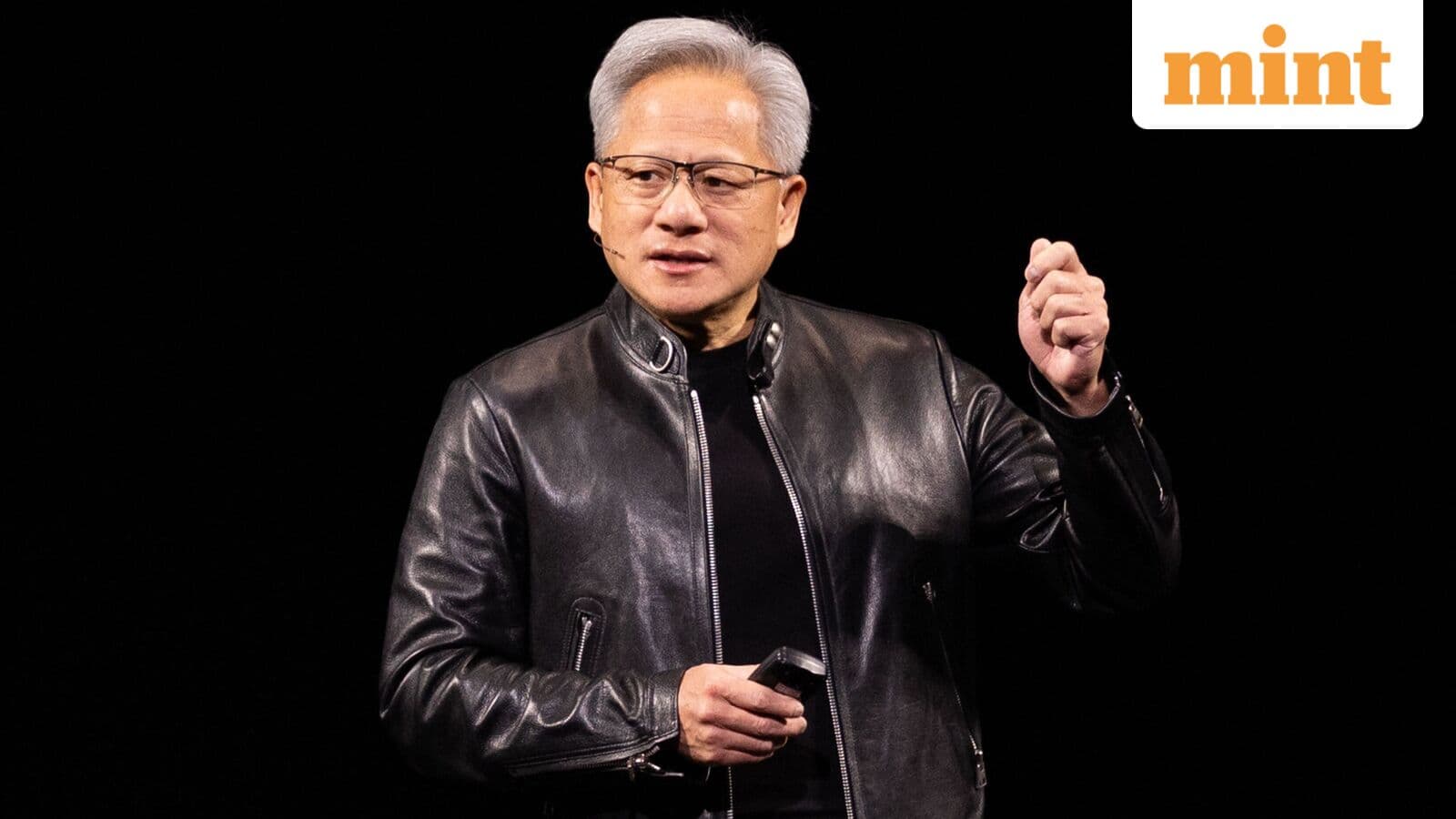
Discover Jensen Huang's provocative take on 'CEO math' and its implications for business strategy in today's AI-driven economy.
GlipzoOn March 17, 2023, Jensen Huang, the visionary CEO of Nvidia, shared a thought-provoking quote that has sparked discussions across the business community: "The more you buy, the more you save… That’s called CEO math. It’s not accurate, but it is correct." This statement might sound counterintuitive at first glance, yet its underlying wisdom speaks volumes about strategic investment in business.
Huang's quote highlights a crucial philosophy for CEOs and entrepreneurs alike, suggesting that the traditional understanding of expenditures does not always apply in the corporate world. While buying more typically means spending more, Huang's perspective encourages leaders to view investments through a different lens—one that considers the long-term benefits of strategic purchases.
Huang shared this insight ahead of Computex, an annual tech exhibition in Taiwan, where innovation and investment strategies take center stage. He elaborated on the importance of investing in graphics processing units (GPUs) and central processing units (CPUs), emphasizing their capacity to enhance operational efficiency.
According to Huang, investing in GPUs can significantly improve performance metrics: - Adding a $500 GPU to a $1,000 PC can boost performance tremendously. - In a billion-dollar data center, adding $500 million in GPUs transforms it into an AI powerhouse.
This assertion is particularly relevant in today's rapidly evolving technological landscape, where companies are increasingly integrating AI capabilities into their operations. Huang's philosophy serves as a guiding principle for CEOs aiming to maximize their investments while navigating the complexities of modern business.
In an era marked by an AI boom, Huang's insights provide a roadmap for CEOs on how to approach capital allocation. As businesses strive to remain competitive and relevant, understanding how to leverage technology is paramount. Huang's endorsement of strategic spending highlights the potential for innovation and growth that can arise from calculated investments.
Interestingly, Huang's approach can be viewed as a double-edged sword. While it encourages risk-taking and proactive investment, it also requires a nuanced understanding of market dynamics and technological advancements. CEOs must balance their desire to adopt new technologies with the financial implications of such decisions.
Jensen Huang's journey to becoming a tech titan is as compelling as his business philosophies. Born on February 17, 1963, in Taipei, Taiwan, he moved to the United States at the age of nine. His early years were marked by a strong emphasis on education, thanks to his mother, a schoolteacher who instilled in him a love for learning.
After excelling at Oregon State University, where he graduated with top honors, Huang pursued a master's degree from Stanford University in 1992. His career took off when he co-founded Nvidia in 1993 with engineers Chris Malachowsky and Curtis Priem. The trio laid the foundation for what would become a dominant force in the tech industry, particularly in graphics and AI technologies.
Huang's leadership has been instrumental in Nvidia's remarkable growth, especially during the AI surge starting in 2020. Under his guidance, Nvidia achieved unprecedented milestones, including becoming the first company to reach a $5 trillion market cap in October 2025. This achievement underscores Huang's ability to navigate the complex landscape of technology and business.
Beyond his professional endeavors, Huang's personal life is equally inspiring. He met his wife, Lori, when they were both engineering lab partners in college. Their marriage in 1985 marks a partnership that has supported Huang throughout his illustrious career. The couple's journey together reflects a shared commitment to education and innovation, values that Huang has carried into his professional life.
As the business world continues to evolve, Jensen Huang's philosophies will likely remain relevant. His insights into CEO math challenge traditional financial thinking and encourage entrepreneurs to embrace strategic investments as a means to drive growth and innovation.
Looking ahead, CEOs and business leaders should consider the following: - Investing in technology: As AI and machine learning evolve, understanding their implications for business operations will be crucial. - Balancing risk and reward: CEOs must weigh the potential benefits of investing against the financial risks involved. - Adapting to change: Staying ahead in a fast-paced market requires agility and foresight, particularly in technology adoption.
In conclusion, Jensen Huang's quote is a powerful reminder of the importance of strategic thinking in business. As we continue to navigate an increasingly complex economic landscape, his insights may serve as a guiding light for future leaders aiming to harness the power of technology for sustainable growth.

Commercial LPG prices have risen again, with increases of ₹42 in Delhi and ₹53.50 in Kolkata impacting businesses and consumers alike. Find out more.
Indian Express
Discover how a tragic coal mine explosion in Shanxi, China, reveals ongoing safety concerns in the industry amidst a push for green energy.
BBC Business
Montek Singh Ahluwalia highlights key economic challenges for India, emphasizing the need for a strategic approach to balance payments and investment.
Indian Express