
Image: BBC World
JD Vance visits Hungary to support Viktor Orban's re-election in a critical parliamentary election amid growing challenges and energy concerns.
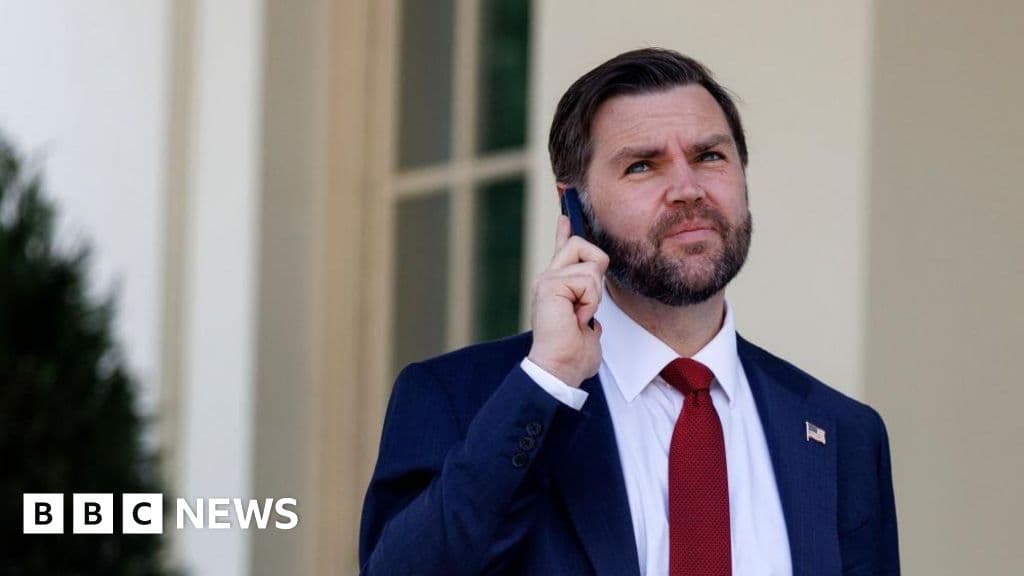
GlipzoIn a significant political move, U.S. Vice President JD Vance is set to visit Hungary to lend his support to Prime Minister Viktor Orban ahead of a crucial parliamentary election. This visit highlights the ongoing relationship between Vance, the Trump administration, and Orban, who has been a prominent figure in European politics for nearly four decades. Vance is anticipated to speak at an election rally in a football stadium in Budapest on Tuesday afternoon, where he will rally support for Orban as they face what is being termed as Orban’s most formidable electoral challenge to date.
The April 12 election is particularly critical for Orban, who is up against Peter Magyar, a former member of Orban's own Fidesz party who has since formed a new political entity called the Tisza party. Polls indicate that Tisza is currently leading Fidesz by margins ranging from 10% to 20%, placing significant pressure on Orban to secure a favorable outcome. Only one polling agency, the pro-government Nezopont, shows Fidesz narrowly ahead, indicating the tense atmosphere surrounding the upcoming election.
The ties between Orban and former President Donald Trump date back to 2016, when Orban became the first European leader to endorse Trump during his presidential campaign. This relationship has only strengthened over the years, with Trump recently expressing his “complete and total support” for Orban during a video message at the Hungarian Conservative Political Action Conference (CPAC). This endorsement comes at a time when Orban is fighting to maintain his grip on power amidst rising challenges.
Orban’s government has also been under scrutiny for its stance on Russian energy dependence. Hungary remains one of the few EU countries that have resisted pressure to reduce its reliance on Russian fossil fuels. During his previous visit to Washington, Orban secured an exemption from U.S. sanctions on Russian oil companies, a deal that Trump has indicated may not extend to Orban’s potential successors if he loses the election. This exemption is particularly critical as Hungary relies heavily on Russian oil and gas, with the Druzhba pipeline and TurkStream pipeline playing essential roles in its energy supply.
The situation has become increasingly complex for Hungary, particularly following disruptions in energy supplies. Since the end of January, there has been no oil flowing through the Druzhba pipeline, a vital artery for Hungarian energy needs, due to geopolitical tensions following a Russian attack on infrastructure in Ukraine. Orban has attributed these supply issues to Ukraine’s inability to restore the pipeline, further complicating Hungary’s energy strategy.
In a bid to address potential shortages, Hungary has been compelled to tap into its fuel reserves and import oil through an alternative pipeline from Croatia. However, new challenges emerged when the government of Serbia reported the discovery and neutralization of explosives near the TurkStream gas pipeline, which runs close to Hungary's border. This incident has been labeled a terror attack by Orban and the pro-government media, but critics, including opposition leader Peter Magyar, have suggested that it may have been orchestrated to bolster Orban's campaign narrative.
With the election drawing closer, Orban has made hostility towards Ukraine and its President Volodymyr Zelensky a focal point of his campaign. This strategy appears to resonate with certain voter segments who share skepticism towards Ukraine, but it has not been without its complications. Recent scandals involving leaked phone conversations of Peter Szijjarto, Hungary's foreign minister, have raised eyebrows. Transcripts reveal Szijjarto providing Russian officials with insights on confidential EU discussions and attempting to influence sanctions against Russia, a move he defends as standard diplomatic practice.
These revelations could potentially undermine Orban's standing, as voters may question the integrity of his government. Nevertheless, Vance's visit is seen as an opportunity for Orban to present himself as a strong leader, further emphasizing the importance of international backing in his bid for reelection. The presence of a high-profile U.S. politician in Hungary may sway undecided voters who are looking for stability in tumultuous times.
As the election looms, all eyes will be on the impact of Vance's support for Orban. Should Vance's presence galvanize enough voters, it could secure Orban's position for another term. Conversely, if the Tisza party maintains its lead, it could signal a significant shift in Hungarian politics, potentially altering the balance of power in the region.
This election is not just a referendum on Orban's past governance but also a pivotal moment that could redefine Hungary's political landscape and its relationship with both the EU and the U.S.. Vance’s visit underscores the intertwining of U.S. domestic politics with European affairs, making the upcoming announcement crucial for observers of both regions. The outcome will undoubtedly have far-reaching implications, not just for Hungary but for the broader geopolitical dynamics of Europe.
In the coming week, watch for key developments from the election rally and how voter sentiments shift in response to Vance's endorsement and the evolving energy situation in Hungary. The stakes are high, and the implications of this election may resonate far beyond Hungarian borders.

Tensions soar as the US and Iran engage in air strikes near the Strait of Hormuz, raising concerns over global oil supply and regional stability.
BBC World
Trump's international interventions face serious stalemates. What will this mean for U.S. foreign policy? Explore the critical challenges ahead.
Indian Express
Tehran denies resignation of President Masoud Pezeshkian amid claims of IRGC influence. What does this mean for Iran's political stability? Click to learn more!
Indian Express