
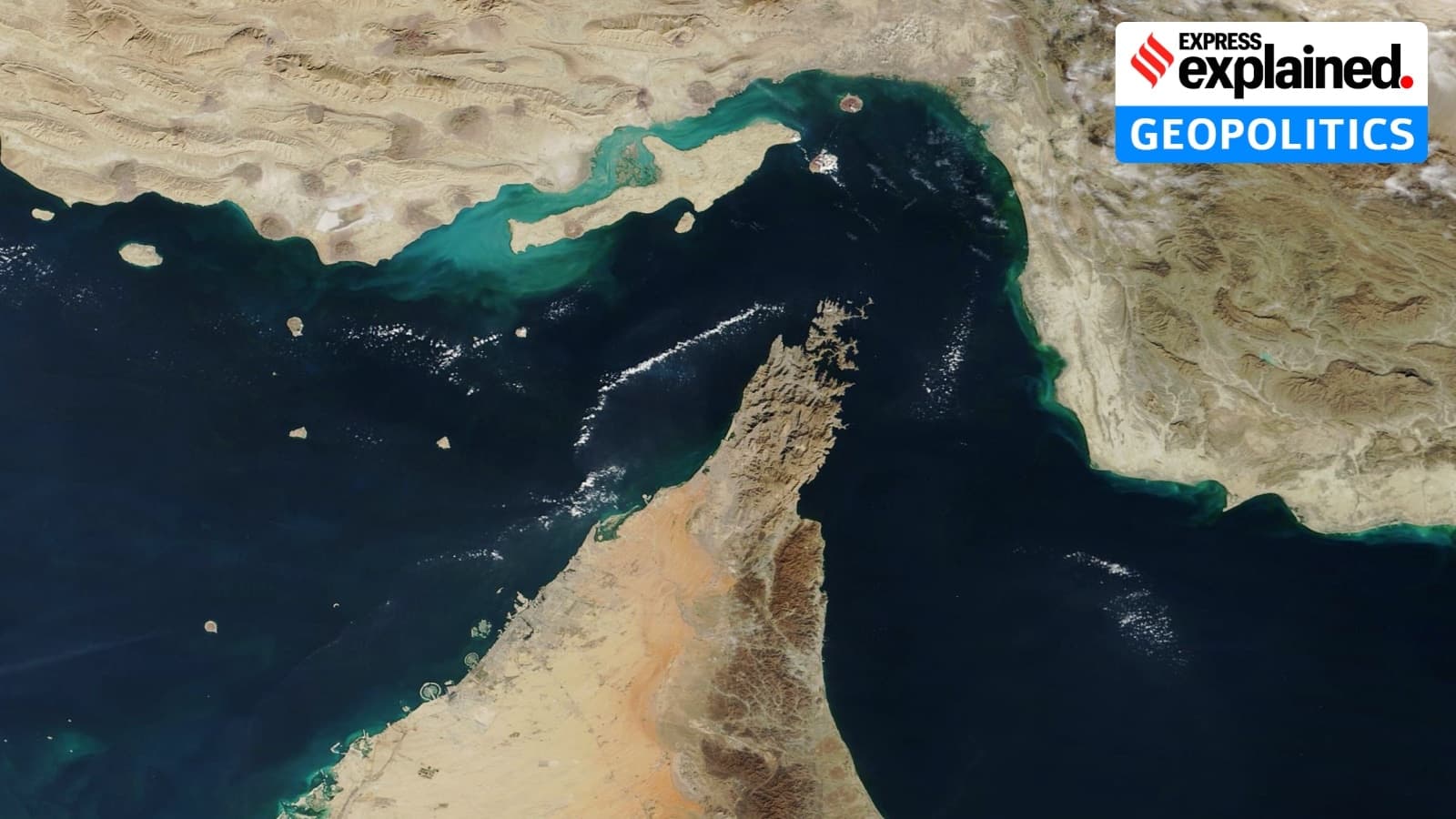
Image: Indian Express
Iran's control of the Strait of Hormuz raises global tensions. Discover the historical context and future implications of this vital maritime chokepoint.
GlipzoIran's recent maneuvers in the Strait of Hormuz signal a crucial escalation in geopolitical tensions. As retaliation against recent U.S.-Israeli military actions, Iran has effectively tightened its grip on one of the world’s most vital maritime routes. This strategic move has transformed the strait into what some analysts are calling a militarized toll booth, raising concerns for global oil markets and international shipping.
Reports indicate that Iran has begun imposing a $2 million transit fee on vessels from certain allied nations, further complicating navigation through this critical waterway. Despite a temporary ceasefire that took effect on April 8, uncertainty looms over the region, sending ripples through the global economy. Tehran maintains that passage through the strait is contingent upon its permission and must be coordinated with its military forces.
The current crisis is steeped in history, reflecting a long-standing practice of leveraging the Strait of Hormuz for political gain. Spanning approximately 167 kilometers in length, with its narrowest point measuring just 33 kilometers across, this strait has served as a crucial maritime crossroads for nearly 4,000 years. Historically, the strait was managed under the Kingdom of Hormuz from the 10th to 13th centuries, which capitalized on its strategic location by relocating the empire to Hormuz Island.
During this period, the strait operated somewhat like a modern toll system, imposing customs duties on ships traversing its waters. The region's strategic value has only increased over time, particularly with the rise of the British Empire, which further commercialized the strait to enhance trade routes for its spice vessels. Today, the Strait of Hormuz is arguably more critical than ever, facilitating approximately 20 million barrels of oil daily, which represents about 20% of global oil supply, alongside a significant portion of the world’s liquefied natural gas (LNG).
The legality surrounding Iran’s new toll system raises significant questions. The United Nations Convention on the Law of the Sea (UNCLOS), effective since 1994, governs international maritime law and grants vessels the right to transit passage without hindrance. However, complications arise since Iran signed the UNCLOS but has yet to ratify it. Tehran adheres to the 1958 Geneva Convention, claiming it recognizes only the right of “innocent passage.” This legal distinction allows Iran to assert its right to halt passage if it perceives a potential threat.
Iran's stance is bolstered by its rejection of non-suspendable passage during UNCLOS negotiations, effectively preserving a loophole that allows it to impose restrictions. Additionally, the navigable lanes fall within the territorial sea limits claimed by both Iran and Oman, allowing Iran to enforce sovereignty in these waters. This situation complicates the international status of the Strait of Hormuz, transforming what is traditionally viewed as a high-seas corridor into a contested area.
Iran's military posture in the Strait of Hormuz has evolved significantly since the 1979 Islamic Revolution. The regime has invested heavily in military capabilities, particularly in asymmetric warfare tactics. The Iran-Iraq War of the early 1980s marked Iran's initial foray into using non-traditional strategies, such as deploying sea mines and missiles against commercial shipping. This approach established a precedent for using the strait as a tool of geopolitical leverage.
Iran has continued to develop its military architecture, further entrenching its strategy of controlling maritime routes to assert power over neighboring nations and global interests. This military expansion, coupled with economic pressures from sanctions, has led Iran to view the Strait of Hormuz as an essential bargaining chip on the international stage.
The implications of Iran's actions in the Strait of Hormuz extend far beyond regional politics. Control over this vital passageway could disrupt global oil supplies, leading to volatile prices and economic instability. The strait is a critical artery for energy exports, and any prolonged conflict or disruption could have a cascading effect on international markets.
Moreover, Iran's strategy poses a challenge to the U.S. and its allies, who rely on securing these maritime routes for energy and trade. As tensions escalate, the situation highlights the fragile balance of power in the Middle East and the potential for military confrontation in the region.
As the situation unfolds, several key factors will influence the future of the Strait of Hormuz: - International Response: How will global powers respond to Iran's actions? Will there be diplomatic efforts to de-escalate tensions? - Economic Impacts: Continued tolls or disruptions could lead to increased oil prices and affect global economies, particularly those heavily reliant on Middle Eastern oil. - Military Developments: What military strategies will Iran adopt moving forward? Could we see an escalation in naval confrontations?
In conclusion, Iran's strategic manipulation of the Strait of Hormuz is not simply a contemporary issue but a manifestation of historical practices. As the world watches, the implications of this maritime control will resonate in global markets and international relations, making it a critical focal point for ongoing geopolitical discourse.

Tensions soar as the US and Iran engage in air strikes near the Strait of Hormuz, raising concerns over global oil supply and regional stability.
BBC World
Trump's international interventions face serious stalemates. What will this mean for U.S. foreign policy? Explore the critical challenges ahead.
Indian Express
Tehran denies resignation of President Masoud Pezeshkian amid claims of IRGC influence. What does this mean for Iran's political stability? Click to learn more!
Indian Express