
Image: BBC World
Iran's navy warns ships crossing the Strait of Hormuz may be destroyed, raising concerns over maritime safety and global shipping amidst ongoing conflict.
GlipzoIn a significant development affecting global shipping, Iran's navy has issued a stark warning to vessels traversing the Strait of Hormuz, declaring that any ships attempting to cross without permission will be targeted and destroyed. This alarming statement was confirmed by the shipping brokerage firm SSY and reported by BBC Verify. The Strait of Hormuz, a crucial maritime corridor, is responsible for transporting approximately 20% of the world’s oil and liquefied natural gas, making it a focal point in the ongoing tensions involving Iran, the US, and Israel.
On April 4, 2023, a two-week ceasefire was established, contingent on ensuring safe passage through the Strait. Despite this ceasefire, only a handful of vessels have successfully navigated the strait since the announcement, raising questions about the effectiveness of the agreement. The strait, measuring just 33 kilometers (21 miles) at its narrowest point, has become increasingly perilous due to the disruption caused by escalating conflicts in the region.
The situation has created significant ripples throughout the global economy, resulting in rising energy prices and highlighting the heavy reliance of international supply chains on this vital waterway. The Gulf region is also essential for the transportation of various chemicals crucial for manufacturing items like microchips, pharmaceuticals, and fertilizers.
Despite a slight decrease in oil prices following the ceasefire announcement, industry experts caution that maritime traffic through the Strait of Hormuz is unlikely to return to normal levels anytime soon. Lars Jensen, a prominent shipping analyst at Vespucci Maritime, stated, “Most shipping lines would want to get details and reassurances on what it actually takes to transit, and those details are not available.” As of April 8, only three bulk carriers—NJ Earth, Daytona Beach, and Hai Long 1—had successfully crossed the strait since the ceasefire was declared, according to ship-tracking data analyzed by BBC Verify. This contrasts sharply with the pre-conflict average of 138 vessels passing through daily.
The uncertainty surrounding these crossings prompts skepticism about whether the three ships that passed were part of a renewed maritime flow or simply pre-planned voyages. Ana Subasic, a shipping analyst with Kpler, remarked, “It is still too soon to tell whether this reflects a broader ceasefire-driven reopening or a previously approved exception.”
As the situation evolves, the apprehension among ship owners remains palpable. Richard Meade, editor-in-chief of Lloyd's List, emphasized that it has been a “very dangerous” time for those in the shipping industry, noting that “we know Iran is essentially still in control of the strait.” Owners may still need to seek permission from the Islamic Revolutionary Guard Corps (IRGC), leaving many questions unanswered regarding the process and safety of navigation.
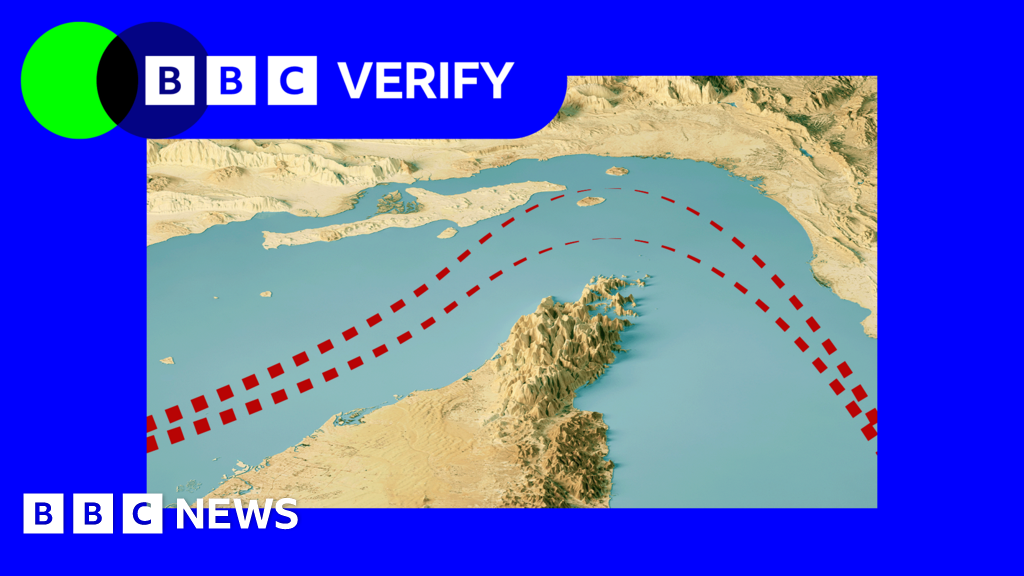
Analysis of the routes taken by the three vessels reveals a northern pathway near Iran's coastline, a notable deviation from the typical southern route used before the conflict. This change in navigation patterns underscores the heightened risks involved and the need for strategic decision-making by ship owners.
Should shipping activity resume, it’s anticipated that the first vessels to traverse the strait will be those that have been stranded, many of which are now fully loaded. Meade predicts that nearly 800 ships have been stuck in the region for weeks, with priorities shifting towards getting these vessels out as soon as possible. However, the duration of the ceasefire presents an additional layer of uncertainty, as many operators are wary of becoming trapped once the two-week window closes.
Niels Rasmussen, a shipping analyst from BIMCO, expressed skepticism about a surge in vessels entering the Gulf, stating, “I doubt there will be a large influx of ships into the Gulf… because they do not want to risk being trapped after the two-week window closes.”
The potential presence of sea mines in the strait adds another concern for maritime safety. Thomas Kazakos, secretary general of the International Chamber of Shipping, emphasized the necessity for clear confirmations regarding the safety of navigation for ships and seafarers. Moreover, there are emerging reports suggesting that ships may face the requirement to make payments to Iran for safe passage, potentially complicating the situation further.
The ongoing conflict and the Iranian navy's assertive stance have profound implications for global trade and energy markets. The Strait of Hormuz is not just a geographical chokepoint but a barometer for geopolitical stability and economic tranquility. As the situation develops, stakeholders in shipping, energy, and global markets will be closely monitoring the security assurances provided and any movements of vessels through this critical passageway.
Expect developments regarding negotiation strategies, shipping protocols, and updates on the geopolitical landscape surrounding the Strait of Hormuz as the international community seeks to stabilize this vital corridor.
Commercial LPG prices have risen again, with increases of ₹42 in Delhi and ₹53.50 in Kolkata impacting businesses and consumers alike. Find out more.
Indian Express
Discover how a tragic coal mine explosion in Shanxi, China, reveals ongoing safety concerns in the industry amidst a push for green energy.
BBC Business
Montek Singh Ahluwalia highlights key economic challenges for India, emphasizing the need for a strategic approach to balance payments and investment.
Indian Express