
Image: Mint (Business)
Iran's President calls for BRICS intervention in US-Israel conflict; Modi emphasizes regional security. What implications lie ahead for Middle Eastern geopolitics?
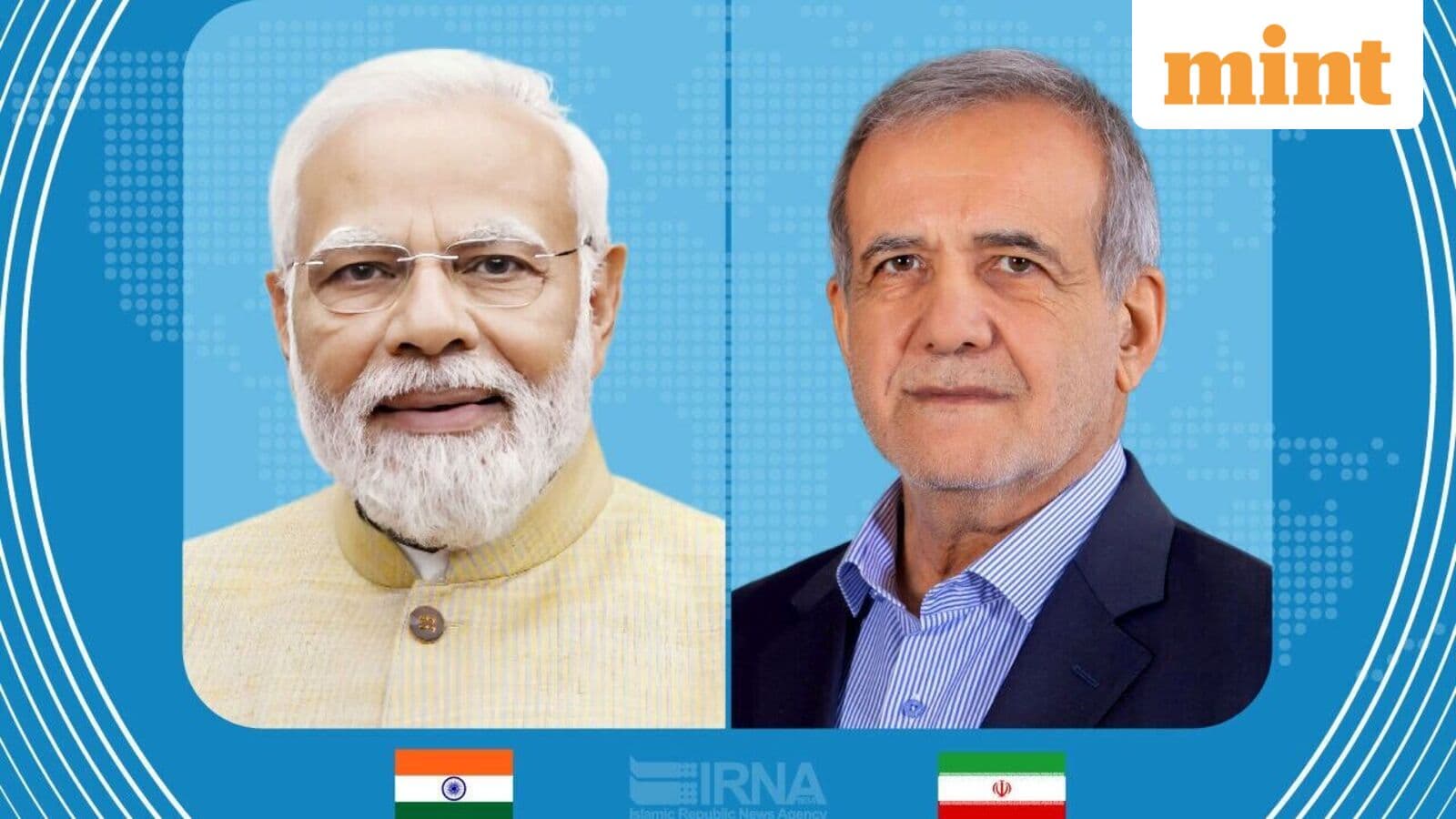
GlipzoDuring a recent phone call with Indian Prime Minister Narendra Modi, Iran's President Masoud Pezeshkian emphasized the urgent need for an "immediate cessation" of what he described as US-Israel aggression. This conversation took place on Saturday, marking a critical moment in the ongoing tensions surrounding the conflict that has ensnared the Middle East. Pezeshkian's remarks were shared by Iran's embassy in India via a post on X (formerly Twitter).
In his communication, President Pezeshkian urged the BRICS nations—Brazil, Russia, India, China, and South Africa—to assume a more independent role in mediating the ongoing attacks on Iran. He stressed that an end to the conflict requires guarantees against future aggressions by the United States and Israel.
In response, PM Modi condemned the assaults on critical infrastructure in the Middle East during the call, although he refrained from addressing the BRICS group's involvement. Modi accentuated the significance of ensuring freedom of navigation and the security of shipping routes in light of the disruptions in the Strait of Hormuz. This region is pivotal for global oil transportation, and any instability could have far-reaching implications for international markets.
Last week, External Affairs Minister S. Jaishankar highlighted BRICS's ongoing discussions with Iran, noting conversations with Iranian Foreign Minister Seyed Abbas Araghchi about bilateral relations and issues relevant to the BRICS agenda. This engagement underscores the complexities of international diplomacy as nations navigate the turbulent waters of Middle Eastern geopolitics.
The current conflict, which escalated on February 28, began when the United States and Israel launched coordinated strikes on Iranian military and nuclear facilities as part of Operation Epic Fury. This operation resulted in significant casualties, including the death of Iran’s Supreme Leader Ali Khamenei and several senior military figures. Iran retaliated with missile and drone strikes on Israeli positions and US military bases in the Gulf, indicating a dramatic escalation in hostilities.
Pezeshkian asserted that Iran was not the instigator of this conflict, describing the attacks on his country as unprovoked and lacking legal justification. He pointed to the tragic loss of 168 innocent schoolchildren due to a US strike on a school in Minab, further amplifying the humanitarian crisis resulting from the ongoing violence.
During the conversation, President Pezeshkian rejected US President's claims that military actions were necessary to prevent Iran from developing nuclear weapons. He noted that past meetings with the Supreme Leader emphasized a strong opposition to nuclear armament, supported by both administrative and religious directives against pursuing such weapons.
Furthermore, Pezeshkian challenged the narrative that Iran is a source of instability in the region. He highlighted Israel’s actions across various nations, including Lebanon, Gaza, Iraq, and Qatar, arguing that these are often justified under the guise of maintaining security but, in reality, exacerbate unrest and lead to further conflict.
The Iranian President articulated a vision for a regional security framework involving West Asian countries. He proposed that such a framework would be instrumental in fostering peace and stability through local cooperation without external interference, an idea that resonates with many nations weary of outside influence in their regional affairs.
Pezeshkian expressed Iran's readiness to engage in discussions with global leaders, including interactions on the sidelines of the United Nations, to allow for verification of its peaceful nuclear program. This openness is crucial for mitigating tensions and fostering dialogue in a charged atmosphere.
The implications of this conversation are significant. The BRICS nations, representing some of the largest emerging economies, could play a pivotal role in mediating tensions and fostering dialogue in this fraught geopolitical landscape. As the conflict continues, the potential for broader regional instability looms large, affecting not only local populations but also international trade and security dynamics.
As we look ahead, the actions of both Iran and the BRICS nations will be crucial. Will BRICS take on a more assertive role in resolving tensions? How will the US and Israel respond to these calls for cessation of hostilities? The answers to these questions could reshape the geopolitical landscape in the Middle East for years to come.
The ongoing dialogue between Iran and global powers, particularly within frameworks like BRICS, highlights the intricate balance of power and the importance of multilateral discussions in resolving international conflicts. As the region continues to navigate these tumultuous waters, it remains to be seen how effective diplomatic efforts will be in curbing violence and fostering long-term peace.

Tensions soar as the US and Iran engage in air strikes near the Strait of Hormuz, raising concerns over global oil supply and regional stability.
BBC World
Trump's international interventions face serious stalemates. What will this mean for U.S. foreign policy? Explore the critical challenges ahead.
Indian Express
Tehran denies resignation of President Masoud Pezeshkian amid claims of IRGC influence. What does this mean for Iran's political stability? Click to learn more!
Indian Express