
Image: Indian Express
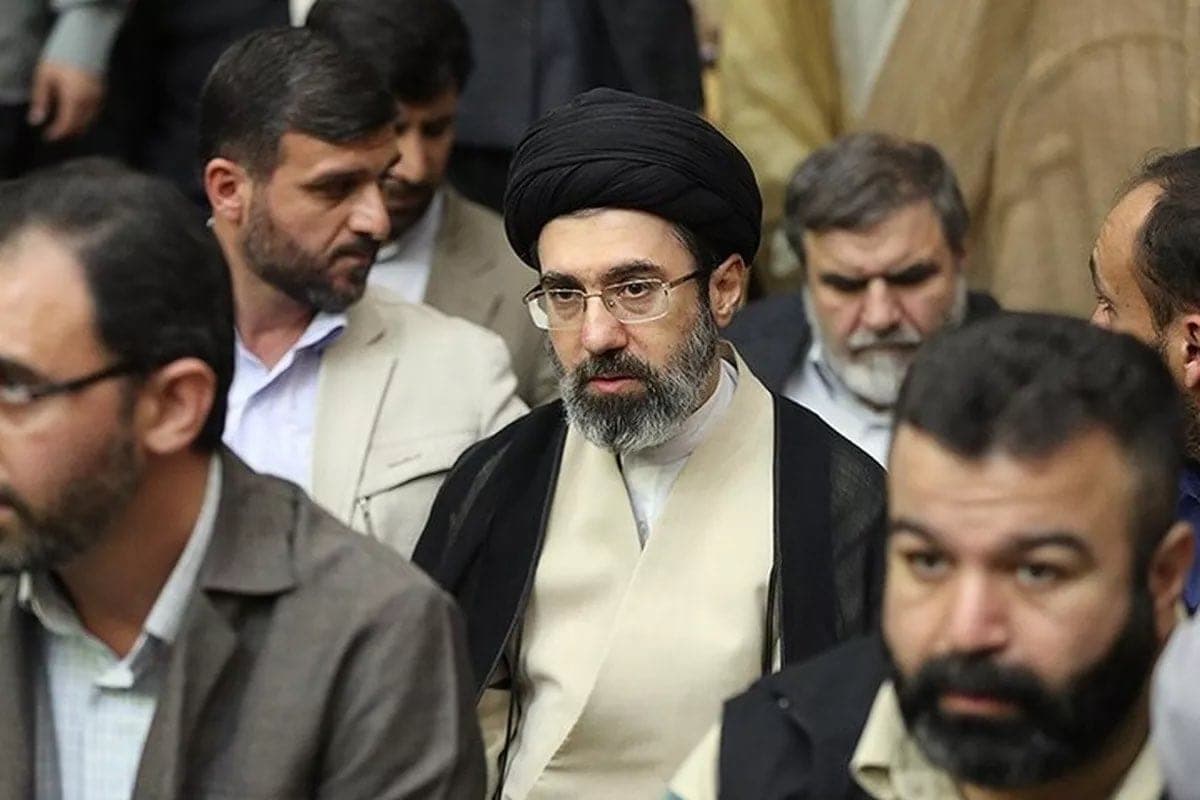
Mojtaba Khamenei's election as Iran's Supreme Leader signals a pivotal shift in Iranian politics, challenging US and Israeli ambitions for regime change.
GlipzoThe appointment of Mojtaba Khamenei as Iran's new Supreme Leader marks a pivotal moment in the country's political landscape. Elected by the 88-member Assembly of Experts, this decision represents a significant setback for the aspirations of both the United States and Israel regarding regime change in Iran. Since the beginning of recent hostilities, US President Donald Trump has openly expressed his desire to influence the selection of a successor to the late Ayatollah Ali Khamenei. In contrast, Russian President Vladimir Putin has welcomed Mojtaba's elevation, while Israeli military officials have indicated their intent to target the new leader.
The assassination of the elder Ayatollah Khamenei has seemingly reinforced the resolve of both the Iranian regime and its populace against the perceived threats from the American and Israeli military forces. This sentiment echoes the words of McGeorge Bundy, who served as National Security Advisor under former US President Lyndon B. Johnson. Bundy emphasized that the greatest surprise of the Vietnam War was the enemy's enduring resistance. The rise of Mojtaba Khamenei stands as a testament to this resilience, a crucial element that appears to have been underestimated by American and Israeli leaders before engaging in military action.
Vali Nasr, a prominent expert on Iran, has noted that Bundy's insights should have been essential reading for the Trump administration. However, it seems these lessons have been overlooked. For Israeli Prime Minister Benjamin Netanyahu, pursuing a conflict with Iran has been a long-held ambition, leading many to characterize this ongoing engagement as “Bibi’s War.” In a recent press briefing, President Trump revealed that he had considered several potential leaders for a post-war Iran, only to lament that they had all been “killed.” This raises questions about whether these figures fell victim to military actions or were eliminated by loyal forces of the late Ayatollah.
The current state of affairs in Iran, following 11 days of conflict with fewer than 1,500 casualties, suggests that the Islamic Revolutionary Guard Corps (IRGC) and other military forces remain largely intact. Should the US and Israel continue to escalate the conflict, the repercussions could be even harsher than those witnessed in Iraq or Afghanistan.
The decision to install Mojtaba Khamenei as Supreme Leader appears contradictory to the founding principles of Iran's revolutionary movement, which aimed to eliminate dynastic rule. However, there is little indication that the elder Khamenei intended for his son to succeed him. Instead, the Assembly of Experts' choice seems driven by a strategic imperative to ensure that the “Khamenei chapter” of Iran's revolutionary history does not conclude under foreign influence.
Prior to his elevation, Mojtaba Khamenei functioned as a critical advisor to his father, often referred to as “the power behind the robes” in US diplomatic cables released by WikiLeaks. Had the elder Khamenei not been assassinated, the transition might have unfolded differently; nevertheless, the new leader now embodies a powerful symbol of defiance against American and Israeli strategies.
Reflecting on Iran’s trajectory, Henry Kissinger, former US Secretary of State, previously stated that Iran must choose between being a nation or a cause. By selecting Mojtaba Khamenei, Iran has demonstrated its intention to remain both. The new Supreme Leader's views on critical issues will significantly influence the ongoing war and the widespread suffering it has caused.
One of the foremost issues is Iran's nuclear ambitions. In 2012, the newly appointed leader declared that possessing nuclear weapons constituted a “great sin.” However, the devastation wrought by ongoing conflicts may compel him to reconsider Iran's nuclear policy. It's important to note that Iran's pursuit of nuclear technology did not originate from the 1979 Revolution, but rather began in the 1970s under the pro-American Shah regime, who initiated the nuclear program.
As Mojtaba Khamenei steps into his role as Supreme Leader, the implications for both Iran and the wider region are profound. His leadership will likely shape Iran's foreign policy, particularly in relation to the West. The ongoing tensions between Iran and the US, alongside Israel's military posture, create a precarious environment where any missteps could escalate into broader conflict.
The world watches closely as Iran navigates its path forward. The new Supreme Leader's decisions on military strategy, nuclear policy, and diplomatic relations will be crucial in determining the future stability of the region.
In conclusion, the ascension of Mojtaba Khamenei as Iran's Supreme Leader signifies not only a new chapter in Iranian politics but also presents challenges for international relations. His leadership could redefine Iran's approach to both internal governance and external threats, influencing geopolitical dynamics for years to come.

Tensions soar as the US and Iran engage in air strikes near the Strait of Hormuz, raising concerns over global oil supply and regional stability.
BBC World
Trump's international interventions face serious stalemates. What will this mean for U.S. foreign policy? Explore the critical challenges ahead.
Indian Express
Tehran denies resignation of President Masoud Pezeshkian amid claims of IRGC influence. What does this mean for Iran's political stability? Click to learn more!
Indian Express