
Image: BBC World
Iran intensifies crackdown on protests with checkpoints and internet restrictions, raising tensions amid ongoing unrest. What’s next for the citizens of Tehran?
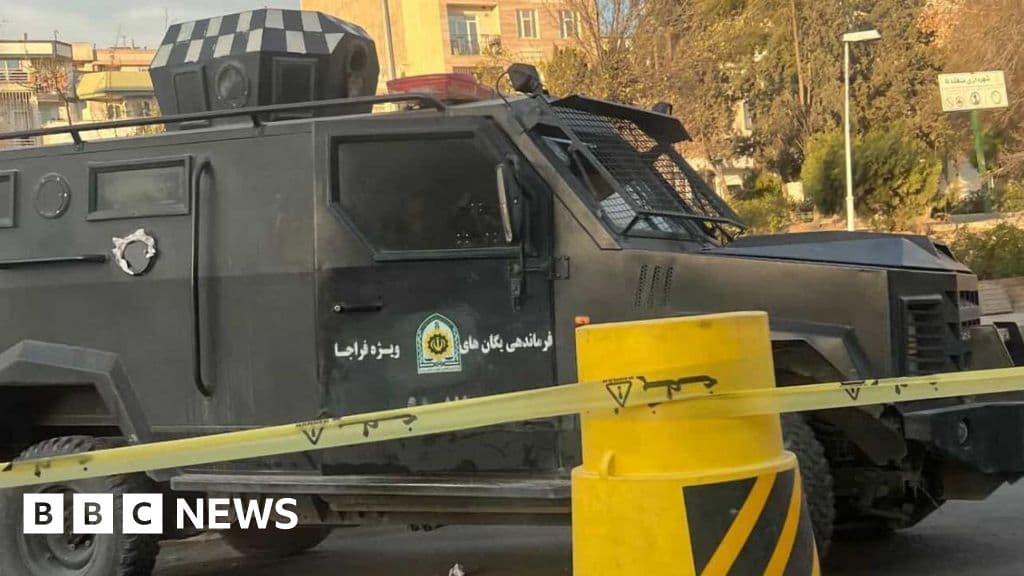
GlipzoIn a significant escalation of security, Iran has implemented new measures aimed at suppressing anti-establishment protests across Tehran. As unrest continues to simmer, checkpoints have emerged throughout the capital, internet access has been severely restricted, and residents are receiving mass text warnings designed to deter participation in protests. The government's actions come in the wake of recent violence, with security forces being targeted in various attacks.
Residents of Tehran have reported to the BBC that these checkpoints are strategically placed in critical areas, including underfoot bridges and within road tunnels. This shift in strategy comes after several checkpoints were reportedly struck by drone attacks, leading to casualties among the security personnel. On March 11, the hardline Fars News Agency confirmed that Israeli strikes had claimed the lives of at least 10 members of the security forces across different districts in the capital.
The Human Rights Activists News Agency (Hrana) has estimated that the recent protests have resulted in the deaths of at least 7,000 civilians. This staggering figure highlights the grave consequences of the ongoing unrest and government crackdown. A young man in his twenties recounted his experience navigating a checkpoint, describing his tactic of expressing gratitude to the security forces to avoid further scrutiny. He noted, “I started saying things like, 'Thanks for your hard work,' as if they were genuinely putting in a lot of effort.” This anecdote sheds light on the desperate measures individuals are taking to stay safe amidst an atmosphere of fear.
On the other hand, a young woman shared her experience of altering her wardrobe choices due to safety concerns. “I always wear colorful clothes. But now I don’t,” she stated, reflecting the anxiety many feel when confronted with the heavy presence of security forces. The pervasive fear extends even to those providing essential services, such as a man who sells secure internet connections to bypass the government’s restrictions. His work, he admits, is viewed as criminal by state authorities.
The government's efforts to restrict internet access serve multiple purposes: they not only cut off communication with the outside world but also hinder protesters’ ability to organize and mobilize effectively. With encrypted messaging apps often being the primary means of sharing protest locations and rallying supporters, the lack of connectivity creates significant challenges for activists.
Despite the government's attempts to clamp down on internet access, tech-savvy residents have found ways to circumvent these restrictions. Some have resorted to using SpaceX's Starlink technology, which has enabled them to maintain connections even during extensive outages. However, these services come at a steep price—approximately $6 (£4.50) for just 1 gigabyte of data, which is exorbitant given the average monthly salary in Iran is between $200 to $300 (£151-226).
Authorities have responded to the emergence of unfiltered internet access by arresting individuals involved in its distribution. On March 12, an arrest was made in Fars Province of a man accused of setting up a network to sell unfiltered internet connections through Starlink. The Fars Province Police reported that the suspect was found in possession of a Starlink device and various related technologies, indicating a proactive effort to stifle alternative communication channels.
The use of Starlink in Iran is not without its consequences; individuals caught using this technology face potential imprisonment of up to two years. As a result, authorities have been actively searching for Starlink equipment to prevent unauthorized internet access.
In light of these developments, government spokesperson Fatemeh Mohajerani stated on March 10 that efforts are underway to restore internet access, specifically for those who can convey the government’s narrative globally. This official stance reflects a broader strategy to control the flow of information both internally and externally.
While domestic applications remain operational, many users express skepticism regarding their security compared to encrypted platforms, which are critical for organizing protests. The challenges posed by internet restrictions are not merely technical; they represent a broader attempt by the Iranian government to maintain control over dissent and public discourse.
As Iran grapples with ongoing protests, the government's tightening grip is likely to continue. The introduction of checkpoints, internet restrictions, and arrests of those attempting to circumvent these measures indicate a determined effort to suppress dissent. However, the resilience of the Iranian people and their willingness to adapt may pose challenges for authorities.
Looking ahead, it will be crucial to monitor how these developments unfold. The potential for increased public unrest remains high, especially if the government fails to address the underlying grievances fueling these protests. Observers should also keep an eye on the role of technology in facilitating communication among protesters, as innovations in this area could either enhance or hinder their efforts in the coming weeks.
In summary, Iran stands at a critical juncture. The interplay between state repression and citizen resistance will shape the country's political landscape in the near future.

Tensions soar as the US and Iran engage in air strikes near the Strait of Hormuz, raising concerns over global oil supply and regional stability.
BBC World
Trump's international interventions face serious stalemates. What will this mean for U.S. foreign policy? Explore the critical challenges ahead.
Indian Express
Tehran denies resignation of President Masoud Pezeshkian amid claims of IRGC influence. What does this mean for Iran's political stability? Click to learn more!
Indian Express