
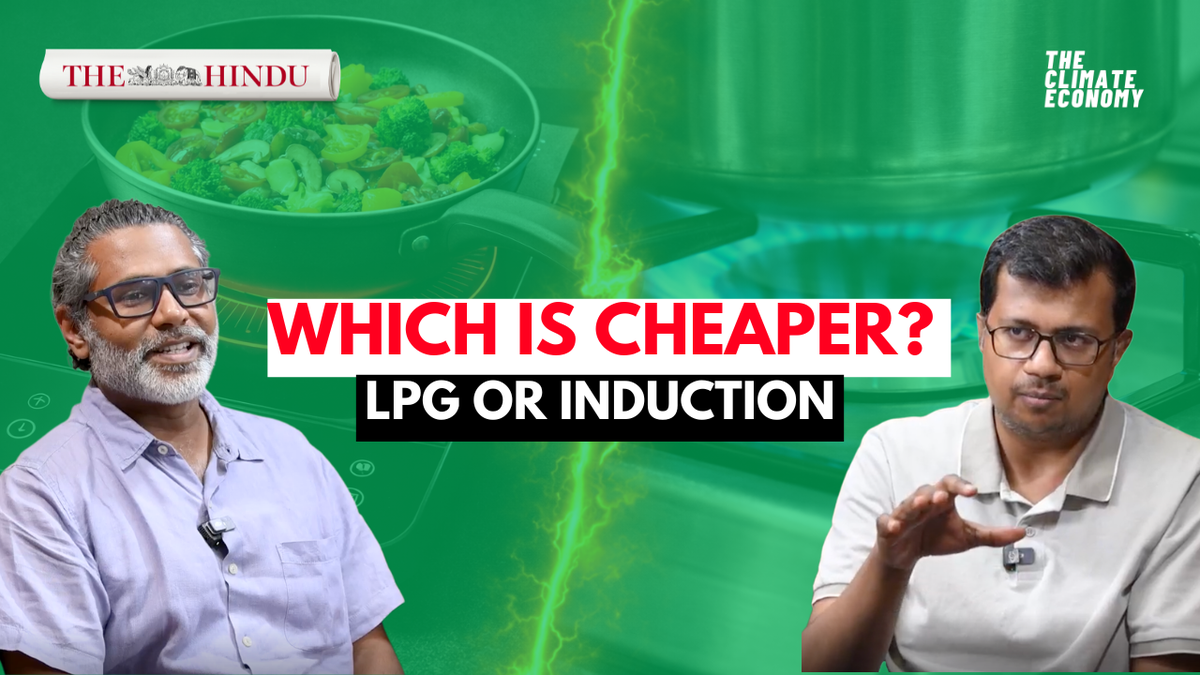
Image: The Hindu
Discover whether LPG or induction cooking saves more money in this insightful comparison, revealing key insights from experts at The Climate Economy.
GlipzoIn an era where energy efficiency and cost-effectiveness are paramount, the debate of induction cooking versus LPG gas stoves has taken center stage. This discussion, which was highlighted in a recent episode of The Climate Economy by Kunal Shankar from The Hindu, seeks to clarify when to choose one cooking method over the other. So, what’s the verdict? Let’s dive into the details.
Induction cookers utilize electromagnetic energy to directly heat pots and pans, while LPG (liquefied petroleum gas) stoves burn gas to produce heat. Each method has its unique advantages and disadvantages, particularly in terms of cost efficiency, energy consumption, and environmental impact. Here’s a breakdown of the two:
Disadvantages: - Emissions: LPG stoves produce carbon dioxide and other emissions, contributing to air pollution. - Safety Risks: There’s always a risk of gas leaks, which can be dangerous if not managed properly.
Drawbacks: - Initial Cost: Induction cookers can be more expensive to purchase upfront compared to traditional gas stoves. - Cookware Compatibility: Not all pots and pans are suitable for induction cooking; you need magnetic materials to work effectively.
When deciding which cooking method is more economical, it’s essential to consider both the initial investment and the operational costs. Here’s a snapshot:
1. Initial Costs: - LPG Stove: Generally cheaper to purchase, often found for around $30 to $100. - Induction Cooker: Typically priced between $100 to $400, depending on features and brands.
2. Operational Costs: - LPG: Costs can vary based on local gas prices, but averages around $2.50 per gallon. A standard household may use around 20 gallons a month, totaling approximately $50. - Electricity for Induction: Average household rates might be around $0.12 per kWh. If an induction stove uses 1.5 kWh per hour of cooking, monthly costs could be about $30, assuming similar usage hours.
In the discussion hosted by Kunal Shankar, Vasudevan Mukunth, Deputy Science Editor at The Hindu, shared insights into the practical applications of each cooking method. According to Mukunth:
> "While LPG may appear cheaper upfront, the long-term benefits of induction cooking can outweigh the initial investment, especially for those who prioritize efficiency and sustainability."
This reflects a growing trend among consumers who are becoming increasingly environmentally conscious and looking for solutions that align with sustainable practices.
The choice between LPG and induction cooking is not just about immediate cost savings—it also reflects broader societal shifts towards sustainability and energy conservation. As more households seek to reduce their carbon footprint, understanding the implications of cooking methods becomes essential.
As technology advances, we may see further improvements in both induction technology and LPG safety measures. Innovations in energy-efficient appliances and renewable energy sources could redefine how we think about cooking in the future.
In conclusion, the decision to opt for LPG or induction cooking should align with individual values regarding cost, safety, and environmental impact. As the culinary landscape evolves, staying informed will empower consumers to make the best choices for their kitchens and our planet.

Commercial LPG prices have risen again, with increases of ₹42 in Delhi and ₹53.50 in Kolkata impacting businesses and consumers alike. Find out more.
Indian Express
Discover how a tragic coal mine explosion in Shanxi, China, reveals ongoing safety concerns in the industry amidst a push for green energy.
BBC Business
Montek Singh Ahluwalia highlights key economic challenges for India, emphasizing the need for a strategic approach to balance payments and investment.
Indian Express