
Image: BBC World
Hungarians vote Sunday in a pivotal election that could end Viktor Orbán's 16-year rule, reshaping the nation's political landscape and its EU ties.
GlipzoOn Sunday, Hungary faces a critical electoral moment that could end the long-standing rule of Prime Minister Viktor Orbán, marking a significant shift in the nation’s political landscape. This election not only holds local implications but could also reverberate across Europe, the United States, and even Russia. As voters cast their ballots, the world watches closely, anticipating the potential upheaval in Hungary’s governance.
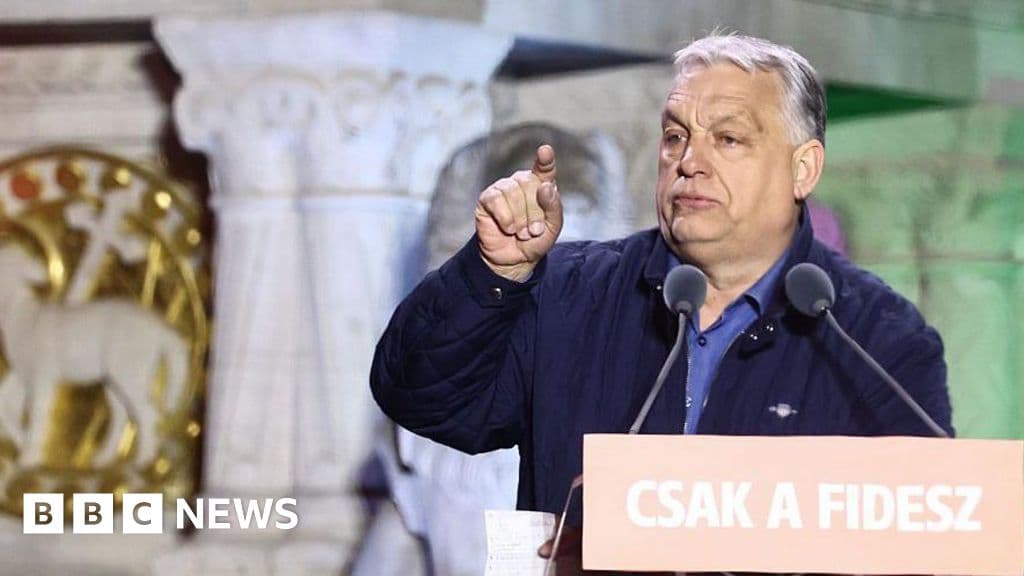
The polls indicate a favorable outcome for Péter Magyar, a former member of Orbán's ruling Fidesz party who has since launched his own grassroots movement, the Tisza party. Magyar is challenging the incumbent and advocating for a dramatic shift in Hungary’s political direction. However, Orbán delivered a rallying speech to thousands of supporters in Budapest, expressing confidence in his party’s chances. "We are going to achieve such a victory that will surprise everyone, perhaps even ourselves," he proclaimed, igniting a fervor among his base.
Voting is set to take place from 06:00 to 19:00 local time (04:00 to 17:00 GMT), with results expected to emerge later in the evening. In the lead-up to the election, tensions have escalated as Orbán accused the opposition of resorting to desperate measures to gain power. Magyar, in response, urged voters not to succumb to what he described as Fidesz pressure and blackmail.
Orbán has been at the helm of Hungary for 16 years, during which his administration has faced criticism for creating what the European Parliament labeled a “hybrid regime of electoral autocracy.” Magyar's campaign promises a “change of regime,” aimed at resetting Hungary’s relations with the European Union and reducing ties with Russia, a move that resonates with many voters. His final rally in Debrecen attracted significantly larger crowds than Orbán’s event in Budapest, indicating a possible shift in public sentiment.
Notably, Orbán remains a favored ally of former U.S. President Donald Trump, who encouraged Hungarians to vote for what he called his “true friend, fighter, and WINNER.” During his campaign, Orbán reiterated his main themes of resisting Brussels and opposing aid to Ukraine. His supporters responded passionately, chanting phrases like “we won’t let that happen,” reflecting the emotional stakes of this election.
Despite his past electoral successes, the current political climate presents challenges for Orbán. The Hungarian economy is facing difficulties, compounded by various scandals, including revelations of communication between Foreign Minister Péter Szijjártó and his Russian counterpart, which has raised eyebrows in European circles. Orbán's veto of a considerable €90 billion aid package to Ukraine has further strained Hungary’s relationships with European partners.
Analysis from Hungary's leading pollsters suggests that Magyar’s Tisza party holds a substantial lead. Róbert László, an election specialist at Political Capital, noted that many analysts had initially expected Fidesz to close the gap as the election approached, but this hasn’t materialized. Magyar's campaign aims for not just an absolute majority of 100 seats in the 199-seat parliament, but a two-thirds super-majority necessary to reverse many of Fidesz's constitutional changes affecting judicial independence and media ownership.
László predicts that while Tisza might secure a comfortable majority, achieving a super-majority is more uncertain. He emphasizes that the recent vocal opposition from police, military, and business figures suggests a shifting public sentiment against Orbán’s rule.
Hungary’s electoral system adds layers of complexity to the voting process. Orbán has acknowledged that the system has favored Fidesz historically. However, a pollster named Nézőpont Institute suggests a glimmer of hope for Orbán, identifying 22 battleground seats that could sway the election in his favor. With a portion of votes from these constituencies not counted immediately, final results may take days to confirm, keeping the nation on edge.
As Hungary navigates this pivotal moment, the implications of the election extend far beyond its borders. A victory for Magyar could signal a broader shift in Europe, particularly in how EU member states engage with both internal and external pressures. Should Tisza achieve its goals, Hungary might realign itself more closely with its European partners and reassess its relationship with Russia.
In conclusion, the stakes are high as Hungarians head to the polls. Whether they choose to continue Orbán’s tenure or embrace a new direction with Magyar will shape not only the future of Hungary but could also alter the political landscape across Europe. The world will be watching closely as the results come in, and the implications of this election will undoubtedly unfold in the weeks and months to follow.

Tensions soar as the US and Iran engage in air strikes near the Strait of Hormuz, raising concerns over global oil supply and regional stability.
BBC World
Trump's international interventions face serious stalemates. What will this mean for U.S. foreign policy? Explore the critical challenges ahead.
Indian Express
Tehran denies resignation of President Masoud Pezeshkian amid claims of IRGC influence. What does this mean for Iran's political stability? Click to learn more!
Indian Express