
Image: BBC World
Lebanon and Israel hold first direct talks in over 30 years, addressing Hezbollah's influence and humanitarian crises amid ongoing conflict.
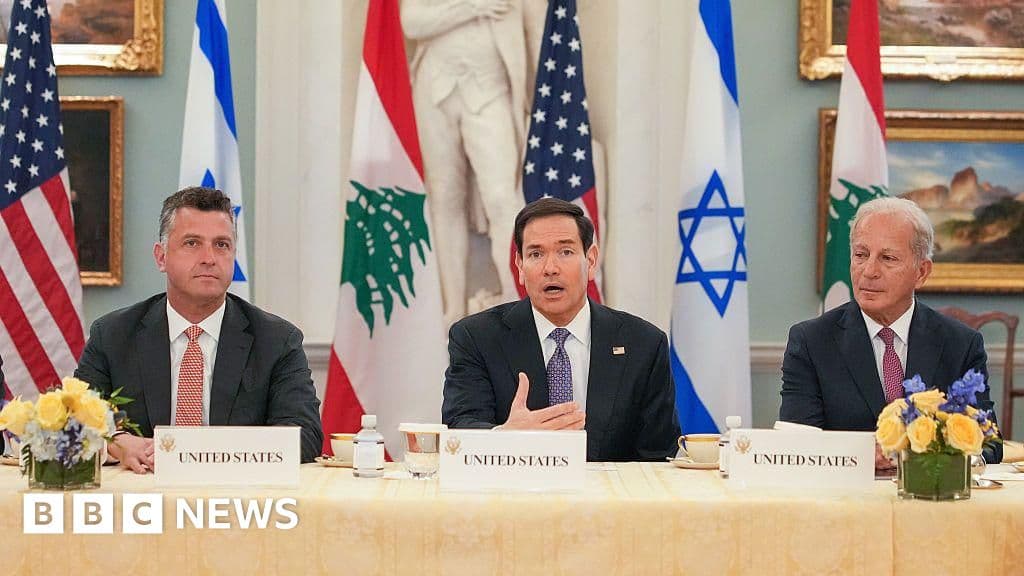
GlipzoIn a significant diplomatic development, Lebanon and Israel have commenced their first direct negotiations in over 30 years. This encounter, mediated by US Secretary of State Marco Rubio, seeks to address the ongoing hostilities between Israel and the Iran-backed Hezbollah militant group. The meeting marks a pivotal moment in the long-standing conflict, providing a hopeful spark for peace in a region often fraught with violence.
The discussions, which took place on Tuesday in Washington, aim to establish a framework for dialogue between the two nations, who have not held formal diplomatic relations since the early 1990s. In a statement, Rubio described the negotiations as a “historic opportunity” to diminish Hezbollah’s influence in the region, emphasizing the potential for a more stable Middle East.
The backdrop for these talks is dire. Over 2,000 lives have been lost since Israeli military operations in Lebanon escalated on March 2, coinciding with intensified conflicts involving both Iranian and Israeli forces. As the negotiations unfolded, Hezbollah asserted its ongoing military operations against Israeli targets, claiming at least 24 attacks on Israeli positions during the discussions.
In response to the escalating violence, Israel reiterated its objective of dismantling all non-state terror organizations, with Hezbollah at the forefront of its concerns. Meanwhile, Lebanon has called for a ceasefire and immediate humanitarian measures to alleviate the suffering of its citizens—many of whom are displaced due to the ongoing conflict.
The initial discussions yielded several important points: - Direct Negotiations: Both countries agreed to continue direct talks, with specific times and locations pending. - Hezbollah’s Influence: The US emphasized the need to curb Hezbollah's power, a sentiment echoed by Israeli officials. - Humanitarian Concerns: Lebanon's representatives pressed for immediate action to address the humanitarian crisis affecting civilians caught in the conflict.
A spokesperson from the US State Department, Tommy Pigott, confirmed that both sides expressed commitment to reducing Hezbollah's influence while addressing Lebanon's pressing humanitarian needs.
Lebanon's internal political landscape complicates its ability to effectively engage in these talks. President Joseph Aoun expressed hope that these discussions could lead to a resolution of suffering for the Lebanese populace, particularly in the southern regions most affected by the conflict. He stated that the Lebanese Armed Forces must be the sole entity responsible for security in the area, stressing the need for a unified front against Hezbollah.
However, Hezbollah’s entrenched position in Lebanese society poses significant challenges. The group, which emerged in 1982, wields considerable political and military power, holding two cabinet positions in the Lebanese government. A senior Hezbollah official, Wafiq Safa, dismissed the legitimacy of any agreements reached during the talks, declaring that the organization would not be bound by decisions made in the US.
The talks between Israel and Lebanon are set against a broader backdrop of international negotiations involving Iran. In separate discussions, Iranian negotiators underscored the importance of including Lebanon in any ceasefire arrangements, a proposition that has met resistance from both the US and Israel.
The US State Department clarified that the groundwork for the Israel-Lebanon talks was laid a month prior to the Iranian discussions, highlighting their independent significance. As the situation evolves, the international community is closely monitoring developments, particularly regarding how these talks might influence Hezbollah's actions and the overall security dynamics in the region.
The outcome of these negotiations remains uncertain. While both Lebanon and Israel have expressed a willingness to engage, the deeply rooted complexities of their relationship, combined with Hezbollah's formidable presence, present formidable hurdles.
Moving forward, stakeholders will be looking for: - Further Engagement: Will Lebanon and Israel continue to negotiate, or will Hezbollah’s influence derail the talks? - Humanitarian Measures: How quickly can the two countries implement agreed-upon humanitarian initiatives to help those affected by the conflict? - Regional Stability: What impact will these discussions have on the broader Middle Eastern geopolitical landscape?
The potential for change is palpable, but only time will tell if this meeting marks a turning point in a conflict that has persisted for decades. As the world watches, the hope for peace hangs in the balance, resting on the outcomes of these unprecedented discussions.

Tensions soar as the US and Iran engage in air strikes near the Strait of Hormuz, raising concerns over global oil supply and regional stability.
BBC World
Trump's international interventions face serious stalemates. What will this mean for U.S. foreign policy? Explore the critical challenges ahead.
Indian Express
Tehran denies resignation of President Masoud Pezeshkian amid claims of IRGC influence. What does this mean for Iran's political stability? Click to learn more!
Indian Express