
Image: BBC World
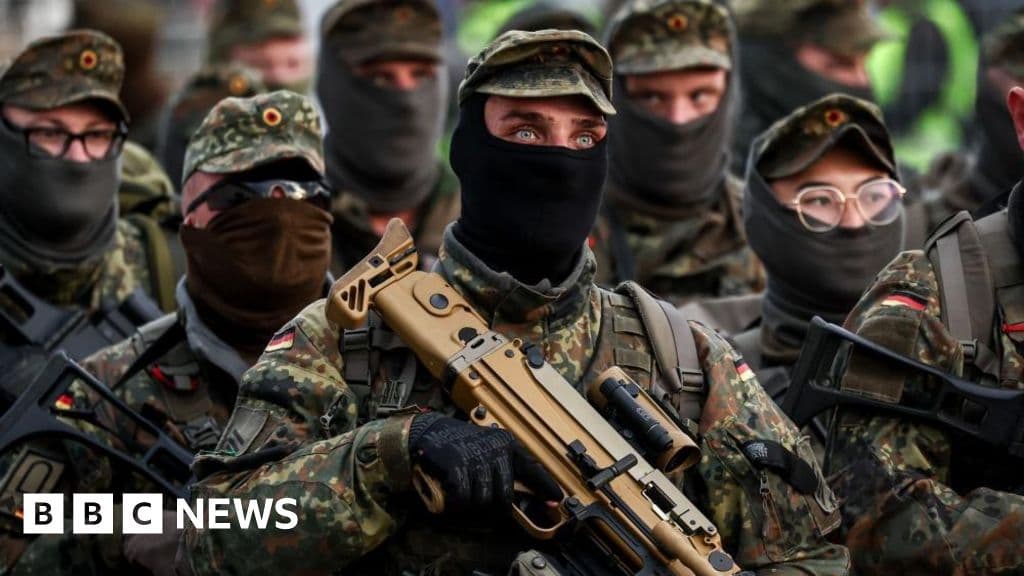
German males aged 17-45 must now seek military approval for long stays abroad, part of a new law aimed at strengthening national defense.
GlipzoGermany has introduced a significant change affecting its young male population, mandating that men aged 17 to 45 must seek military approval for extended stays abroad. This requirement is part of the newly enacted Military Service Modernisation Act, which took effect on January 1, 2023. The aim of this legislation is to bolster national defense in light of escalating threats, particularly following Russia's invasion of Ukraine.
The new law stipulates that males in the specified age range must obtain prior approval for any travel outside Germany lasting more than three months. A spokesperson from the German Defence Ministry confirmed this requirement in a statement to the BBC. This change has drawn attention, as many were unaware of this obligation until it was highlighted by the Frankfurter Rundschau newspaper.
The Defence Ministry clarified that these regulations are designed to maintain a reliable military registration system. In case of an emergency, the government needs to be aware of individuals who might be residing abroad for extended periods. While the specifics of enforcement for those who fail to comply remain vague, the ministry has acknowledged that the implications for young people could be significant. Plans are underway to create exemptions to prevent unnecessary bureaucratic hurdles.
This new requirement is rooted in Germany's Conscription Act of 1956, which has undergone several amendments over the years. Previously, the obligation to report long-term stays abroad was only applicable during national defense or mobilization scenarios. A Defence Ministry representative noted that a similar provision existed during the Cold War, although it had little practical effect at that time.
The Military Service Modernisation Act aims to expand the number of active personnel in the German military from approximately 180,000 to 260,000 by 2035. As part of these reforms, the German parliament voted in December to implement voluntary military service, which requires all 18-year-olds to complete a questionnaire regarding their interest in joining the armed forces. Starting in July 2027, these individuals will also undergo a fitness assessment to evaluate their service eligibility in the event of war.
Although the military service is voluntary for most, there is a possibility that if the security landscape deteriorates, Germany might have to consider reintroducing compulsory military service. This prospect has already sparked protests among young people, with many expressing their discontent on social media. One protest organizer stated, “We don’t want to spend half a year of our lives locked up in barracks, being trained in drill and obedience and learning to kill.”
Such sentiments reflect a broader concern among the younger generation about the implications of a military-focused policy shift. As Germany transitions from a long-standing period of military downsizing—following substantial reductions in the 1990s—to a renewed emphasis on defense, the reactions from the youth are crucial in shaping the discourse around national service and military engagement.
Chancellor Friedrich Merz has articulated a bold vision for the Bundeswehr, aiming to transform it into Europe’s most formidable conventional army. This ambition is a direct response to the perceived increase in security threats across the continent. Germany, which had a military force of nearly 500,000 during the Cold War, has seen significant reductions since the end of compulsory military service in 2011 under former Chancellor Angela Merkel.
As these reforms unfold, several elements will be critical to monitor: - Youth Engagement: How will young Germans respond to the new regulations and potential military service requirements? - Political Reactions: What will the response be from political factions and civil society regarding military reform and youth mobilization? - Security Dynamics: How will changes in Germany’s military strategy influence its role within NATO and the broader European security architecture?
The decisions made today regarding military engagement and national defense will shape not only Germany’s military capabilities but also its societal values and the relationship between the state and its citizens. As the geopolitical landscape evolves, the balance between security and civil liberties will be a pivotal issue for Germany, reflecting broader trends across Europe.
In conclusion, as the Military Service Modernisation Act takes root, the implications for young German males and the future of the Bundeswehr will be closely watched, marking a significant chapter in Germany's military history.

Tensions soar as the US and Iran engage in air strikes near the Strait of Hormuz, raising concerns over global oil supply and regional stability.
BBC World
Trump's international interventions face serious stalemates. What will this mean for U.S. foreign policy? Explore the critical challenges ahead.
Indian Express
Tehran denies resignation of President Masoud Pezeshkian amid claims of IRGC influence. What does this mean for Iran's political stability? Click to learn more!
Indian Express