
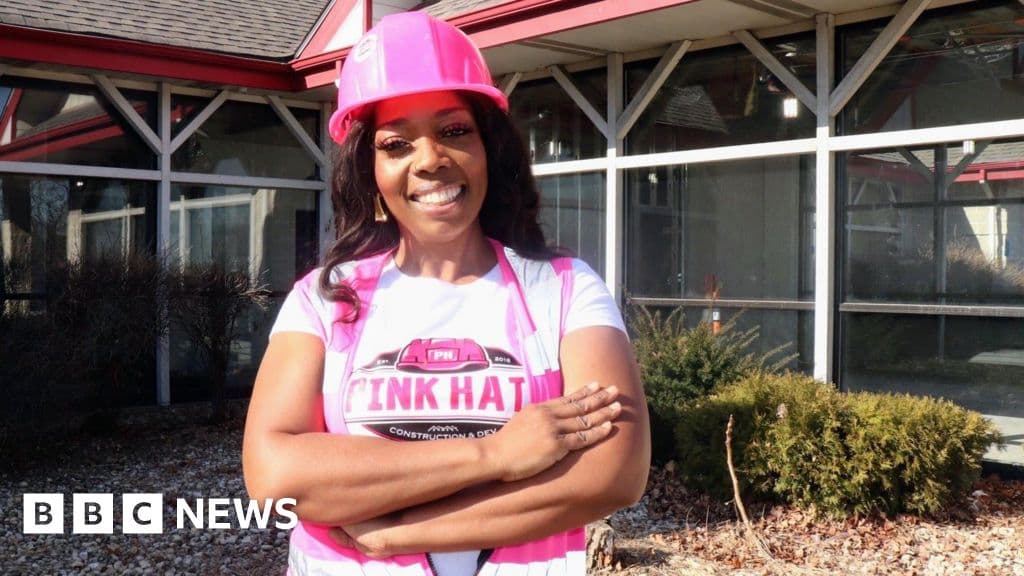
Image: BBC Business
Discover how Traci Quinn transformed her life from prison to leading a successful all-female construction company in Chicago, empowering communities.
GlipzoIn Chicago, a powerful story of resilience unfolds as Traci Quinn, a mother and grandmother, transforms her life from incarceration to leadership in the construction sector. After spending three years in prison, Traci has become the boss of an all-female construction company, Pink Hats, which she founded with the vision of revitalizing the most impoverished areas of her city.
Traci’s journey began not in construction, but as a dedicated nurse for two decades. During her time in hospitals, she witnessed firsthand the therapeutic benefits of cannabis for patients suffering from various ailments, including seizures. This inspired her to enter the medical cannabis industry. However, her aspirations took a drastic turn in 2016 when she was arrested for transporting 50 pounds (23 kg) of cannabis into Tennessee, a state known for its stringent cannabis laws. Despite legally purchasing the cannabis in California, Traci faced conviction for trafficking, which led to a life-altering prison sentence.
“I bawled, I cried, and asked God why. I had taken care of people my whole life,” Traci reflects on her time in prison. Yet, it was during these challenging moments that she felt a calling to create a construction company aimed at redeveloping underserved communities in Chicago.
Upon her release in 2020, amid the Covid pandemic, Traci launched Pink Hats with little experience in construction. Initially, she relied on subcontractors to manage her projects. However, she quickly realized that many of them lacked the skills necessary for quality work. “I learned the hard way that they couldn't deliver,” she admits, recalling instances where her projects fell short of expectations.
Traci's experiences highlight the persistent sexism in the construction industry, which still sees women comprising only 11% of the workforce. For black women, the numbers are even more disheartening, with less than 7% representation. “It's a male-dominated world, and they don’t always respect you,” she noted, sharing her struggles with male contractors who often dismissed her authority.
Traci also faced the additional burden of racism. “You absolutely have to work harder as a black woman.” She has confronted biases throughout her life, even in her previous nursing career where people often assumed she was a nursing assistant despite holding the position of director of nursing.
Determined to succeed, Traci pursued construction classes and sought mentorship from established companies to build her skills. “You really have to be bold as a woman working in construction,” she emphasized. Yet, she encountered obstacles beyond technical skills. When applying for municipal contracts with the City of Chicago, she faced challenges related to financial literacy.
Despite her qualifications, Traci found herself struggling to navigate the complex financial jargon required to secure funding for her projects. “I was too embarrassed to admit I didn’t understand,” she recalled, but eventually reached out for help. Non-profit organizations stepped in to assist her with accounting and job bidding processes, crucially boosting her confidence and capabilities.
Thanks to her perseverance and the support she received, Pink Hats thrived. In its first year, the business generated $125,000 (£95,000) in revenue, and projections indicate it will exceed $1 million by 2025. Traci has successfully built a team that includes all four of her daughters, along with six part-time female staff members, emphasizing the importance of female empowerment in a male-dominated industry.
Pink Hats specializes in transforming both residential and commercial spaces, focusing on projects that uplift marginalized communities. A notable achievement for the company was the renovation of a 30-room home for women recovering from substance abuse in Chicago's Austin neighborhood. This project exemplifies Traci’s commitment to not just building structures but also rebuilding lives.
Traci Quinn’s story is not just about overcoming personal challenges but also about addressing broader issues within the construction industry and society at large. Her journey underscores the need for greater representation of women, particularly women of color, in sectors traditionally dominated by men.
Moreover, her dedication to community redevelopment highlights the urgent need for social responsibility in business practices. As Traci continues to pave her path, she serves as an inspiration for others facing similar adversities, showing that with determination, support, and skill development, it is indeed possible to turn one's life around.
As Pink Hats prepares for significant growth in the coming years, the focus will remain on empowering women in construction and developing projects that improve the living conditions of Chicago’s most vulnerable populations. Traci’s leadership and vision will likely inspire more women to enter the industry, challenging the status quo and creating a more inclusive environment.
In the future, it will be critical to monitor how Traci's initiatives influence not only her local community but also the national conversation around diversity and inclusion in construction. Her story serves as a beacon of hope, proving that second chances can lead to transformative change.
Traci Quinn’s journey from prison to a successful business owner exemplifies the essence of resilience, determination, and the possibility of rebuilding a life, making her an influential figure in both the construction industry and her community.

Commercial LPG prices have risen again, with increases of ₹42 in Delhi and ₹53.50 in Kolkata impacting businesses and consumers alike. Find out more.
Indian Express
Discover how a tragic coal mine explosion in Shanxi, China, reveals ongoing safety concerns in the industry amidst a push for green energy.
BBC Business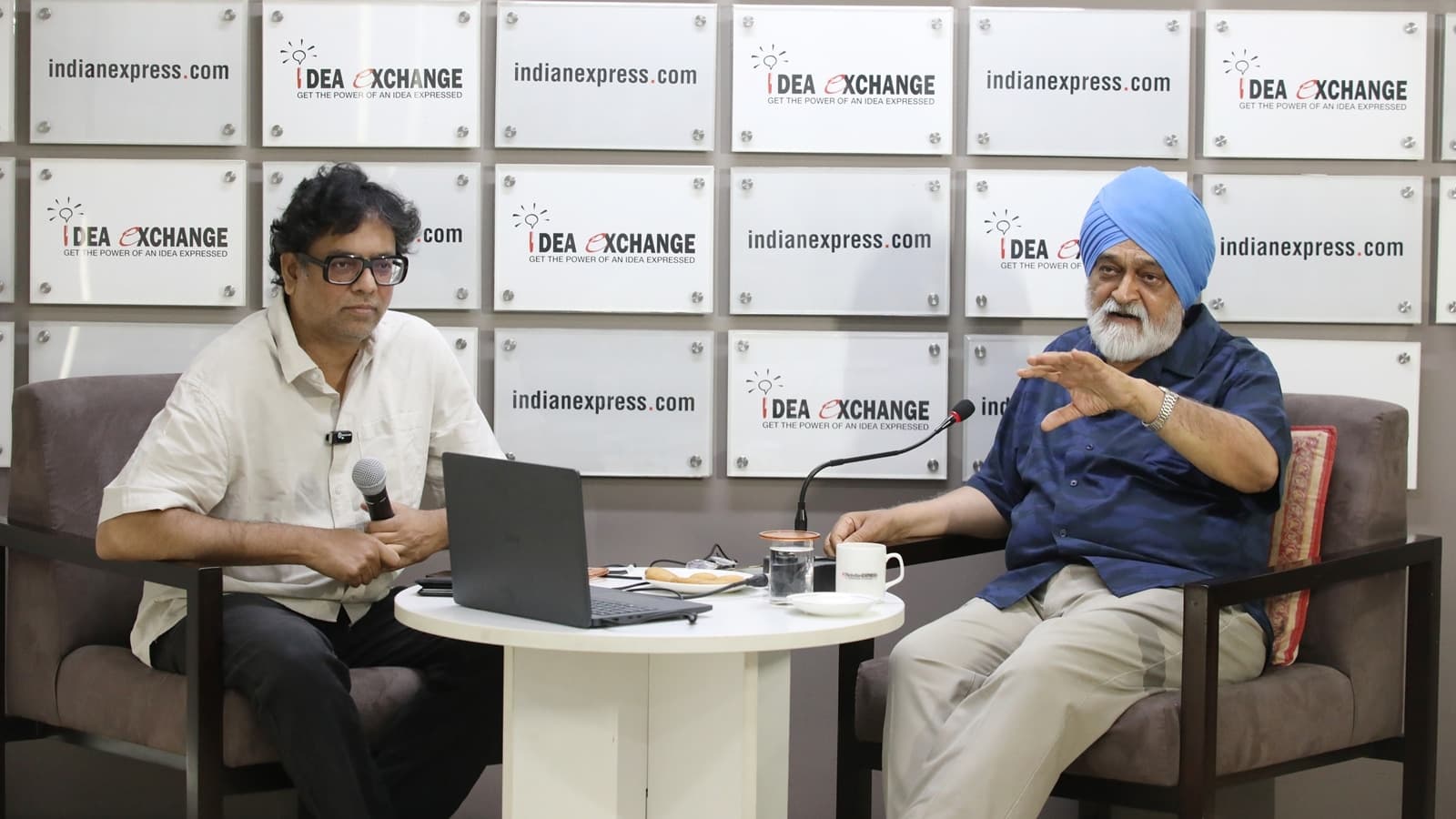
Montek Singh Ahluwalia highlights key economic challenges for India, emphasizing the need for a strategic approach to balance payments and investment.
Indian Express