
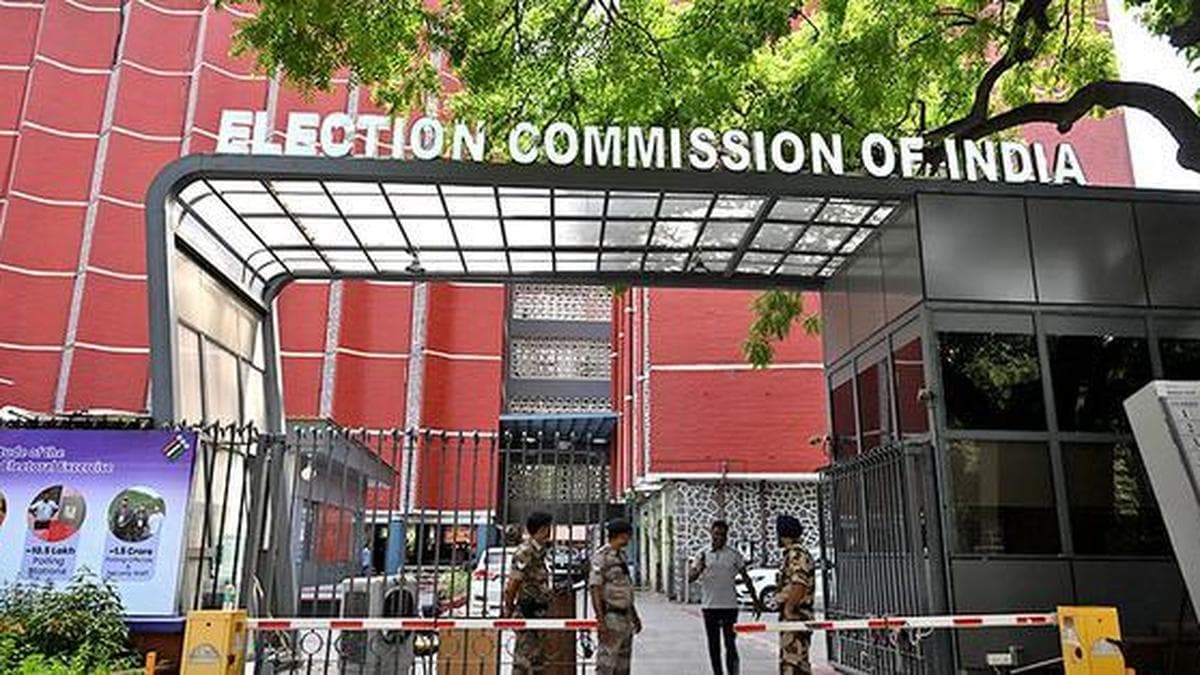
Image: The Hindu
Breaking news: The Election Commission of India removes key bureaucrats in West Bengal ahead of crucial assembly elections. What does this mean for the polls?
GlipzoIn a surprising turn of events, the Election Commission of India (ECI) has enacted significant changes in West Bengal's administrative landscape just hours after announcing the schedule for the upcoming West Bengal Assembly elections. On March 15, 2026, the ECI decided to remove two high-ranking officials: Chief Secretary Nandini Chakravorty and Home Secretary Jagdish Prasad Meena. This move has raised eyebrows across the political spectrum, signaling a critical shift in the state's electoral management.
The ECI appointed Dushyant Nariala, an IAS officer from the 1993 batch, to take over as Chief Secretary. Meanwhile, Sanghamitra Ghosh, another seasoned IAS officer from the 1997 batch, has been designated as the new principal secretary for Home and Hill Affairs. This reshuffling is unprecedented in the recent political history of West Bengal, a state that has seen its fair share of electoral controversies and bureaucratic challenges.
According to a communication from the ECI, the decision to replace these officials was taken after a thorough evaluation of the state's preparedness for the elections. The commission's directive specifies that the officers removed from their posts are barred from any election-related assignments until the voting concludes. This move is interpreted by some as a necessary step to maintain impartiality in the election process.
The ECI's letter, signed by Sujeet Kumar Mishra, the commission secretary, emphasized the urgency of the situation, mandating that the newly appointed officials report to their positions by 3 p.m. on March 16, 2026. This swift action highlights the commission's commitment to ensuring a fair electoral environment, especially in a politically charged atmosphere.
The reshuffle comes at a time when the Mamata Banerjee-led Trinamool Congress (TMC) government has been vocally critical of the ECI, particularly regarding the ongoing SIR (State Information Report) exercise in the state. The TMC has raised concerns about the ECI's role and has accused the commission of bias. By removing key bureaucratic figures, the ECI aims to neutralize any perceptions of favoritism or administrative bias.
Political analysts suggest that these changes are crucial for the integrity of the upcoming elections, scheduled for April 23 and 29, with results to be announced on May 4, 2026. The timing of the changes is particularly strategic, as they aim to bolster public confidence in the electoral process amidst ongoing tensions between the ruling party and the poll body.
The significance of the Election Commission's decision lies in its potential impact on the electoral landscape of West Bengal. With the assembly polls looming, maintaining administrative neutrality is paramount for ensuring fair elections. The ECI's actions reflect a proactive approach to mitigate any political backlash and reinforce the credibility of the electoral process.
Additionally, the changes represent a broader trend in Indian politics, where the relationship between state governments and election authorities continues to evolve. As political affiliations become increasingly polarized, the role of bureaucrats in ensuring a level playing field during elections is more crucial than ever.
Looking forward, several key aspects will be critical in the lead-up to the assembly elections: - Monitoring the new appointees: Observers will closely watch how Dushyant Nariala and Sanghamitra Ghosh navigate their new roles, especially regarding their interactions with political parties and their effectiveness in managing election-related logistics. - Response from the TMC: It will be interesting to see how the TMC reacts to these changes. Will they continue to criticize the ECI, or will they adapt to the new administrative framework? - Voter Sentiment: As the elections approach, public sentiment will likely shift in response to these bureaucratic changes. The perception of fairness and transparency will play a vital role in shaping voter turnout and preferences.
In conclusion, the Election Commission's decisive actions in West Bengal signify a critical juncture in the state's electoral process. As the assembly elections draw nearer, all eyes will remain on the unfolding political dynamics and the effectiveness of newly appointed officials in navigating this complex landscape.

Tensions soar as the US and Iran engage in air strikes near the Strait of Hormuz, raising concerns over global oil supply and regional stability.
BBC World
Trump's international interventions face serious stalemates. What will this mean for U.S. foreign policy? Explore the critical challenges ahead.
Indian Express
Tehran denies resignation of President Masoud Pezeshkian amid claims of IRGC influence. What does this mean for Iran's political stability? Click to learn more!
Indian Express