
Image: BBC World
Ecuador mobilizes 75,000 troops to combat drug gangs amid rising violence, implementing curfews and collaborating with the U.S. in a decisive crackdown.
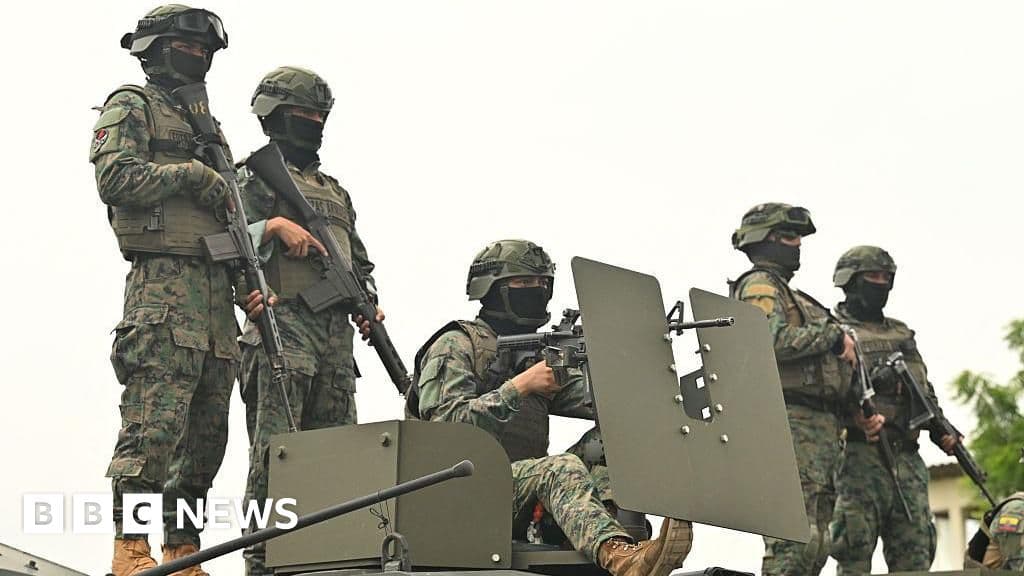
GlipzoIn a decisive response to escalating violence linked to drug trafficking, Ecuador has mobilized over 75,000 police officers and soldiers across four provinces notorious for gang activity. This significant deployment, announced by Interior Minister John Reimberg, marks a pivotal step in the government’s new strategy to confront the rampant drug-related crime that has plagued the nation.
The provinces targeted include El Oro, Guayas, Los Ríos, and Santo Domingo de los Tsáchilas, regions that have witnessed shocking levels of violence in recent years. To bolster security, the government has implemented a night-time curfew, urging residents to stay indoors to minimize risks as authorities embark on a comprehensive crackdown on criminal organizations.
Since taking office in November 2023, President Daniel Noboa has faced the daunting challenge of taming drug-related violence. Despite his efforts, Ecuador recorded a staggering murder rate increase of over 30% from 2024 to 2025, underscoring the complexity and urgency of the issue at hand. Noboa's administration has adopted a hardline approach, declaring multiple states of emergency in response to the growing threat of criminal gangs.
In addition to domestic measures, Noboa has allied with a U.S.-led coalition of 17 countries aimed at dismantling drug cartels across the Western Hemisphere. This alliance highlights a shared commitment to combating the transnational nature of drug trafficking, as countries like Colombia and Peru continue to be the world's largest cocaine producers, with Ecuador serving as a crucial transit point. Notably, an estimated 70% of cocaine produced in these neighboring countries is trafficked through Ecuador.
To enhance their efforts, the Ecuadorian government has sought assistance from the United States. Recently, the FBI established its first office in Ecuador, an initiative that coincides with the launch of joint counter-narcotics operations. This partnership aims to curb the flow of cocaine heading to the U.S. and disrupt the operations of powerful drug cartels.
President Noboa participated in an international summit hosted by former President Donald Trump at Mar-a-Lago, dubbed the “Shield of the Americas”. During this meeting, Trump described criminal gangs as a “cancer”, urging Latin American leaders to utilize military force against these organizations. In a show of solidarity, Noboa shared a photo on social media with Trump, emphasizing that the time for mafias to operate freely across borders without consequences is over.
The implications of Ecuador's aggressive stance against drug gangs extend beyond its borders. With a strategic location between Colombia and Peru, Ecuador is at the heart of the global cocaine trade. The government's actions could serve as a critical test case for other nations grappling with similar issues of drug-related violence and crime.
The curfew and military presence in the targeted provinces signal a shift towards a more militarized approach to law enforcement. This strategy aims not only to restore peace but also to reassure citizens that the government is committed to their safety.
Ecuador's situation is reflective of a broader crisis affecting many Latin American countries where drug trafficking fuels violence and instability. The government's response is crucial in determining whether it can reclaim control from gangs that have increasingly asserted their influence over communities.
As the situation unfolds, observers will be keenly watching how effective these measures are in reducing violence and whether they will lead to long-term stability in Ecuador. The success or failure of Noboa's administration in this endeavor could set a precedent for similar strategies in other nations battling drug-related crime.
In the coming months, the focus will be on the impact of the 75,000 troops deployed across the provinces and how the government’s stringent measures will affect crime rates. Will the curfew and military presence deter gang activity, or will they escalate tensions further?
As international support continues to flow in, particularly from the U.S., it remains to be seen how these relationships will evolve and what additional resources might be provided to bolster Ecuador's fight against organized crime. Furthermore, as the region watches closely, the effectiveness of Ecuador's approach could influence strategies adopted by neighboring countries facing similar challenges.
In conclusion, Ecuador is at a critical juncture in its fight against drug-related violence. The deployment of troops and the collaboration with international allies signal a strong commitment to eradicating criminal influence, and the outcomes of these initiatives will be pivotal in shaping the future of security in Ecuador and beyond.

Tensions soar as the US and Iran engage in air strikes near the Strait of Hormuz, raising concerns over global oil supply and regional stability.
BBC World
Trump's international interventions face serious stalemates. What will this mean for U.S. foreign policy? Explore the critical challenges ahead.
Indian Express
Tehran denies resignation of President Masoud Pezeshkian amid claims of IRGC influence. What does this mean for Iran's political stability? Click to learn more!
Indian Express