
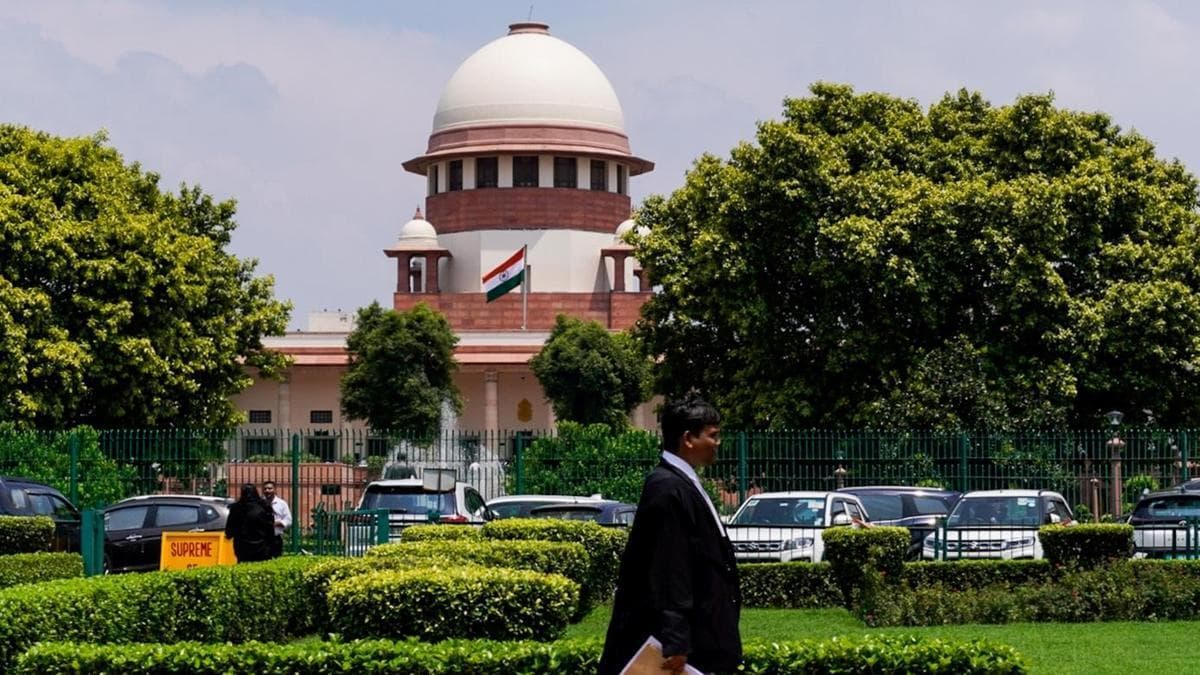
Image: The Hindu
DNT leaders petition the Supreme Court for distinct enumeration in the 2027 Census, aiming for recognition and access to government benefits.
GlipzoIn a pivotal move for Denotified, Nomadic, and Semi-nomadic Tribes (DNT), community leaders have filed a petition with the Supreme Court of India. They are advocating for the inclusion of a distinct enumeration for their communities in the upcoming 2027 Census. This effort, led by prominent DNT advocate Dakxinkumar Bajrange from Gujarat, aims to ensure that DNT members are accurately represented in the national population data.
Historically, the DNT communities have faced significant challenges due to their omission from census data since India became a republic. The leaders argue that this lack of recognition has severely hampered their ability to access essential government benefits and affirmative action programs designed to uplift marginalized groups. The petition emphasizes that without proper enumeration, members of these communities remain invisible in the eyes of policymakers, which undermines their rights and hinders their socio-economic progress.
Dakxinkumar Bajrange highlighted that the absence of a specific question regarding the DNT communities in census forms prevents them from obtaining crucial data that could influence government policies in their favor. He stated, “It is essential for our community to be counted, as this will pave the way for us to receive our rightful benefits.” This sentiment resonates with many advocates who believe that visibility is key to empowerment.
The petition, filed at the Supreme Court, demands that the Registrar General and Census Commissioner of India take action to include a targeted question addressing the DNTs in both the houselisting and population enumeration phases of the census. By doing so, the community hopes to secure their rightful representation in national statistics, which in turn could lead to better policy formulation and resource allocation.
Key points from the petition include: - Distinct enumeration for DNT communities in the 2027 Census. - Inclusion of a specific question in census forms addressing DNT designation. - Recognition of DNTs to facilitate access to government schemes and programs.
The lack of enumeration for DNT communities has a profound impact on their livelihoods and social standing. For decades, these groups have struggled with socio-economic disadvantages exacerbated by their invisibility in official records. The Census of India, conducted every ten years, serves not only as a headcount but also as a critical tool for social justice and resource distribution.
To understand why this matters, consider the following: - Access to Benefits: Accurate data collection can unlock various benefits, including education, healthcare, and employment opportunities that are crucial for the development of these communities. - Policy Influence: Enumeration is vital for effective policymaking; without data, programs may not address the needs of DNTs. - Social Justice: Recognizing DNTs in the census is a step towards rectifying historical injustices faced by these communities.
The petition has garnered significant support from various civil society organizations and activists advocating for marginalized communities. Many see this as a critical moment for DNTs, which could lead to an awakening of awareness regarding their rights and needs.
Looking ahead, the Supreme Court's decision will be crucial. If the court rules in favor of the petitioners, it could set a precedent for other marginalized groups seeking recognition and representation in future censuses. The outcome could herald a new era of inclusivity in India's demographic studies, ensuring that every community is counted and recognized.
As the 2027 Census approaches, community leaders, advocates, and members of DNTs are poised to watch closely how the judicial system responds to their plea. The implications of this decision extend beyond numbers; they resonate with the fundamental principles of equality and justice that underpin the Indian Constitution.
With the legal proceedings underway, stakeholders will be keen to monitor developments. The advocacy for DNT enumeration is not merely about data collection but about restoring dignity and rights to a community long overlooked by mainstream society. This crucial moment represents a fight for visibility and recognition that could change the trajectory of countless lives.
The DNT leaders' appeal to the Supreme Court is a significant step toward ensuring that their communities are seen and heard. As the country prepares for the upcoming census, the inclusion of DNTs could profoundly impact their ability to access opportunities and support systems. This situation serves as a reminder of the importance of representation in governance and social development, making it imperative for the court to consider their request with the utmost seriousness.
In the coming months, the legal landscape will evolve, and the decision of the Supreme Court will undoubtedly play a pivotal role in shaping the future for DNT communities in India. Will justice prevail? Only time will tell.

Tensions soar as the US and Iran engage in air strikes near the Strait of Hormuz, raising concerns over global oil supply and regional stability.
BBC World
Trump's international interventions face serious stalemates. What will this mean for U.S. foreign policy? Explore the critical challenges ahead.
Indian Express
Tehran denies resignation of President Masoud Pezeshkian amid claims of IRGC influence. What does this mean for Iran's political stability? Click to learn more!
Indian Express