
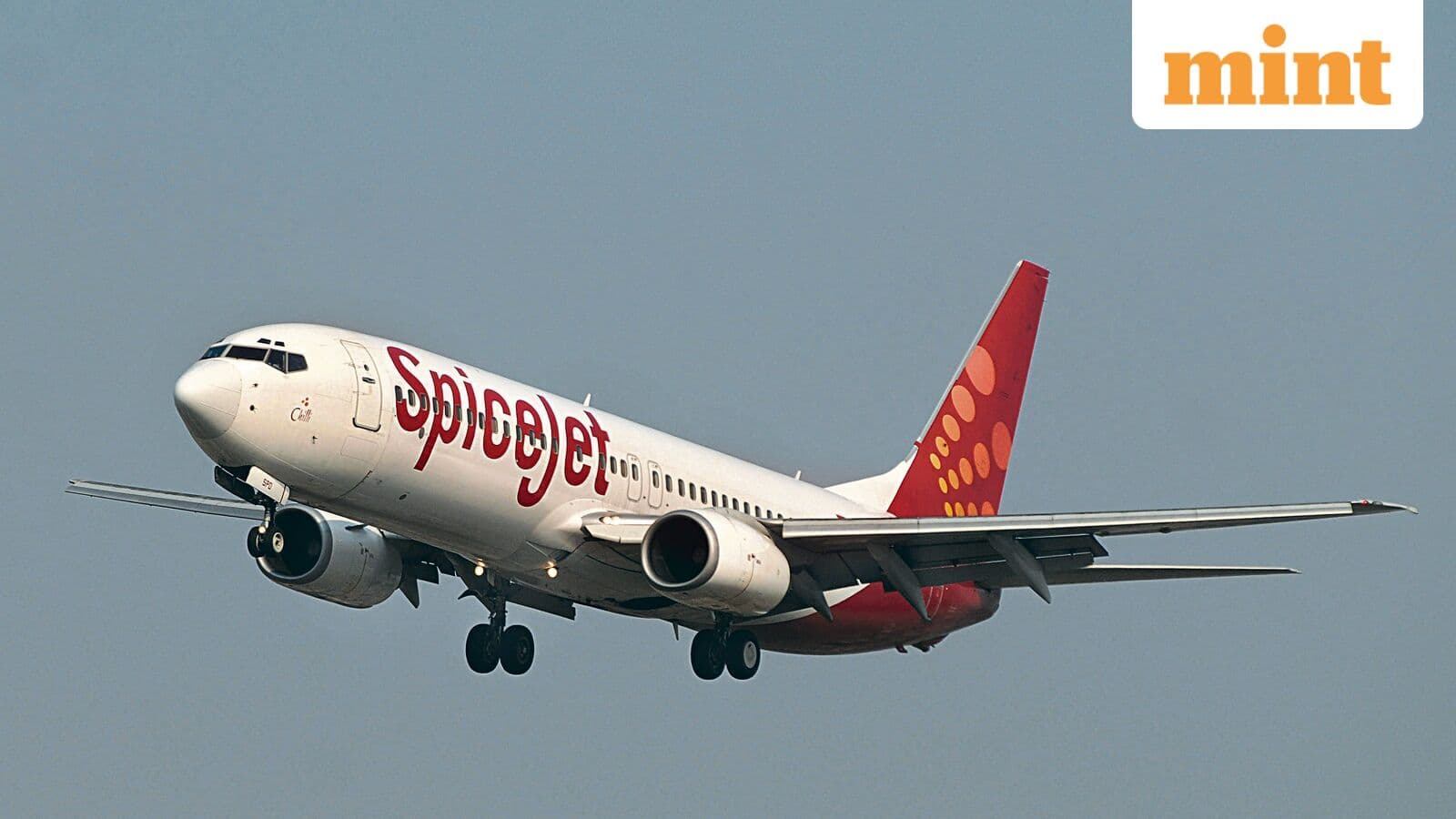
Image: Mint (Business)
SpiceJet faces a tight deadline from the Delhi High Court, needing to deposit ₹144.5 crore in a dispute with Kalanithi Maran. What’s next for the airline?
GlipzoIn a significant ruling on Wednesday, October 4, 2023, the Delhi High Court granted SpiceJet, a prominent budget airline, an ultimatum to deposit ₹144.5 crore as part of a prolonged arbitration dispute with Kalanithi Maran and KAL Airways Pvt. Ltd. With this decision, the court is tightening the screws on the airline amidst a backdrop of ongoing litigation, highlighting the urgency and seriousness of the situation.
The court's order comes after a series of failed attempts by SpiceJet to postpone cash payments, despite the airline's claims of liquidity challenges. Justice Subramonium Prasad firmly denied SpiceJet’s request to amend a previous ruling from January, where the airline proposed using a property valued at about ₹148 crore as collateral instead of making the cash payment.
Justice Prasad took the unusual step of allowing the plea to be heard, acknowledging the broader implications for stakeholders involved. “Dismissed. I am extending the time by four more weeks to deposit the money. Sell the property in four weeks,” Justice Prasad instructed, emphasizing the need for compliance.
During the proceedings, SpiceJet’s senior counsel, Amit Sibal, raised substantial concerns regarding the impact of immediate cash payment on the airline’s operations. “Can I just point out that my operations will be affected? There are 22,000 passengers and 7,000 employees. Nearly 40% of my flights go to the Gulf, which have been cancelled,” Sibal argued, pleading for understanding from the court.
The airline has been grappling with a liquidity crisis exacerbated by flight cancellations, particularly on its Gulf routes, leading to financial strain. Sibal highlighted the ripple effect these cancellations have on employees and passengers alike, making the situation increasingly dire for the airline.
The court, however, remained steadfast in its decision, noting that the operational challenges presented by SpiceJet did not warrant a modification of its previous order. Justice Prasad stated, “It is only because of the problems that will be faced by the staff and the people working there that I have heard this matter for so long.”
The latest ruling is part of a broader legal saga that has unfolded since January 2015, when Kalanithi Maran and KAL Airways transferred their 58.46% stake in SpiceJet to Ajay Singh, who took over during a period of acute financial distress for the airline. This transaction involved an infusion of approximately ₹679 crore into the airline through convertible warrants and preference shares.
Maran later contended that these financial instruments were not issued under the new management, prompting him to seek reimbursement. The dispute eventually led to arbitration, overseen by a tribunal that included retired Supreme Court judges. In July 2018, the tribunal ruled against Maran's claim for ₹1,323 crore in damages but ordered SpiceJet to refund ₹579 crore, along with interest attributed to the warrants and preference shares.
Both parties subsequently challenged the tribunal's decisions in the Delhi High Court, triggering a series of enforcement proceedings and appeals that continue to complicate matters for SpiceJet.
In total, SpiceJet claims to have paid around ₹730 crore to Maran and KAL Airways, which includes the principal amount of ₹579 crore and approximately ₹150 crore in interest. However, with ₹144.51 crore still outstanding, the airline’s financial troubles have compounded over the years, leading to aircraft groundings due to unpaid dues and the filing of insolvency petitions.
The ongoing legal battle represents a significant burden for SpiceJet, which is already navigating through turbulence in terms of operational viability and financial stability. The court's insistence on cash payment rather than property as security further underscores the gravity of the situation.
The implications of this ruling extend beyond SpiceJet and its immediate stakeholders. The airline industry, particularly in India, is under the spotlight as carriers navigate the complexities of post-pandemic recovery, operational challenges, and financial sustainability.
As SpiceJet grapples with the court’s decision, industry observers will keenly watch how the airline manages this new deadline. The airline must devise a strategy to secure the necessary funds, potentially through asset liquidation or other means, while also addressing its operational challenges.
In conclusion, the next four weeks will be pivotal for SpiceJet, as the airline must balance judicial compliance with operational realities in a highly competitive and challenging environment.
Commercial LPG prices have risen again, with increases of ₹42 in Delhi and ₹53.50 in Kolkata impacting businesses and consumers alike. Find out more.
Indian Express
Discover how a tragic coal mine explosion in Shanxi, China, reveals ongoing safety concerns in the industry amidst a push for green energy.
BBC Business
Montek Singh Ahluwalia highlights key economic challenges for India, emphasizing the need for a strategic approach to balance payments and investment.
Indian Express