
Image: BBC World
In a major escalation, the US is deploying more Marines and warships to the Middle East amid rising tensions with Iran. What does this mean for global security?
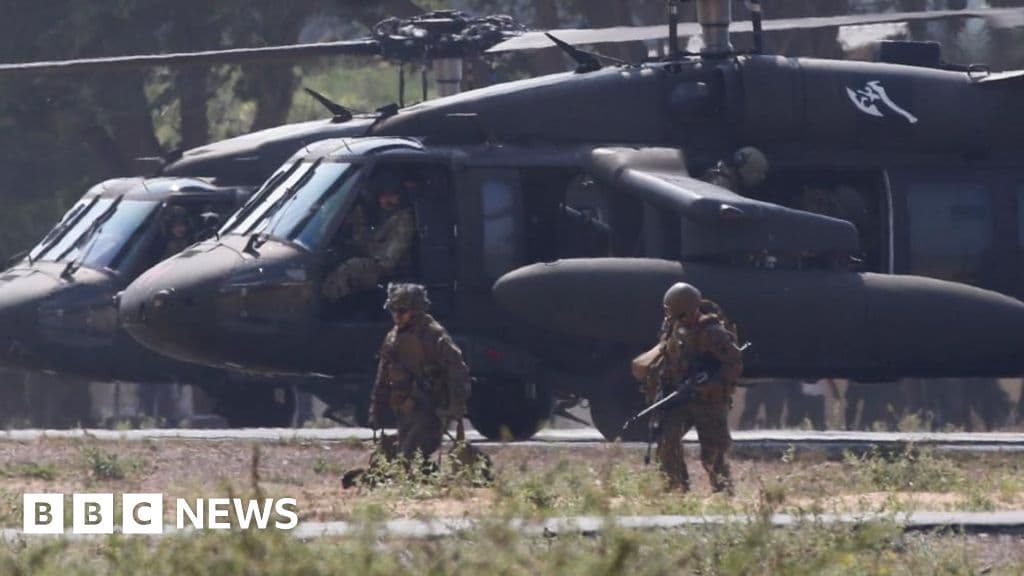
GlipzoIn a significant escalation of military presence, more US Marines and warships are being dispatched to the Middle East, according to reports from CBS News and confirmed by two officials. This strategic move marks a pivotal moment in ongoing tensions in the region, particularly as President Donald Trump intensifies rhetoric following heightened conflict with Iran.
The reinforcements are expected to stem from an amphibious ready group and its corresponding Marine expeditionary unit, spearheaded by the USS Tripoli, an amphibious assault ship currently stationed in Japan. This group typically comprises approximately 5,000 sailors and Marines across various naval vessels, underscoring America's commitment to maintaining military readiness in this volatile area.
This deployment comes on the heels of President Trump’s assertion that US forces have successfully “totally obliterated” Iranian military assets on Kharg Island, strategically located in the Strait of Hormuz, a crucial artery for global oil transportation. The ongoing conflict has led to retaliatory Iranian strikes, targeting both Israeli and US military installations throughout the Middle East, resulting in significant disruptions to international air travel and a marked increase in oil prices.
In a recent press conference, when asked about the timeline for US naval escorts for oil tankers traversing the Strait of Hormuz, Trump indicated, “It will happen soon.” This statement aligns with growing concerns over the safety and security of maritime routes in light of escalating hostilities.
According to reports from the Wall Street Journal, the request for additional personnel was initiated by US Central Command, the military branch overseeing operations in the Middle East, and subsequently approved by Defense Secretary Pete Hegseth. The Pentagon has not officially confirmed these troop movements, as such details are often kept under wraps to maintain operational security.
In addition to deploying more personnel, the US is also shifting components of a missile defense system from South Korea to the Middle East, as confirmed by both the Washington Post and various South Korean news organizations. This move highlights the broader scope of American military strategy in responding to perceived threats from Iran.
President Trump has indicated that Iran will face “very hard” repercussions in the upcoming week, suggesting a potential increase in military action. He asserted that the conflict would conclude when he “feels it in his bones,” a statement reflecting his approach to international relations and military engagements.
Defense Secretary Hegseth, emphasizing the US’s stance, declared that the military would show “no mercy for our enemies,” reinforcing the administration's hardline approach towards Iranian actions and threats. The Pentagon reports indicate that 6,000 Iranian targets have already been struck in the initial weeks of the conflict, which began on February 28, following US and Israeli strikes that resulted in the death of Iran's Supreme Leader Ayatollah Ali Khamenei.
In a recent address, Iran’s new supreme leader, Mojtaba Khamenei, the son of the late Ayatollah Khamenei, vowed to continue blocking the Strait of Hormuz. His statements were broadcasted on Iranian state television, where he pledged to “avenge the blood” of those lost in the conflict with the US and Israel. Khamenei’s warning to neighboring countries regarding the hosting of US military bases highlights the potential for further regional instability.
This escalation of US military forces in the Middle East is critical not only for regional security but also for global economic stability, particularly concerning oil prices and shipping routes. With tensions running high between the US and Iran, the consequences of military actions could reverberate across international markets and geopolitical alliances.
As the situation evolves, key areas to monitor include: - Military movements: Watch for updates on the deployment and readiness of US forces in the region. - Iran's response: Observing how Iran reacts to US military actions and whether they escalate their own operations. - Oil prices: With the Strait of Hormuz being vital for oil shipments, fluctuations in oil prices could indicate broader economic implications. - Diplomatic efforts: Any potential diplomatic negotiations or interventions aimed at de-escalating tensions will be crucial for future stability.
The coming weeks will be pivotal in shaping the trajectory of US-Iran relations and the overall security landscape in the Middle East. As both sides brace for potential confrontations, the world watches closely, aware that the stakes could not be higher.

Tensions soar as the US and Iran engage in air strikes near the Strait of Hormuz, raising concerns over global oil supply and regional stability.
BBC World
Trump's international interventions face serious stalemates. What will this mean for U.S. foreign policy? Explore the critical challenges ahead.
Indian Express
Tehran denies resignation of President Masoud Pezeshkian amid claims of IRGC influence. What does this mean for Iran's political stability? Click to learn more!
Indian Express