
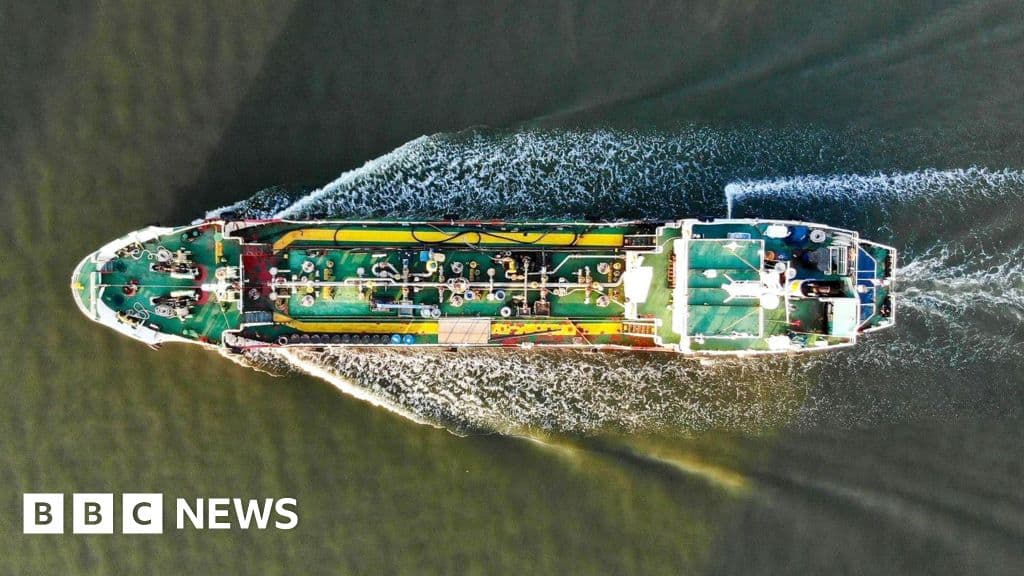
Image: BBC Business
Discover how the recent ceasefire in Iran impacts global economics, oil prices, and future diplomatic relations. What should we watch for next?
GlipzoIn recent weeks, the Strait of Hormuz has been at the center of a global crisis, with about 800 ships stranded due to escalating tensions in the region. This maritime bottleneck has not only delayed the shipping of essential oil and gas supplies but has also triggered a ripple effect on petrol prices, airfare, and mortgage rates worldwide. As the situation evolves, the recent ceasefire offers a glimmer of hope, but the economic scars from the conflict are expected to linger.
The closure of this vital shipping lane has raised serious concerns for countries that rely heavily on the transit of various petrochemical products, including jet fuel, diesel, and fertilizers. The ongoing disruption has led to soaring prices and has left many nations scrambling for alternatives to meet their energy needs.
The announcement of a ceasefire has injected optimism into global markets, resulting in a 15% drop in the prices of oil and gas and a positive rally across stock markets. Investors are cautiously celebrating, but the underlying economic implications require careful consideration.
Despite the temporary relief, there are significant uncertainties surrounding the negotiations between Iran, the United States, and Israel. The real test lies in whether substantial face-to-face discussions will take place, as the outcome will dictate future economic stability in the region.
Key questions remain regarding the navigation of the Strait of Hormuz post-ceasefire. U.S. President Donald Trump has indicated that traffic will flow freely, while Iranian Foreign Minister statements suggest a more complicated scenario, emphasizing coordination with Iran's armed forces. This disparity raises concerns about how effectively oil and gas shipments can resume and whether the tension will subside or escalate again.
The implications extend beyond oil; industries relying on sulphur, urea, and diesel could feel the effects as well. As the ceasefire continues, the potential for inflation to stabilize increases, benefitting both consumers and businesses.
The ceasefire has created a new dynamic in the Gulf, establishing Iran's capability to exert control over critical maritime routes, a situation unprecedented before the conflict. With reports of Iran potentially collecting tolls for passage through the Strait, it raises a provocative question: has this war transformed the Strait of Hormuz into a lucrative toll booth? The prospect of Iran coordinating control with Oman adds a layer of complexity, as Gulf nations must now navigate this altered geopolitical landscape.
The damage inflicted on global gas production, especially in Qatar, is expected to have long-lasting effects. Experts predict that restoring production to pre-war levels could take years, significantly affecting the availability of liquefied natural gas (LNG). As Europe seeks to replenish its natural gas reserves, a consistent flow of LNG tankers will be crucial to prevent price surges.
While a modest increase in domestic energy bills in the UK is anticipated, the extreme rise initially feared for October may be mitigated. A lower inflation spike would be advantageous in keeping interest rates stable, providing further relief to consumers and businesses alike.
The ceasefire has already resulted in a notable decline in effective interest rates for European governments, including the UK. The five-year gilt rate fell by approximately a quarter of a percentage point, suggesting potential relief for borrowers. If the ceasefire holds, fixed mortgage rates may stabilize or even decrease, easing financial pressures on homeowners.
Historically, the economic aspects of this conflict have been paramount, and Iran’s actions have showcased its leverage in the Strait. As the global economy grapples with uncertainty, the potential for rising oil prices could have catastrophic effects if tensions flare again. Just yesterday, predictions estimated oil prices could skyrocket to $200 a barrel, but the ceasefire has opened the door for prices to stabilize between $60 and $70 per barrel, a significant improvement.
While the ceasefire presents a temporary reprieve, the future remains uncertain. Continued monitoring of the situation in the Strait and the dynamics between Iran and its neighbors will be vital in predicting further economic impacts. The world must remain vigilant as the ceasefire could either lead to lasting peace or reignite tensions, which could disrupt global markets once more.
In summary, though the present moment brings a sigh of relief, the intricate web of diplomacy, economic repercussions, and geopolitical strategies will dictate the road ahead. Stakeholders must prepare for various scenarios as they navigate this complex landscape, keeping a close eye on developments in the region.

Tensions soar as the US and Iran engage in air strikes near the Strait of Hormuz, raising concerns over global oil supply and regional stability.
BBC World
Trump's international interventions face serious stalemates. What will this mean for U.S. foreign policy? Explore the critical challenges ahead.
Indian Express
Tehran denies resignation of President Masoud Pezeshkian amid claims of IRGC influence. What does this mean for Iran's political stability? Click to learn more!
Indian Express