
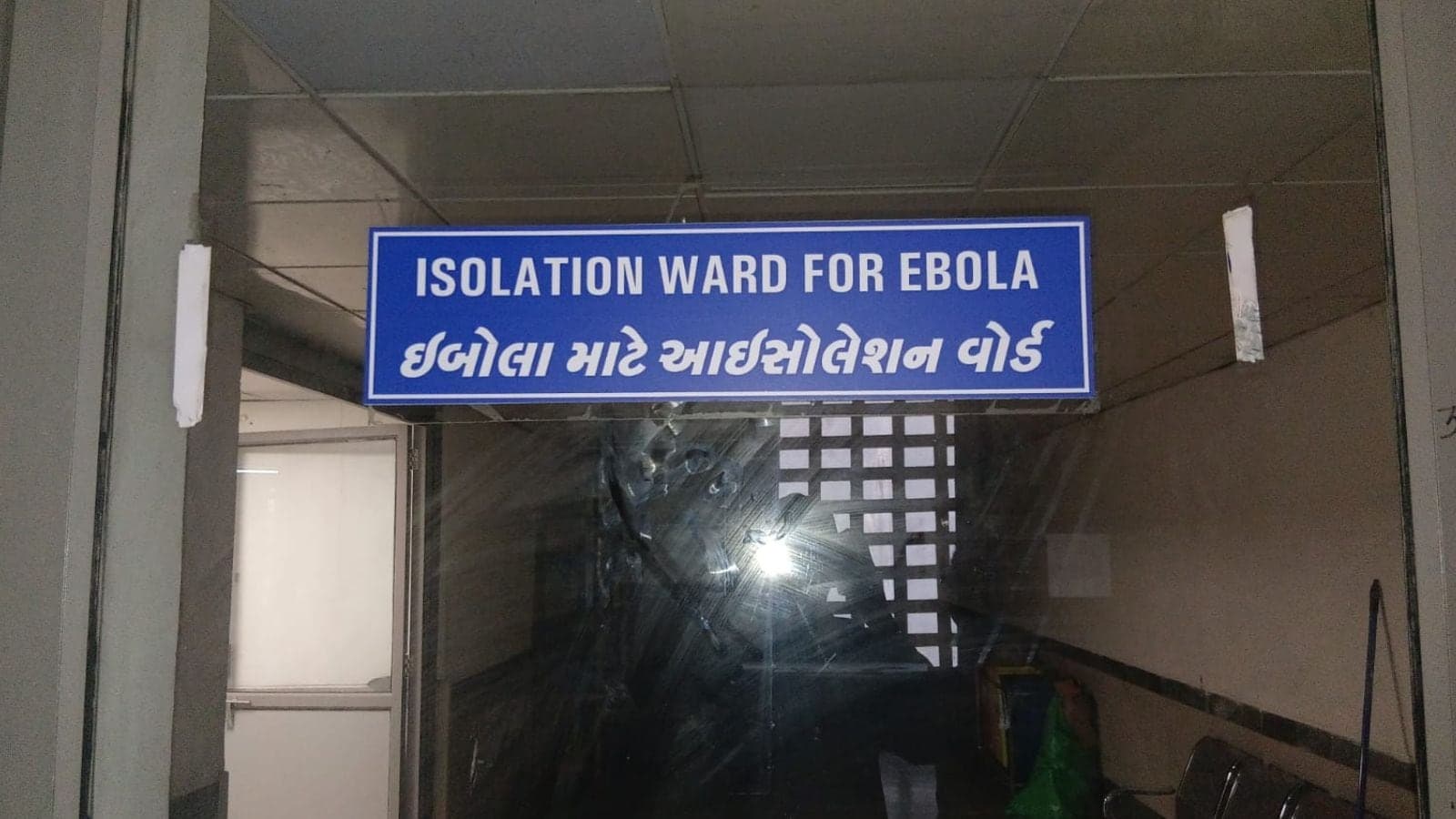
Image: Indian Express
A traveler from the Democratic Republic of Congo tests negative for Ebola after a second test, easing health concerns in India. What’s next for public health?
GlipzoA 37-year-old man from the Democratic Republic of Congo has been cleared of the potentially fatal Ebola Virus Disease after his second blood test returned negative results. This significant development was confirmed on Saturday by Dr. Rakesh Joshi, the medical superintendent at Civil Hospital in Ahmedabad, India, where the patient was being treated. The individual was admitted to the facility on May 26 after concerns arose about his health subsequent to his arrival in India earlier that month.
Initially, the traveler had undergone a test at the National Institute of Virology (ICMR-NIV), which indicated he did not have Ebola but did test positive for Falciparum Malaria. Given the gravity of the situation, the Government of India mandated a second confirmatory test within 48 hours, a decision that ultimately provided reassurance regarding the patient’s health status.
The man landed in Mumbai on May 18, where he remained for about five days before traveling to the Union Territories of Silvassa and Daman until May 25. He then moved to Vadodara, where he checked into the Express Hotel. On the evening of May 26, he was admitted to the Ahmedabad Civil Hospital, designated as the primary center for Ebola cases in Gujarat.
As Dr. Joshi noted during his update, the patient’s fever has subsided, and he is feeling better. He will be moved from the isolation ward dedicated to Ebola patients to a specialized room for ongoing treatment of his malaria diagnosis, which poses a different health risk but is manageable.
Ebola, a disease with a high mortality rate, has been labeled a Public Health Emergency of International Concern (PHEIC) by the World Health Organization (WHO). The current outbreaks primarily afflict regions in DR Congo, Uganda, and South Sudan. Understanding the characteristics of the Ebola virus is crucial; its incubation period can range from 2 to 21 days, with symptoms typically manifesting between 8 to 10 days post-exposure. This prolonged incubation makes monitoring travelers from affected areas essential to curtail potential outbreaks.
The case of the traveler from the Congo highlights the vital role of rapid testing and response protocols in managing public health risks. The Indian authorities acted swiftly to quarantine three of the patient's colleagues, who were identified as close contacts, at SVP Hospital in Ahmedabad. They are expected to be released soon, following the negative test results for Ebola.
This incident sheds light on the need for heightened vigilance when it comes to monitoring travelers from regions affected by infectious diseases such as Ebola. Although the immediate threat has been minimized with the negative test results, the healthcare system continues to face challenges in managing potential outbreaks, especially as global travel resumes post-pandemic.
Key strategies for public health officials include: - Rapid testing and isolation of suspected cases. - Contact tracing to identify and monitor individuals who may have been exposed. - Public awareness campaigns to educate communities about recognizing symptoms and seeking medical assistance.
As the situation develops, health officials in India and beyond will continue to monitor for any signs of illness in travelers returning from regions with known outbreaks. The recent case serves as a reminder of the importance of maintaining robust health surveillance systems and being prepared for any future threats that may arise.
Moving forward, the focus will remain on ensuring that health systems are equipped to handle potential outbreaks effectively while also addressing other health issues such as malaria, which remains a significant concern in many regions. Public health agencies will likely continue to refine their protocols to adapt to the evolving landscape of global health threats.
This incident underscores the interconnectedness of global health and the importance of international cooperation in monitoring and preventing the spread of infectious diseases. As we look ahead, the commitment to vigilance and preparedness will be pivotal in safeguarding public health against emerging threats.

Shocking findings from Nottingham's maternity unit reveal a toxic culture and alarming neglect. What can be done to improve care? Discover the details.
BBC Health
Discover how daraxonrasib, a new pill, is nearly doubling survival rates for pancreatic cancer patients, offering hope in a challenging battle against this deadly disease.
BBC Health
Waste companies propose a £5 deposit on vapes to encourage proper disposal and curb littering as the environmental impact of vapes increases.
BBC Business