
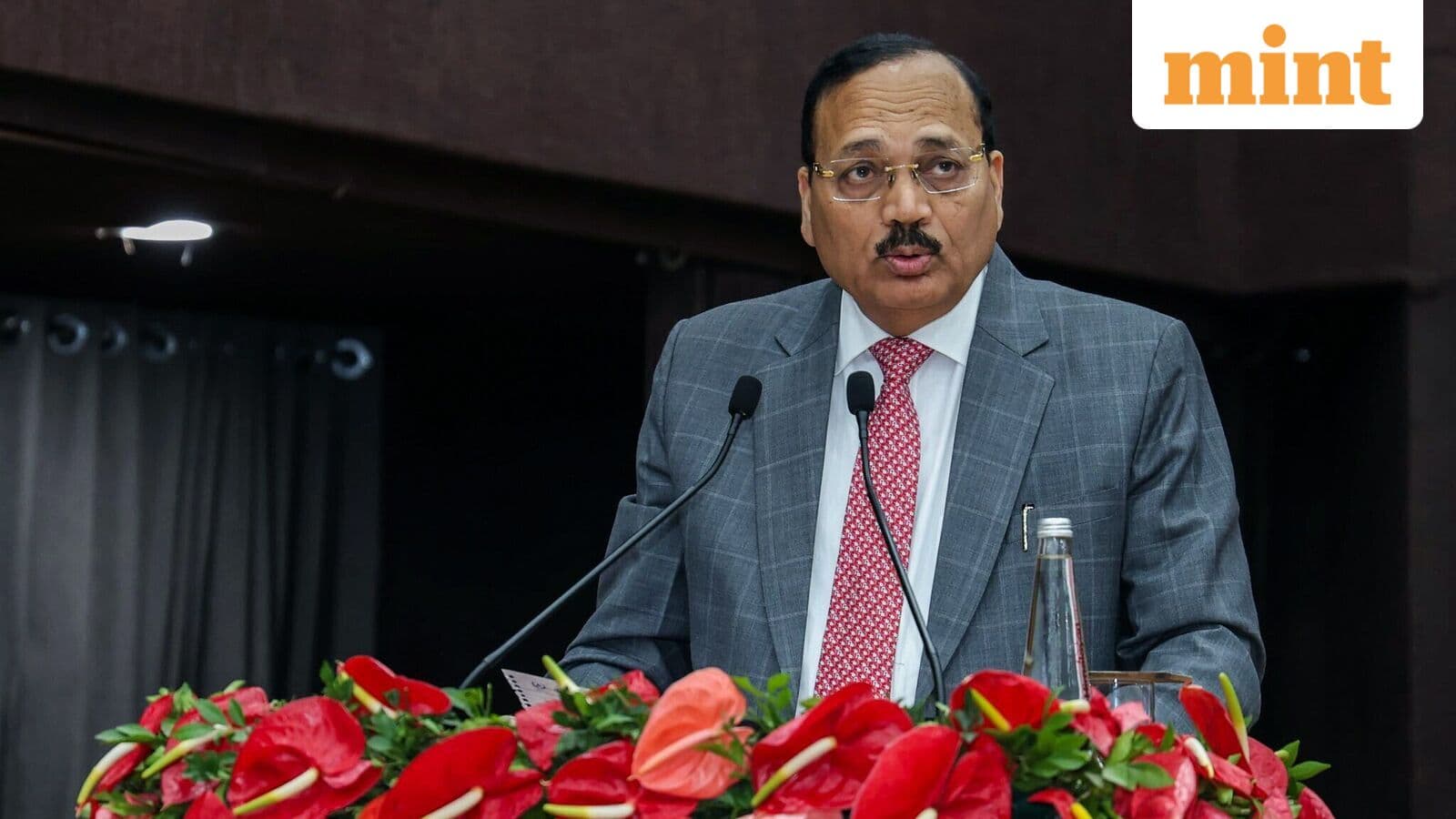
Image: Mint (Business)
CJI Surya Kant recuses himself from a pivotal election law case due to conflict of interest concerns. What does this mean for India's electoral integrity?
GlipzoIn a significant development, Chief Justice of India (CJI) Surya Kant has opted out of presiding over a crucial legal matter concerning the appointment of the Chief Election Commissioner (CEC) and other Election Commissioners. The decision, made during a recent Supreme Court session, has raised eyebrows and highlights a potential conflict of interest.
CJI Kant expressed his concerns explicitly, stating, "I will be accused of conflict of interest. There is a conflict of interest," as he sat alongside Justices Joymalya Bagchi and Vipul M Pancholi. His statement underscores the sensitivity surrounding the case, which challenges the Chief Election Commissioner and Other Election Commissioners (Appointment, Conditions of Service and Term of Office) Act, 2023.
The law in question has come under scrutiny as it notably excludes the Chief Justice from the selection panel responsible for appointing election commissioners. The current panel is composed of the Prime Minister, a Union Minister nominated by the Prime Minister, and the Leader of the Opposition or the leader of the largest opposition party in the Lok Sabha. Critics argue that this exclusion undermines the independence of the appointment process.
This legal challenge stems from a landmark Supreme Court ruling in March 2023, which mandated that the selection committee must include the Chief Justice. The court's decision aimed to preserve the integrity of the appointment process until a new law was enacted. However, the law was passed in December 2023, igniting further debate.
Legal experts and political observers are closely monitoring the ramifications of this law, especially given that multiple public interest litigations (PILs) have been filed against it. Prominent figures, including Congress leader Jaya Thakur and the Association for Democratic Reforms, have voiced their opposition, emphasizing that the exclusion of the CJI threatens the independence of the Election Commission.
CJI Kant acknowledged the complexities involved in hearing this matter, suggesting that it would be prudent for the case to be handled by a bench of judges not in line to ascend to the Chief Justice position. This recommendation came from Advocate Prashant Bhushan, representing one of the petitioners, who highlighted the potential for perceived bias.
As the legal battle unfolds, the Supreme Court has scheduled the next hearing for April 7, 2024. During the session, CJI Kant directed the matter to be allocated to a separate bench, ensuring that no judge with aspirations to become Chief Justice would be involved. This decision is seen as a move to maintain the integrity of the judicial process and avoid any accusations of partiality.
CJI Kant remarked, "This is what was in my mind. I should mark the matter to a Bench where the judge is not in line to become CJI. Then nobody can say anything. I have already done my homework." This proactive approach reflects the judiciary's commitment to upholding justice and transparency.
In response to the rising tension over the new appointments, the Union Law Ministry has defended the selection process of two new election commissioners under the 2023 law. They contend that the independence of the Election Commission is not solely dependent on having a judicial member present in the selection committee. The Ministry also dismissed allegations that the appointments were made hastily to circumvent impending court decisions regarding the law.
In a recent affidavit, the government asserted that the appointments of Sukhbir Singh Sandhu and Gyanesh Kumar were legitimate and not preemptive actions against the legal challenges facing the new law. Despite the controversy, a bench led by former CJI Sanjiv Khanna previously opted not to intervene in these appointments, allowing the process to move forward.
The unfolding situation surrounding the Election Commission appointments is critical for the future of India's democracy. The independence of electoral bodies is essential for maintaining the integrity of elections and public trust in democratic processes. As the Supreme Court prepares to revisit this contentious issue, the implications of its rulings could have lasting effects on the governance and electoral landscape of the country.
As we approach the April 7 hearing, all eyes will be on the Supreme Court and the newly constituted bench. Observers will be eager to see how the court navigates the legal challenges posed by the 2023 Act, and whether it will uphold the previous directive to include the Chief Justice in the selection process. The outcome could reshape the future of election oversight in India, making it a pivotal moment for both the judiciary and the electoral system.
In summary, the situation remains fluid, and the decisions made in the coming weeks will likely resonate throughout India’s democratic institutions. Stay tuned for updates as the legal proceedings continue to unfold.

Tensions soar as the US and Iran engage in air strikes near the Strait of Hormuz, raising concerns over global oil supply and regional stability.
BBC World
Trump's international interventions face serious stalemates. What will this mean for U.S. foreign policy? Explore the critical challenges ahead.
Indian Express
Tehran denies resignation of President Masoud Pezeshkian amid claims of IRGC influence. What does this mean for Iran's political stability? Click to learn more!
Indian Express