
Glipzo
WorldTechnologyBusinessSportsEntertainmentScienceHealthPolitics
Glipzo
WorldTechnologyBusinessSportsEntertainmentScienceHealthPolitics
  1. Home
  2. /
  3. Politics
  4. /
  5. Chancellor Merz Predicts Major Return of Syrian Refugees in 3 Years
Chancellor Merz Predicts Major Return of Syrian Refugees in 3 Years

Image: BBC World

Politics
Tuesday, March 31, 20264 min read

Chancellor Merz Predicts Major Return of Syrian Refugees in 3 Years

Chancellor Merz predicts 80% of Syrian refugees in Germany may return home in 3 years, but concerns about safety and integration persist.

Glipzo News Desk|Source: BBC World
Share
Glipzo

Key Highlights

  • Chancellor Merz foresees 80% of Syrian refugees returning home.
  • Protests highlight concerns over minority rights in Syria.
  • Many Syrian refugees are deeply integrated into German society.
  • Circular migration could allow for contributions to Syria's rebuilding.
  • Opposition warns of instability in Syria hindering safe returns.

In this article

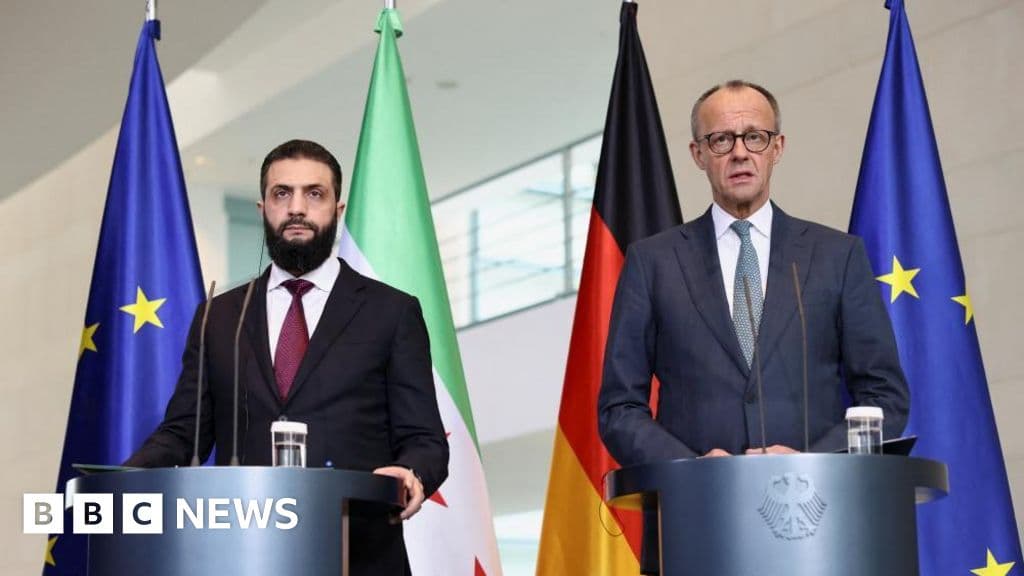
  • Germany's Vision for Syrian Refugees In a bold statement, **Chancellor Friedrich Merz** has expressed his belief that **80%** of the **Syrian refugees** currently living in Germany will return to their homeland within the next **three years**. This announcement came after a significant meeting with **Syrian President Ahmed al-Sharaa** in Berlin, marking a pivotal moment in Germany's refugee policy.
  • A Shift in Policy Toward Refugees Merz's government has begun to take a firmer stance on immigration, driven partly by increasing support for the **Alternative for Germany (AfD)** party, known for its anti-immigration rhetoric. The Chancellor mentioned that the initial focus will be on returning individuals without valid residency rights, particularly those with criminal backgrounds. This step is seen as a precursor to a broader repatriation strategy.
  • Contributions of Syrian Refugees and Future Prospects Despite the call for repatriation, Merz acknowledged the significant contributions made by Syrian refugees to German society. Many have integrated, working in essential sectors such as healthcare. The Chancellor emphasized that while some will return, it is in Germany's interest to allow skilled individuals, such as doctors and caregivers, to remain if they choose.
  • Opposition Voices and the Reality of Return Critics of the proposed repatriation are already voicing concerns. **Franziska Brantner**, a member of the opposition **Green Party**, pointed out that many Syrian families are deeply rooted in German society, with children in schools and jobs deemed critical to the economy. For these families, returning to a country still grappling with instability and inadequate infrastructure is not a viable option.
  • The Larger Context of Migration Issues The backdrop of this dialogue is rooted in the **2015 refugee crisis**, when then-Chancellor **Angela Merkel** famously declared **“Wir schaffen das”** – “We’ll manage this,” as she opened Germany’s borders to those fleeing war. This decision was met with both praise and criticism, ultimately becoming a significant point of contention in German politics. Subsequent surges in far-right sentiment across Europe have led to a growing anti-immigration stance, complicating discussions about the future of refugees.
  • The Road Ahead: Challenges and Considerations As Germany navigates the complexities surrounding Syrian refugees, the future remains uncertain. The idea of repatriation raises critical questions about the safety and stability of Syria, particularly in light of ongoing violence and political unrest. The discussions between Merz and Sharaa signify a shift in policy, but the implementation of such a strategy will require careful consideration of the humanitarian implications involved.

Germany's Vision for Syrian Refugees In a bold statement, **Chancellor Friedrich Merz** has expressed his belief that **80%** of the **Syrian refugees** currently living in Germany will return to their homeland within the next **three years**. This announcement came after a significant meeting with **Syrian President Ahmed al-Sharaa** in Berlin, marking a pivotal moment in Germany's refugee policy.

During the Syrian civil war, which saw nearly a million Syrians seeking safety, Germany became a primary destination. However, with the conflict declared over more than a year ago, Merz indicated that the circumstances in Syria have evolved significantly, making it imperative to reassess the need for protection for these displaced individuals.

A Shift in Policy Toward Refugees Merz's government has begun to take a firmer stance on immigration, driven partly by increasing support for the **Alternative for Germany (AfD)** party, known for its anti-immigration rhetoric. The Chancellor mentioned that the initial focus will be on returning individuals without valid residency rights, particularly those with criminal backgrounds. This step is seen as a precursor to a broader repatriation strategy.

Merz stated, "Looking ahead over the next three years – as Sharaa has expressed his hope – around 80% of Syrians currently residing in Germany are expected to return to their home country." This statement raises questions about the logistics and conditions under which these returns will occur, as many Syrians have established lives in Germany.

Contributions of Syrian Refugees and Future Prospects Despite the call for repatriation, Merz acknowledged the significant contributions made by Syrian refugees to German society. Many have integrated, working in essential sectors such as healthcare. The Chancellor emphasized that while some will return, it is in Germany's interest to allow skilled individuals, such as doctors and caregivers, to remain if they choose.

President Sharaa echoed this sentiment, asserting that Syria is grateful for Germany's support during the war. He proposed a 'circular migration model' that would allow Syrians to contribute to Syria's reconstruction while maintaining their lives in Germany if they so desire. This model, however, raises further concerns about the stability and security of Syria, considering the ongoing issues within the country.

Opposition Voices and the Reality of Return Critics of the proposed repatriation are already voicing concerns. **Franziska Brantner**, a member of the opposition **Green Party**, pointed out that many Syrian families are deeply rooted in German society, with children in schools and jobs deemed critical to the economy. For these families, returning to a country still grappling with instability and inadequate infrastructure is not a viable option.

The visit from President Sharaa has not been without controversy, as protests erupted, particularly from the Kurdish Community in Germany. They have called for assurances regarding the protection of minorities in Syria, accusing Sharaa of committing human rights violations during his rise to power. Sharaa, who took office in December 2024 after leading a successful offensive against former leader Bashar al-Assad, faces ongoing challenges in unifying a nation still fractured by sectarian violence.

The Larger Context of Migration Issues The backdrop of this dialogue is rooted in the **2015 refugee crisis**, when then-Chancellor **Angela Merkel** famously declared **“Wir schaffen das”** – “We’ll manage this,” as she opened Germany’s borders to those fleeing war. This decision was met with both praise and criticism, ultimately becoming a significant point of contention in German politics. Subsequent surges in far-right sentiment across Europe have led to a growing anti-immigration stance, complicating discussions about the future of refugees.

The Road Ahead: Challenges and Considerations As Germany navigates the complexities surrounding Syrian refugees, the future remains uncertain. The idea of repatriation raises critical questions about the safety and stability of Syria, particularly in light of ongoing violence and political unrest. The discussions between Merz and Sharaa signify a shift in policy, but the implementation of such a strategy will require careful consideration of the humanitarian implications involved.

Looking ahead, it is essential to monitor how these proposals evolve and what measures will be taken to ensure the safety and rights of minorities in Syria. The international community’s response to Syria's political landscape and the situation of refugees in Germany will likely play a crucial role in shaping the future of both nations.

In conclusion, while the vision of returning a majority of Syrian refugees to their homeland is ambitious, the realities on the ground must be addressed to ensure that the rights and welfare of those involved are prioritized. The coming years will be critical in determining the fate of both Syria and the Syrian diaspora in Germany.

Did you find this article useful? Share it!

Share

Related Articles

Shocking Allegations: Greek Police Using Migrants for Pushbacks
Politics
Apr 14, 2026

Shocking Allegations: Greek Police Using Migrants for Pushbacks

Uncovered evidence reveals Greek police allegedly recruiting migrants to push others back to Turkey, raising serious human rights concerns.

BBC World
Breaking: Eric Swalwell Resigns Amid Sexual Misconduct Claims
Politics
Apr 14, 2026

Breaking: Eric Swalwell Resigns Amid Sexual Misconduct Claims

Eric Swalwell resigns from Congress amid sexual misconduct allegations, raising questions about accountability in politics and impacting California's governor race.

BBC World
Shocking Charges: Spanish PM's Wife Begoña Gómez Accused of Corruption
Politics
Apr 14, 2026

Shocking Charges: Spanish PM's Wife Begoña Gómez Accused of Corruption

Spanish PM Pedro Sánchez's wife, Begoña Gómez, faces serious corruption charges after a two-year investigation, raising questions about political ethics.

BBC World

Categories

  • World
  • Technology
  • Business
  • Sports

More

  • Entertainment
  • Science
  • Health
  • Politics

Explore

  • Web Stories
  • About Us
  • Contact

Legal

  • Privacy Policy
  • Terms of Service

© 2026 Glipzo. All rights reserved.

