
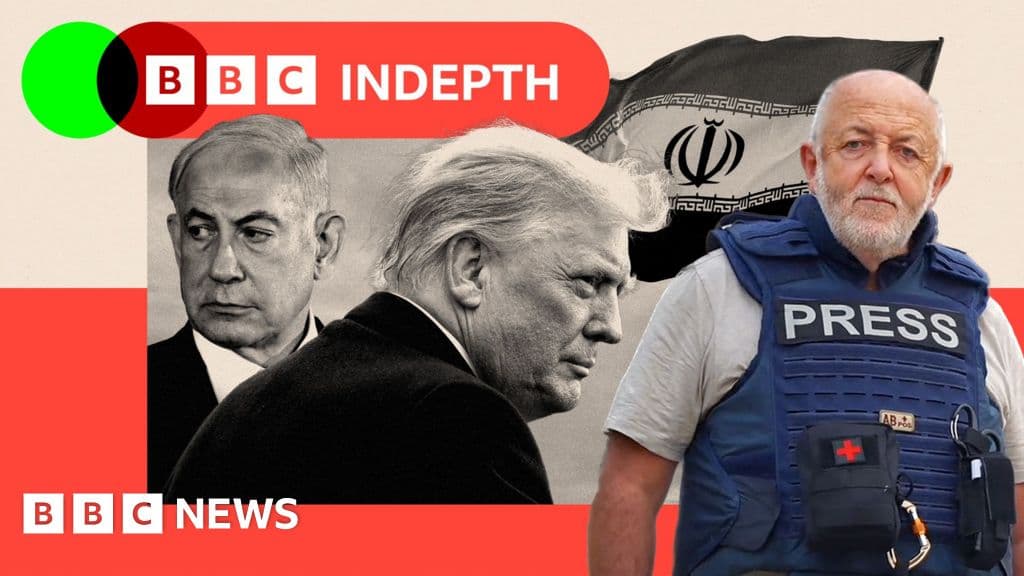
Image: BBC World
The ongoing ceasefire talks in Pakistan signal a critical turning point for the U.S. and Iran, but deep-rooted distrust poses significant challenges.
GlipzoThe ongoing discussions in Pakistan regarding a potential ceasefire in the Middle East represent a pivotal moment as both the United States and Iran confront the dire consequences of prolonged conflict. With escalating tensions and strategic posturing, both nations find themselves at a crossroads. U.S. President Donald Trump has recently framed the conflict in the past tense, signaling a desire for resolution, while Iran grapples with the fallout of its own military engagements.
The path to peace, however, is fraught with challenges. A significant hurdle remains the deep-rooted distrust between the two powers, coupled with the stark contrast in their proposed solutions. Israel, a key ally of the U.S., has intensified its military operations in Lebanon, further complicating the environment for negotiations.
As the U.S. approaches midterm elections in November, Trump's urgency to project an image of victory grows. The upcoming state visit from King Charles and a summit with China's President Xi Jinping in May add to the pressure, making it clear that Trump seeks a swift exit from the conflict. The need to lower gas prices ahead of the summer holiday season also looms large, suggesting that political considerations are influencing the urgency of ceasefire discussions.
Iran’s leadership, while maintaining a defiant stance, is facing significant internal challenges. The war has crippled many Iranian cities economically, necessitating a pause for recovery and regrouping. Iran’s ability to launch missiles and drones continues, and its social media campaigns mock Trump, yet the toll of the conflict is evident. The upcoming negotiations in Pakistan could be pivotal for Iran in seeking to regain its footing.
The negotiations are complicated by the stark differences in the proposals put forth by both countries. Reports indicate that Trump has a 15-point plan that has yet to be made public, but leaked details suggest it may resemble a capitulation rather than a foundation for constructive dialogue. Conversely, Iran's 10-point plan articulates demands that have historically been rejected by the U.S., creating a chasm between the two sides.
To forge a durable ceasefire, both parties will need to engage in discussions about their conflicting agendas. The mere act of maintaining dialogue amidst the absence of trust is a daunting challenge, especially in the volatile context of ongoing warfare. The potential for misinterpretation and escalation is high, making even a frail ceasefire tenuous without a broader agreement on contentious issues.
One of the most pressing issues on the negotiation table is the Strait of Hormuz, the vital maritime corridor that facilitates oil transport from the Gulf. The closure of this waterway allows Iran to exert significant pressure on the global economy, making its reopening a crucial factor in the current talks. With millions of civilians affected by the conflict, there is a collective hope that these negotiations could signal a definitive end to hostilities.
The U.S. did not anticipate that discussions for a ceasefire would emerge so soon after their military actions, which began with large-scale strikes on February 28 that resulted in the death of key Iranian figures, including the supreme leader and his family. Trump's expectation of a rapid victory akin to the U.S. operation against Venezuelan leader Nicolás Maduro has proven overly optimistic. The presumed collapse of Iran's regime following such strikes has not materialized as expected.
The aftermath of the U.S. airstrikes has revealed a resilient Iranian regime, one that appears to have adapted and sustained itself despite heavy losses. Speculations abound regarding the fate of Mojtaba Khamenei, the son of the late Ayatollah Ali Khamenei, who has been notably absent since the attacks. Reports suggest he may have suffered injuries during the strikes, raising questions about the future leadership of Iran.
As negotiations unfold, Trump's representatives, led by Vice President JD Vance, face the challenge of dealing with adversaries they previously claimed to have defeated. The rhetoric of a decisive military victory contrasts sharply with the reality on the ground, complicating the diplomatic landscape.
As the ceasefire talks progress, the international community watches closely. The outcomes of these negotiations could reshape the geopolitical landscape of the Middle East. The need for a sustainable resolution is more urgent than ever, as continued hostilities threaten not only regional stability but also global economic interests tied to oil supply and trade routes.
The next steps will involve assessing the willingness of both the U.S. and Iran to compromise on their demands and the potential for a broader peace agreement. Should these talks falter, the risk of renewed conflict looms large, potentially dragging neighboring countries into the fray and exacerbating the humanitarian crisis already unfolding in the region.
In conclusion, while the prospect of a ceasefire in Pakistan offers a flicker of hope, the road ahead remains challenging. The interplay of political strategy, economic necessity, and deep-seated mistrust will define the future of U.S.-Iran relations and the broader geopolitical dynamics of the Middle East.

Tensions soar as the US and Iran engage in air strikes near the Strait of Hormuz, raising concerns over global oil supply and regional stability.
BBC World
Trump's international interventions face serious stalemates. What will this mean for U.S. foreign policy? Explore the critical challenges ahead.
Indian Express
Tehran denies resignation of President Masoud Pezeshkian amid claims of IRGC influence. What does this mean for Iran's political stability? Click to learn more!
Indian Express