
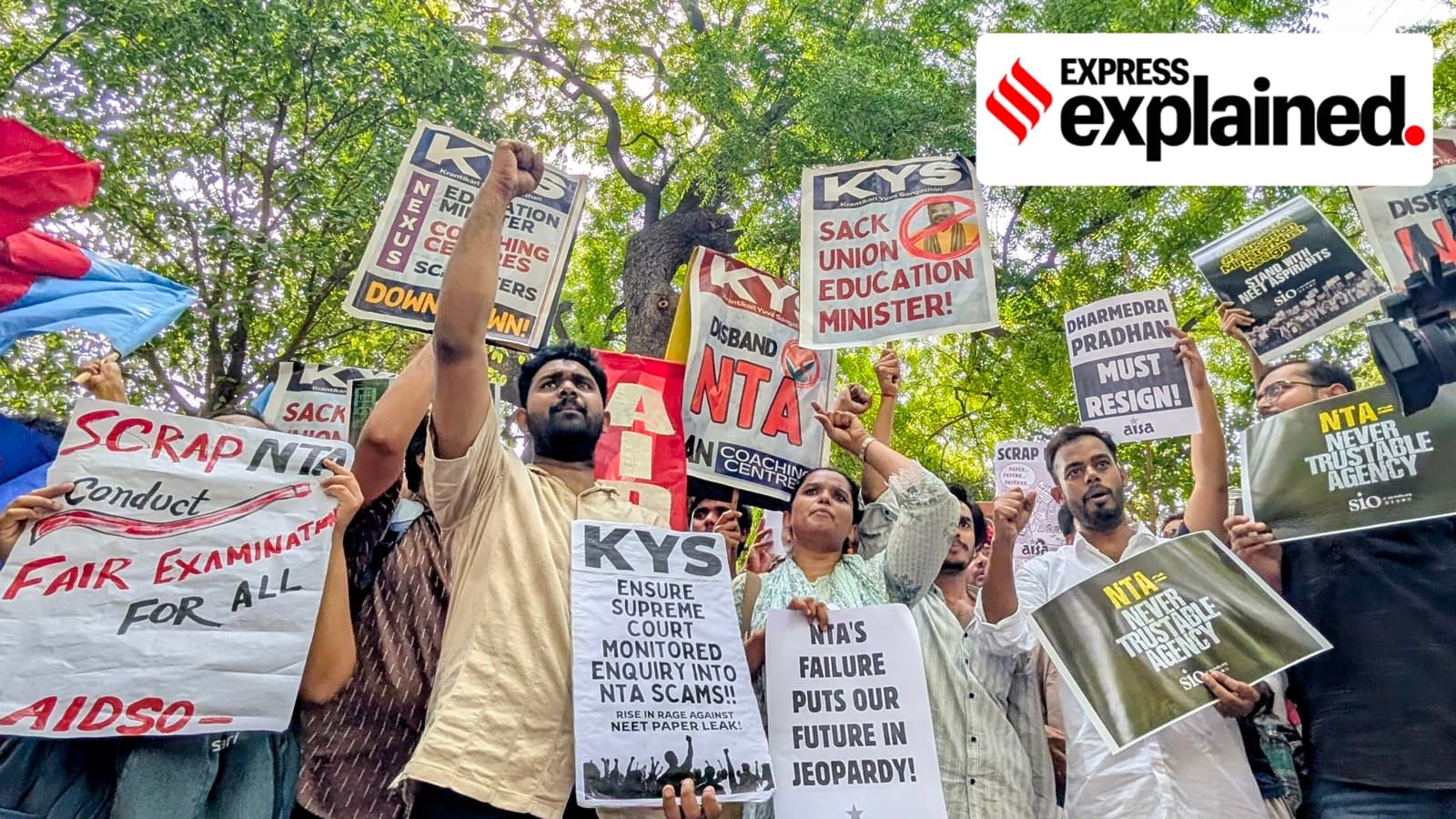
Image: Indian Express
CBI probes NEET-UG paper leak affecting 22 lakh candidates. Discover the investigation's focus on the exam's security processes and future implications.
GlipzoIn a significant turn of events, the Central Bureau of Investigation (CBI) has initiated an in-depth investigation into the NEET-UG paper leak that disrupted the examination for a staggering 22 lakh candidates. The focus of the probe will be on tracing the origins of the breach, examining every phase from the creation of the question paper to its delivery at the examination centers.
The National Testing Agency (NTA), overseen by Director General Abhishek Singh, has revealed that the examination process is based on a set of stringent guidelines established by a high-level committee led by former ISRO chief K. Radhakrishnan. These recommendations were put forth following a similar incident in 2024 and were submitted to the Education Ministry, although not fully disclosed to the public to maintain confidentiality.
To comprehend the gravity of this investigation, it is vital to understand the meticulous process involved in setting the NEET-UG question paper:
1. Confidential Paper Setting: The NTA enlists faculty members who are experts in physics, chemistry, and biology to create the exam questions. These individuals operate under strict confidentiality, and their work environment resembles a secure bunker to ensure they are isolated from any external influences. The exam format adheres strictly to a defined syllabus, allowing minimal flexibility in question formulation.
2. Secure File Management: After the paper has been finalized, it is stored on a single terminal at the NTA headquarters, which is disconnected from the internet. A comprehensive log is maintained to track who accesses the document and how frequently it is opened, ensuring tight control over the material.
3. Supervised Printing: The transition from the NTA to a commercial printing press is highly controlled. Only one printing press is utilized, with NTA personnel supervising the process. To maintain security, the supervisor is prohibited from carrying mobile devices, and the printing area is monitored by CCTV cameras.
4. Transport to Exam Centers: Once printed, the papers are securely stored in bank vaults before being transported to examination centers. This transportation involves coordination with local district administrations, with the district magistrate and police officers overseeing the logistics to ensure safe delivery.
5. Police Escort and Monitoring: Transport vehicles are equipped with GPS tracking and are under police escort to safeguard the integrity of the question papers. This year, the exam took place across 5,432 centers, underscoring the logistical scale involved in managing such a significant examination event.
The 2024 breach highlighted vulnerabilities in the transportation phase following printing. In response, the committee's recommendations aimed to enhance the involvement of district authorities and police to safeguard the papers during transport. However, questions remain about the potential for breaches occurring earlier in the process, particularly at the printing stage or even before that.
Singh has stated, "We have implemented the committee’s recommendations, and identifying where the breach has occurred will be a focal point of the CBI inquiry." The previous NEET-UG leak was uncovered after the exam results were published, revealing that the paper was allegedly photographed, solved, and sold after being transported to a school in Hazaribagh, Jharkhand.
As the CBI delves deeper into this case, several crucial factors will be examined: - Chain of Custody: Investigators will closely scrutinize the handling of the question paper from the moment it is set until it reaches the exam centers. - Personnel Involvement: Any personnel involved in the paper-setting, printing, or transportation phases will be thoroughly vetted to identify potential leaks. - Technological Safeguards: The effectiveness of the technological measures in place, such as CCTV monitoring and internet isolation, will be evaluated.
The recent investigation underscores the importance of maintaining the integrity of one of India's largest competitive examinations. With the stakes so high, the outcome of this probe could lead to significant changes in how exam processes are managed in the future.
The implications of this NEET-UG paper leak investigation extend beyond the immediate concerns of accountability and security. The integrity of entrance exams is crucial for maintaining trust in the educational system, which influences the futures of millions of students. Ensuring that the examination process remains transparent and fair is vital for maintaining public confidence.
As the CBI investigation unfolds, stakeholders in the education sector will be watching closely. The results may prompt a re-evaluation of existing protocols, potentially leading to reforms aimed at fortifying the examination process against future breaches. It is crucial for the NTA and educational authorities to implement stronger safeguards to protect the integrity of examinations and ensure that all candidates compete on a level playing field. The focus will now be on identifying vulnerabilities and enhancing security measures, making the future of competitive exams more resilient.
In summary, as investigations continue, it remains to be seen how the findings will shape the future of examination protocols in India and bolster the trust in the education system. Updates from the CBI are eagerly anticipated as they may reveal both the shortcomings of the current system and the pathways to a more secure examination framework.

Amritsar student questions age-based ranking, prompting Punjab CM to reform PSEB policies. A significant change towards merit-based recognition is underway.
Indian Express
AP EAMCET 2026 results are out! Discover how to check your scorecard and navigate the upcoming counselling process for college admissions.
Indian Express
CBSE's new OSM system faces backlash as students struggle with re-evaluation. Will their futures be jeopardized by technical flaws?
Indian Express