
Image: BBC World
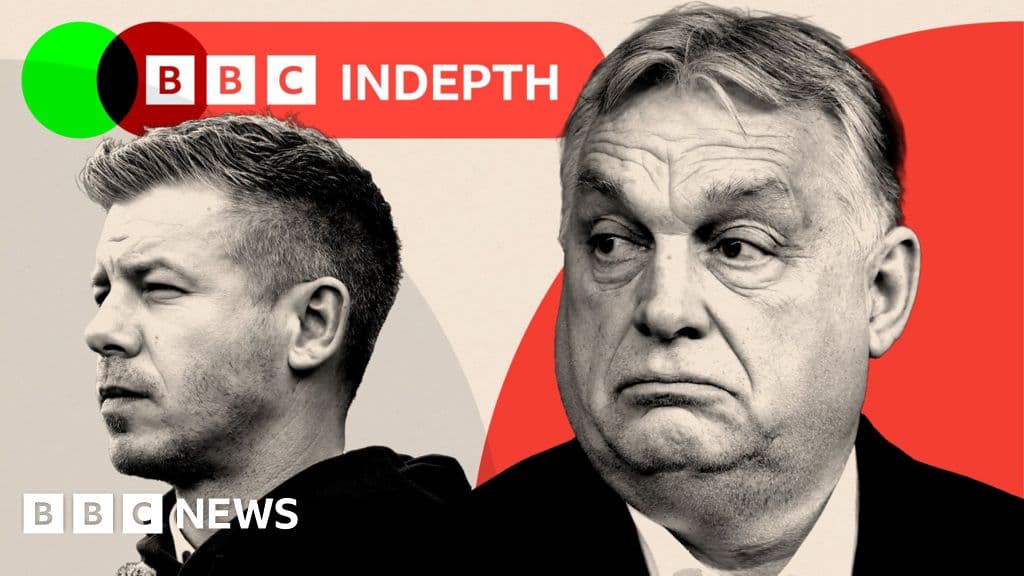
As Hungary heads toward elections, can Viktor Orban's 16-year reign be challenged? Discover the shifting political landscape and its implications.
GlipzoIn a highly charged atmosphere, Viktor Orban faced opposition fury during a recent rally in Györ, Hungary, on March 27. The long-serving Prime Minister, who has held power for 16 years, found himself at a crossroads as protesters interrupted his speech, chanting phrases like "Filthy Fidesz." This incident marked a significant shift in public sentiment and revealed a more vulnerable side of a leader known for his charismatic presence and calculated remarks.
Recent polls indicate a dramatic change in the political landscape. The Tisza party, led by Peter Magyar, is reportedly leading with 58% support compared to Orban’s 35%. This shift comes as Orban, who previously enjoyed a nearly unchallenged grip on power, is now racing against time to rally his supporters just days before the April 12 parliamentary elections. The outcome of this election holds important implications not just for Hungary, but for the broader European political environment.
Since his ascent to power in 2010, Orban has aligned himself with influential figures like Donald Trump and Vladimir Putin, positioning Hungary as a nationalistic model within the EU. However, his governance has increasingly faced accusations of corruption and cronyism, with many Hungarians, particularly younger voters, now viewing him and his Fidesz party as part of a corrupt elite.
The Orban administration has been criticized for channeling state resources towards projects benefiting friends and family members. Prominent among these accusations is the rapid accumulation of wealth by individuals like his son-in-law, Istvan Tiborcz, and childhood friend, Lörinc Meszaros, who has transformed from a gas fitter to Hungary's wealthiest citizen. The government defends these actions as necessary for national interests, arguing that wealth should remain within Hungarian hands rather than being directed to foreign entities.
Polling data from the Median agency indicates a notable transformation in public opinion. In January, a survey showed 44% of respondents expecting Fidesz to win, while 37% supported Tisza. Fast forward to March, and the tables have turned: 47% now predict victory for Tisza, against just 35% for Orban. This shift highlights a growing belief among the electorate that change is possible.
Political analysts have noted that the current climate of anger against perceived corrupt elites is now directed at Orban. As discontent grows, the Prime Minister is faced with the challenge of convincing voters that he can address their concerns while maintaining his image as a leader capable of navigating Hungary through turbulent times.
The run-up to the election has not been without controversy. Allegations of voter intimidation have surfaced, alongside bizarre claims involving a supposed Russian plot to stage a fake assassination attempt on Orban. Such developments create an air of uncertainty about the electoral process and the integrity of the upcoming vote.
Fidesz officials, however, dismiss these allegations as tactics employed by the opposition to undermine their credibility. Zoltan Kiszelly, a political analyst from the government think tank Szazadveg, argues that these narratives are merely the opposition’s attempts to prepare for claims of fraud should they lose the election.
In the face of these challenges, the question remains: can Orban salvage his position by redirecting blame towards Ukraine and its supporters in the EU? His opponent, Peter Magyar, faces the daunting task of persuading the Hungarian populace, especially those in rural areas loyal to Fidesz, that he can deliver the “more humane, better functioning country” he promises.
Political analyst Gabor Török noted that the current turmoil undermines the carefully crafted image of Orban as a calm and strategic leader. He warns that if the next two weeks continue along this trajectory, it could spell trouble for Orban’s administration. The tension leading up to the election suggests that many Hungarians are ready for change, and the results could signal a pivotal moment in Hungary’s political history.
As the April 12 elections draw near, the outcome will be closely monitored not only in Hungary but throughout Europe. Should the Tisza party emerge victorious, it could embolden other nationalist movements across the continent, potentially reshaping the EU’s political landscape. Conversely, a win for Orban could reinforce his controversial policies and approach to governance, solidifying his position as a key player in European politics.
The stakes are high in this Hungarian election, with implications that extend beyond national borders. The showdown between Orban and Magyar could determine the future of Hungary’s relationship with the EU, influence other nationalist movements, and redefine the role of populism in Europe. As voters head to the polls, the world watches closely to see if Hungary will embrace change or continue with its current leadership.
As the election date approaches, keep an eye on: - Polling trends: Are the Tisza party's gains consistent, or is Fidesz regaining ground? - Public sentiment: What issues resonate most with voters, especially the youth? - Election integrity: Are there credible reports of voter intimidation or fraud? - International responses: How will the EU react to the election results, regardless of the outcome? - Future of populism: Will Orban's potential loss signal a broader shift in European politics?

Tensions soar as the US and Iran engage in air strikes near the Strait of Hormuz, raising concerns over global oil supply and regional stability.
BBC World
Trump's international interventions face serious stalemates. What will this mean for U.S. foreign policy? Explore the critical challenges ahead.
Indian Express
Tehran denies resignation of President Masoud Pezeshkian amid claims of IRGC influence. What does this mean for Iran's political stability? Click to learn more!
Indian Express